What Happens When the Reward Screen Loads 8 Seconds Late
Eight seconds of delay on a reward screen can quietly reshape how real the reward feels, changing what people do next
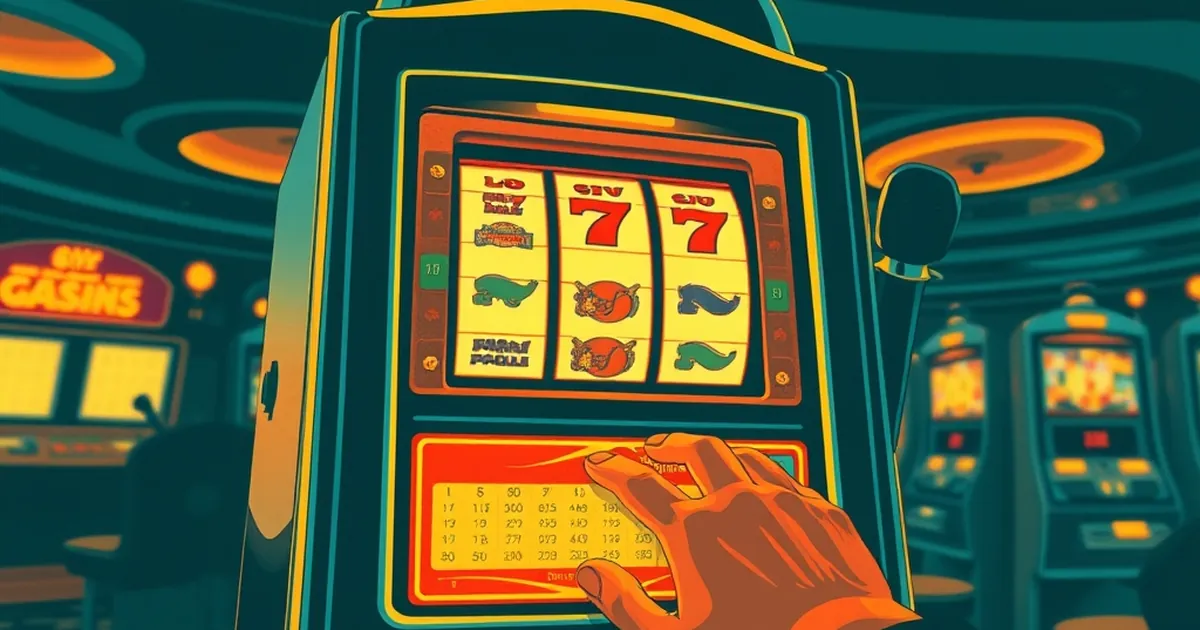
Eight seconds is roughly the time it takes to read this paragraph. It is also, according to a growing body of work in behavioral psychology, long enough to change what a person does next. When a reward screen stalls — a progress bar frozen at 80 percent, a "calculating results" spinner that just keeps spinning — something quietly interesting happens inside the person waiting. The question worth chasing is not whether the delay annoys them. It is what the delay does to their sense of whether the reward was ever real.
The Gap Between Action and Outcome
Behavioral scientists have long understood that the space between a behavior and its consequence is where learning gets shaped. B.F. Skinner's work on reinforcement schedules showed that the timing and predictability of a reward matter as much as the reward itself. A reward that arrives reliably and quickly teaches the brain one lesson. A reward that arrives after a variable delay teaches a different one.
That eight-second gap is not neutral dead time. It is a window in which the person does something the designers of any reward system should care about: they start negotiating with themselves. Did it work? Should I refresh? Should I try again? The delay converts a passive receipt into an active decision point.
Variable Delay and the Anticipation Loop
Most people have heard of variable-ratio reinforcement — the pattern where a reward comes after an unpredictable number of actions. Less discussed is variable delay: rewards that show up after an unpredictable amount of time. The two produce different psychological textures.
Variable ratio produces persistence. Variable delay produces something closer to vigilance — a low-grade alertness that keeps attention pinned to the screen. In a 2019 study on digital feedback timing, researchers found that participants who received delayed confirmations reported higher engagement with a task than those who got instant ones, even when the delayed group earned less overall. The delay itself had become part of the experience.
That finding is uncomfortable. It suggests that sluggishness can function as a feature rather than a bug, at least in the short term.
Loss Aversion Meets the Loading Screen
Here is where Daniel Kahneman and Amos Tversky's loss aversion enters the picture. People weigh losses roughly twice as heavily as equivalent gains. An eight-second delay feels, to many users, like a small loss — of time, of momentum, of certainty. The instinct is to recover it.
That instinct explains a lot of behavior around stalled reward screens. People re-tap. They close and reopen. They screenshot the frozen bar and post it. Each of these actions is an attempt to claw back the seconds that the delay took. The irony is that the recovery attempt usually costs more time than the original delay.
A Concrete Case
When a major airline's loyalty app pushed a redesign in 2022, members reported that points confirmation slowed from under a second to several seconds. Forums filled with posts from travelers describing the same ritual: refresh, wait, refresh again, then check the account balance manually. The points had not changed. The confidence that the points were there had.
What the Delay Actually Tests
Strip away the interface and the eight-second wait is a stress test on trust. A reward that appears instantly feels like a fact. A reward that appears slowly feels like a claim. The user is no longer just receiving something; they are deciding whether to believe it.
This matters far beyond any single app. As more of daily life routes through systems that promise outcomes — fitness streaks, savings milestones, delivery confirmations — the timing of confirmation becomes a design decision with psychological weight. Engineers often treat latency as a pure performance metric, something to shave down for its own sake. The behavioral evidence suggests latency is also a meaning metric.
Designing for the Wait
The forward-looking move is not to eliminate every delay. Some are unavoidable, and some, perversely, increase attention. The move is to decide what the delay should say. A progress bar that moves communicates that something is happening. A static spinner communicates nothing and invites speculation. A short, honest line — "confirming your result" — does more work than eight seconds of silence ever could.
The next time a reward screen hangs, watch what you do in those seconds. That reflex — the re-tap, the refresh, the flicker of doubt — is the whole story in miniature. The delay did not just slow the reward down. It changed what the reward meant.