What happens when the reward preview arrives after the tap
The brief pause between a tap and its reward shapes anticipation more than the payoff itself, revealing why products stretch that delay
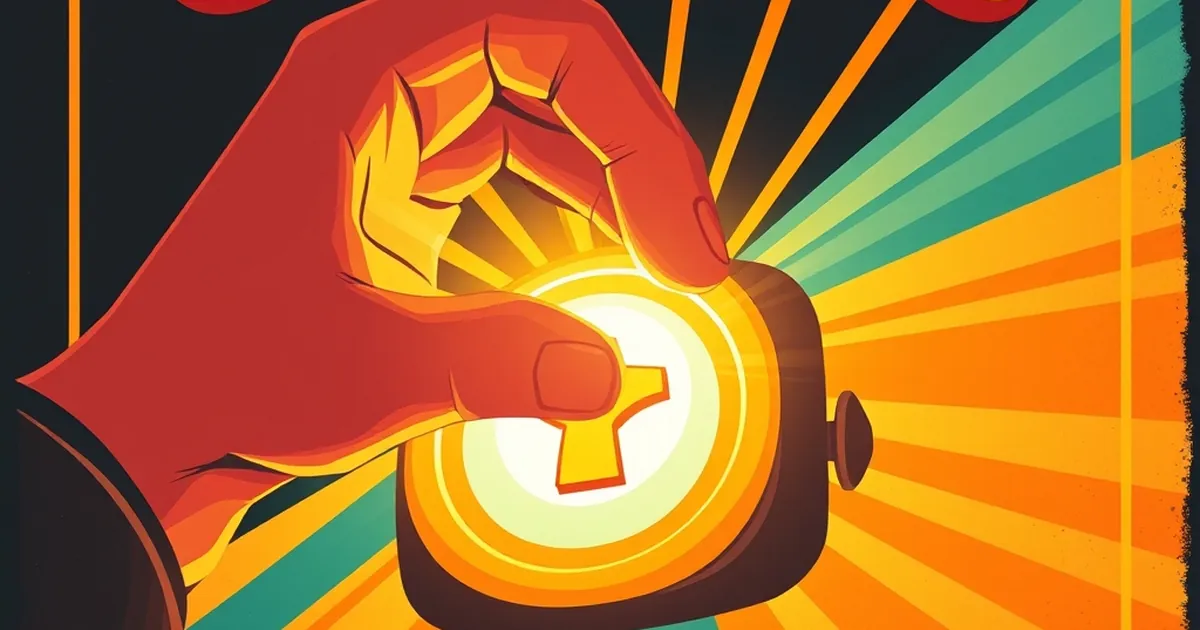
The pause between a finger lifting off a screen and the result landing is one of the most studied — and least discussed — moments in consumer technology. That half-second, sometimes less, is where anticipation gets manufactured. The question worth asking isn't whether people enjoy the payoff. It's what the delay itself does to them, and why so many products are built to stretch it just enough.
The Gap Is the Product
Behavioral research has long understood that uncertainty about when a reward arrives can be more motivating than the reward itself. B.F. Skinner's work on variable-ratio reinforcement showed that subjects pressed harder and more persistently when payoffs came on an unpredictable schedule than a fixed one. The tap-then-wait pattern on a phone is a domesticated version of that finding: the outcome is unknown, the timing is short but not instant, and the brain fills the gap with prediction.
That gap is not an accident of engineering. It's the space where attention lives.
Loss Aversion Inside the Loading Spinner
Daniel Kahneman and Amos Tversky's loss aversion work established that losses feel roughly twice as painful as equivalent gains feel good. Designers who understand this build anticipation differently than designers who don't. A near-miss animation, a "you almost had it" message, a progress bar that stalls at 90 percent — each one converts the waiting period into a small stakes negotiation with the self.
The user isn't deciding whether to keep going. They're deciding whether to stop, and stopping feels like forfeiting something already half-earned. That's the mechanism, and it operates whether the thing on the other side of the tap is a discount code, a streak counter, or a leaderboard position.
What the Lab Actually Shows
A useful reference point: the 2011 study by Brian Knutson and colleagues on anticipatory neural activity found that the expectation of reward activated the ventral striatum more reliably than the reward's delivery did. In plain terms, the waiting is often the emotional peak. The result is frequently a letdown by comparison.
That has a practical implication for anyone building or evaluating these interfaces. If the anticipation is doing the heavy lifting, then the honest question is what the product gives back after the preview resolves. A well-designed experience converts the lift into something the user keeps — a skill, a habit, a genuine preference. A poorly designed one just re-arms the loop.
The Reward Loop Is Not Automatically a Problem
It's worth resisting the reflex that any variable-reward mechanic is manipulation. Competitive play, fitness streaks, language apps, and skill-based games all use versions of the same architecture, and many of them leave users better off. The distinguishing factor is usually whether the post-tap outcome is legible — whether the user can learn from it, improve, and eventually predict it.
Opaque outcomes train dependence. Transparent ones train judgment. That's the line worth watching.
Where This Goes Next
Regulators in the U.S. are beginning to look at dark patterns and "addictive design" language in consumer protection frameworks, and the Federal Trade Commission's 2024 actions against manipulative subscription and interface practices suggest the tap-then-wait mechanic will face more scrutiny as it spreads into finance, retail, and health apps.
The forward-looking move for designers and product teams is to treat the anticipation gap as a design debt rather than a free engagement lever. Instrument it, measure whether users are learning or just returning, and ask what the preview actually delivers when it lands. The half-second after the tap is short. What it teaches the person on the other side of the screen can last a lot longer.