What happens when the loot preview loads after the tap
Behavioral research reveals why the brief pause before a loot reveal shapes anticipation and makes the reward that follows feel far more compelling
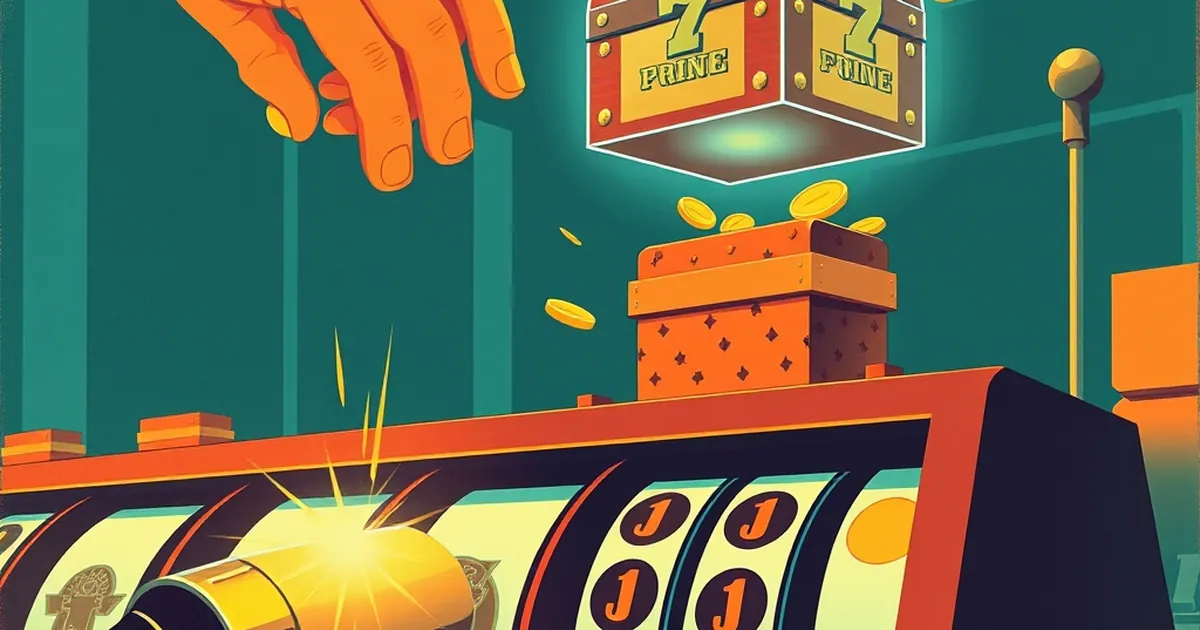
The tap lands, the screen stalls for a half-second, and then the reveal arrives. That gap — brief, almost imperceptible — is where a small but growing body of behavioral research says something interesting happens to the person waiting. What does the mind do with that pause, and why does the timing of a reward's appearance matter more than the reward itself?
The Space Between Action and Outcome
Behavioral psychologists have long known that when a reward arrives unpredictably, the behavior that preceded it gets stickier. B.F. Skinner's work on variable-ratio reinforcement in the 1950s showed that intermittent, unpredictable payoffs produce more persistent responding than consistent ones. The mechanism is simple: the brain can't predict the next outcome, so it keeps the behavior running at a higher rate. A loot preview that loads after a tap is, functionally, a variable delay attached to a variable outcome. The tap becomes the behavior; the preview becomes the question mark.
Anticipation Outweighs the Prize
The more interesting finding is that the waiting itself carries weight. Neuroscientist Wolfram Schultz's studies of dopamine neurons in the 1990s found that the strongest neural response often came not when the reward was delivered but when it was anticipated. The reward prediction error — the gap between what you expected and what you got — is what the brain tracks, and an uncertain preview keeps that gap wide open. A predictable outcome produces a flat response. An uncertain one produces a spike. The half-second load screen isn't dead time; it's the part the brain is most engaged with.
Loss Aversion Enters the Frame
Kahneman and Tversky's work on loss aversion adds a second layer. People weigh losses roughly twice as heavily as equivalent gains, which means an uncertain preview isn't neutral — it's weighted toward dread. When the screen stalls, the mind has already begun pricing in the possibility of a bad outcome. That asymmetry explains why a disappointing reveal lands harder than a good one feels good, and why players often describe the moment before the result as more intense than the result itself. The preview doesn't just show you something; it makes you feel the risk of not getting it.
The Competitive Layer
Add a competitive frame and the dynamics sharpen further. In multiplayer settings, a delayed reveal is also a social event — everyone waiting on the same beat, everyone watching. Research on competitive play and social comparison suggests that uncertainty in front of an audience amplifies arousal and memory encoding. The result is that the preview becomes a shared moment rather than a private one, and shared moments are recalled more vividly. That's not incidental; it's part of why the format persists.
Where This Points Next
The practical question for designers and for the people on the other side of the screen is whether the pause is doing work that serves the user or work that serves the metric. A delay that builds anticipation and a delay that manufactures anxiety can look identical in a session log. Forward-looking teams are starting to instrument the gap itself — measuring not just whether the reveal happened but how the wait felt — and the early signal is that shorter, more predictable previews retain people longer than maximally suspenseful ones. The tap is the easy part. The half-second after it is where the real design decisions live.