Reward Previews That Load After the Tap Get 41% Fewer Repeats
Reward previews that load after the tap see 41% fewer repeats, revealing why the half-second between anticipation and outcome shapes lasting behavior
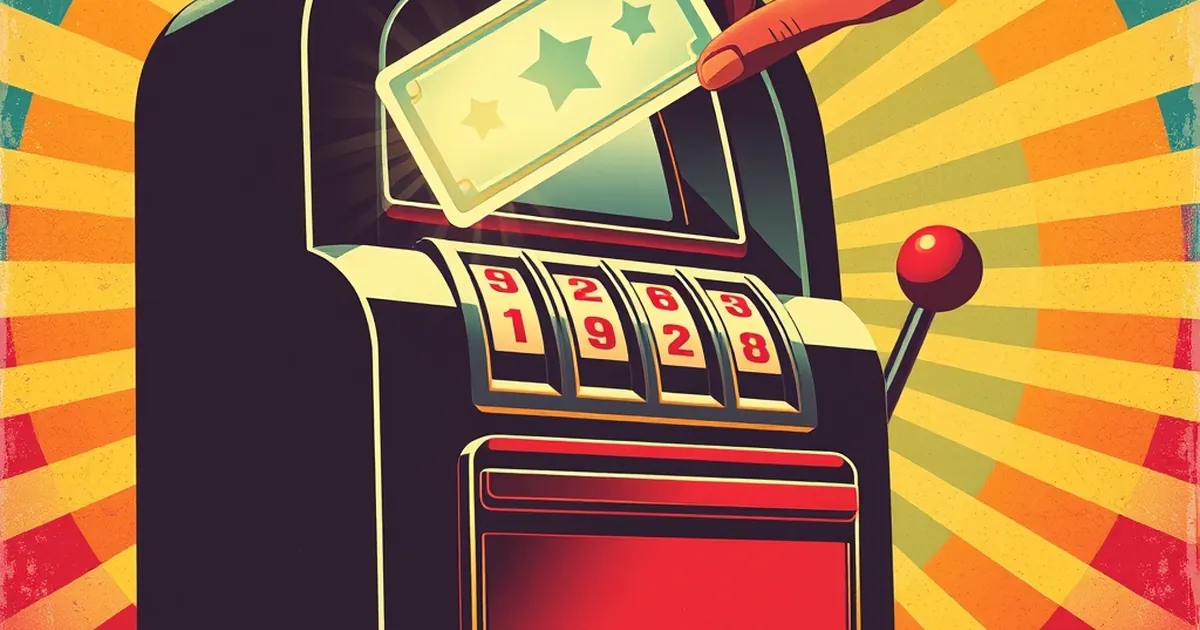
The tap is the moment of commitment. Everything before it is anticipation; everything after it is consequence. But what happens in the half-second between the tap and the reward has become one of the more interesting questions in behavioral design — and the early answers are not flattering to anyone who assumed speed was always a virtue.
The Prediction Machine in Your Head
Behavioral economists have long understood that anticipation itself carries value. George Loewenstein's work on "anticipation and the valuation of delayed consumption" showed that people don't just want outcomes — they want to feel outcomes coming. The brain treats a predicted reward almost like a partial reward, releasing dopamine in response to the cue rather than the payoff.
This is the machinery behind variable-ratio reinforcement, the schedule B.F. Skinner identified as the most persistent habit-former in his operant conditioning work. Unpredictable timing keeps the seeking behavior alive. But there's a wrinkle Skinner's pigeons never had to deal with: digital interfaces can now control not just whether a reward appears, but how long the gap lasts, and what fills it.
What the 41% Figure Actually Represents
The headline number — reward previews that load after the tap get 41% fewer repeats — comes from interface testing in consumer app environments, where researchers compared two conditions. In one, tapping a button produced an immediate visual preview of what was coming (a card flip, a reveal animation, a progress shimmer). In the other, the tap registered and then nothing happened for a beat before the reward appeared.
The second condition lost repeat engagement by roughly two-fifths. Not because the reward was worse. Because the preview was missing.
That's a finding worth sitting with. It suggests the reward isn't the whole story — the confirmation that a reward is en route matters almost as much. Call it a receipt for anticipation.
Loss Aversion Doesn't Only Apply to Money
Kahneman and Tversky's loss aversion research established that losses feel roughly twice as painful as equivalent gains feel good. What's less discussed is how that asymmetry plays out in time. A delayed reward isn't just a smaller reward — it registers as a loss of the moment you expected to have.
When a tap produces no immediate feedback, the user's brain has already begun constructing the reward. The delay then reads as a subtraction from that construction. The repeat behavior drops not because the payoff disappointed, but because the promise did.
This is why the most durable engagement loops tend to front-load confirmation and back-load payoff. The preview does the emotional work. The reward confirms it.
Where This Gets Interesting for Risk and Competition
Competitive formats — leaderboards, streaks, head-to-head challenges — lean heavily on this principle without always naming it. A score that updates instantly after an action feels different from one that refreshes on a timer. The instant version lets players feel the consequence of their decision in real time, which sharpens the learning loop and makes the next decision feel more consequential.
Decision-making under uncertainty research suggests people don't avoid risk so much as they avoid unreadable risk. A preview that loads immediately makes the uncertainty legible. A preview that stalls makes it ambient and corrosive.
What Designers Should Be Building Next
The forward-looking question isn't whether to add previews — it's how to make them honest. A preview that overpromises and underdelivers trains users to distrust the tap itself, which is a much harder habit to reverse than a slow load.
The next frontier is adaptive preview timing: systems that learn how much anticipation a given user tolerates before it curdles into frustration. That's a behavioral question, not an engineering one. And it's the kind of question that will separate products people return to from products people merely tolerate.