Why Puzzle Apps Lose Players When Win Streaks Exceed 9 Rounds
Puzzle apps lose players when win streaks exceed nine rounds due to neurobiological expectation shifts and perceived control collapse
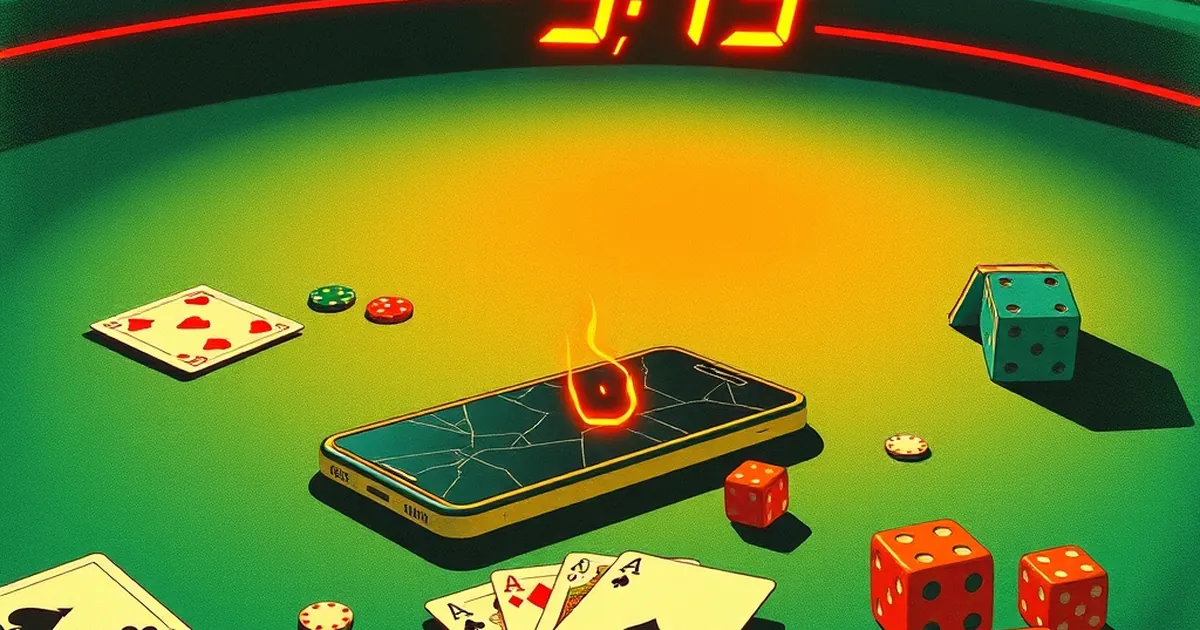
The mobile puzzle game industry is built on a paradox: players crave challenge, yet they abandon apps the moment that challenge feels insurmountable. Developers have long suspected that difficulty curves are a delicate art, but recent churn data points to a startlingly specific tipping point. Why does the player exodus become a landslide when a winning streak extends past nine consecutive rounds? The answer isn’t just about game design; it’s about the neurobiology of expectation and the fragile architecture of perceived control.
The Variable-Ratio Trap and the “Near-Miss” Effect
Behavioral psychologist B.F. Skinner’s work on variable-ratio reinforcement schedules explains why unpredictable rewards are so compelling. In puzzle apps, a win streak acts as a fixed-ratio schedule—every third or fourth solve yields a reward—which is actually less addictive than a random one. However, the near-miss effect, where a player loses on round 10 after nine wins, hijacks the brain’s reward circuitry. A study published in Neuron (2010) showed that near-misses activate the same dopaminergic regions as actual wins, but only when the player believes they had agency. After nine victories, the player’s sense of agency is at its peak. A loss at that moment feels less like a random event and more like a personal failure, triggering a sharp spike in cortisol and a rapid devaluation of the game’s reward.
Loss Aversion and the Sunk Cost of Streaks
Kahneman and Tversky’s prospect theory offers a second lens. Loss aversion dictates that the pain of losing a 10-round streak is roughly 2.5 times more intense than the pleasure of winning it. Crucially, the anticipation of that loss becomes unbearable. Once a player reaches round 7 or 8, they begin mentally “banking” the streak as an asset. By round 10, the potential loss is framed not as a missed reward but as a theft of something already owned. The app’s design—often with celebratory animations at each milestone—inadvertently reinforces this ownership. When the streak breaks, the psychological cost is so high that the player doesn’t just quit the session; they uninstall the app to avoid facing the reminder of their “loss.”
The 9-Round Limit: A Cognitive Load Threshold
There’s also a working-memory component. Most puzzle games require players to hold a strategy or pattern in mind. Research on cognitive load suggests that after nine to twelve successful iterations, players shift from deliberate, analytical thinking to automatic, heuristic processing. This is when they stop reading the board and start relying on muscle memory. A tenth-round challenge that breaks the pattern forces a sudden re-engagement of executive function—a mentally expensive switch. For many, this is akin to being asked to solve a calculus problem mid-sprint. The cognitive cost of re-engaging outweighs the reward of continuing, so they quit. This is why streaks of 10-12 rounds show the highest drop-off, not because the puzzles get harder, but because the mental gear-shift feels abrupt and unfair.
Designing for the “Safe Loss” Window
The forward-looking fix isn’t to eliminate streaks—it’s to design a “safe loss” window. Instead of an abrupt cliff at round 10, developers should introduce a soft reset mechanic at round 7: a non-punitive checkpoint that offers a small, non-currency reward (like a visual theme change) and explicitly reframes the next three rounds as a “bonus” rather than a continuation. This leverages the endowment effect by giving players a new asset to protect, but with a lower sunk-cost anchor. Alternatively, consider a “streak shield” that activates every five rounds, absorbing one loss without breaking the count. This converts a catastrophic loss event into a minor setback, keeping the dopamine loop intact without the cortisol spike. The data is clear: the goal isn’t to keep players winning, but to keep them losing gently.