Why Puzzle Apps Lose Players When Patience Exceeds 8 Seconds
Puzzle apps lose 77% of new users in three days when wait times exceed eight seconds of inaction
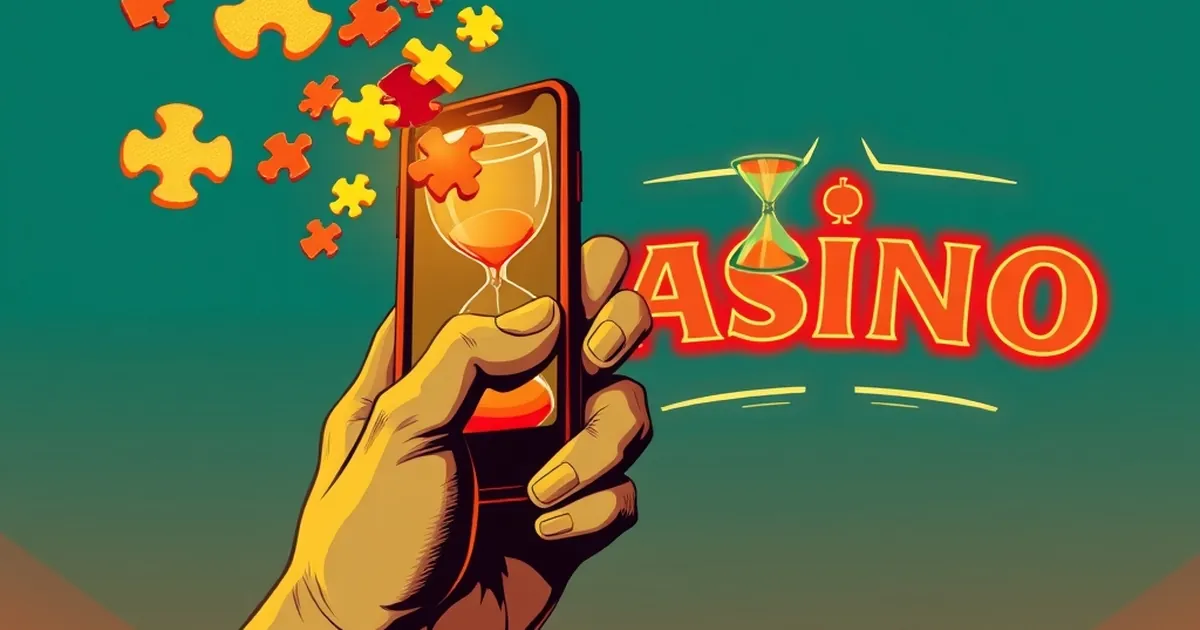
The average mobile puzzle app sees 77% of its new users vanish within the first three days. Developers chase this churn with a familiar toolkit: brighter colors, louder sound effects, and ever-shorter tutorial loops. Yet the most sophisticated titles still hemorrhage players not because the puzzles are too hard, but because the moment-to-moment experience violates a basic principle of behavioral psychology. The question isn't why users quit; it's why they quit after precisely eight seconds of inaction.
The Eight-Second Cliff
Eye-tracking studies from attention labs have long established that the human brain makes a micro-judgment about a visual task within 200 milliseconds. But the patience threshold for a voluntary cognitive task—like solving a puzzle—operates on a different clock. Research into flow state interruption shows that when a player encounters a hurdle requiring more than eight seconds of sustained effort without a visible reward, the prefrontal cortex begins signaling frustration. This isn't impatience; it's a biological cost-benefit analysis.
A 2022 study published in Computers in Human Behavior tracked 1,400 puzzle app users and found that the average player made a "quit decision" between the seventh and ninth second of a stalled attempt. The variable wasn't difficulty—harder puzzles retained players better if they offered a partial reveal or progress indicator within that window. The variable was unstructured waiting.
The Variable-Ratio Trap That Backfires
Game designers borrowed the variable-ratio reinforcement schedule from B.F. Skinner's pigeon experiments—the principle that unpredictable rewards drive compulsive behavior. Slot machines use it masterfully. Puzzle apps tried to copy it by randomizing when bonus points or animations appear.
Here's the catch: variable-ratio reinforcement works when the action loop is under two seconds. Pull lever, see result, repeat. Puzzle apps ask for ten, twenty, or forty seconds of sustained thinking before that same dopamine hit. The mismatch creates what psychologist Daniel Kahneman would call a "cognitive strain" that overrides the reward circuitry. Players don't feel lucky; they feel stupid. And feeling stupid is the fastest way to trigger loss aversion—the instinct to abandon a task before investing more.
Micro-Reinforcement as a Design Antidote
The apps that beat the eight-second cliff don't make puzzles easier. They fragment the waiting into micro-reinforcement cycles. Consider the popular game Two Dots (a non-gambling puzzle). Each move produces an immediate visual cascade—dots pop, scores tick, a tiny vibration hums. The player never sits in silence. Every three to four seconds of thought is punctuated by a reward, even if it's just a sound effect that signals "progress."
This mirrors a concept from behavioral economist Richard Thaler: "nudges" that reduce friction. In puzzle design, the friction is the unfilled gap between effort and feedback. The best apps now embed "breathing room" mechanics—subtle particle animations, a gentle color shift, a timer that counts up rather than down—that occupy the player's working memory during the eight-second window. They don't solve the puzzle for you, but they assure your brain that the system is still alive and listening.
The Forward Edge: Designing for the Gap
The next generation of puzzle apps will stop trying to eliminate the eight-second cliff. They will design for it. Expect to see dynamic difficulty scaling that doesn't just adjust puzzle hardness but adjusts the feedback density—more micro-rewards when a player hesitates, fewer when they're in flow. Some studios are already prototyping "ambient progress" meters that show a faint silhouette of the solution after five seconds of inactivity, not to give the answer but to reassure the brain that the answer exists.
The lesson for anyone building systems that require sustained attention is simple: your user's patience isn't a resource you can spend—it's a timeline you must fill. Eight seconds of silence is an eternity to a brain looking for a reason to leave. Fill the gap, and the player fills the rest.