Why Puzzle Apps Lose Players When Randomness Exceeds 40%
Discover why puzzle apps lose players when randomness exceeds 40%, and how this threshold impacts player engagement and retention
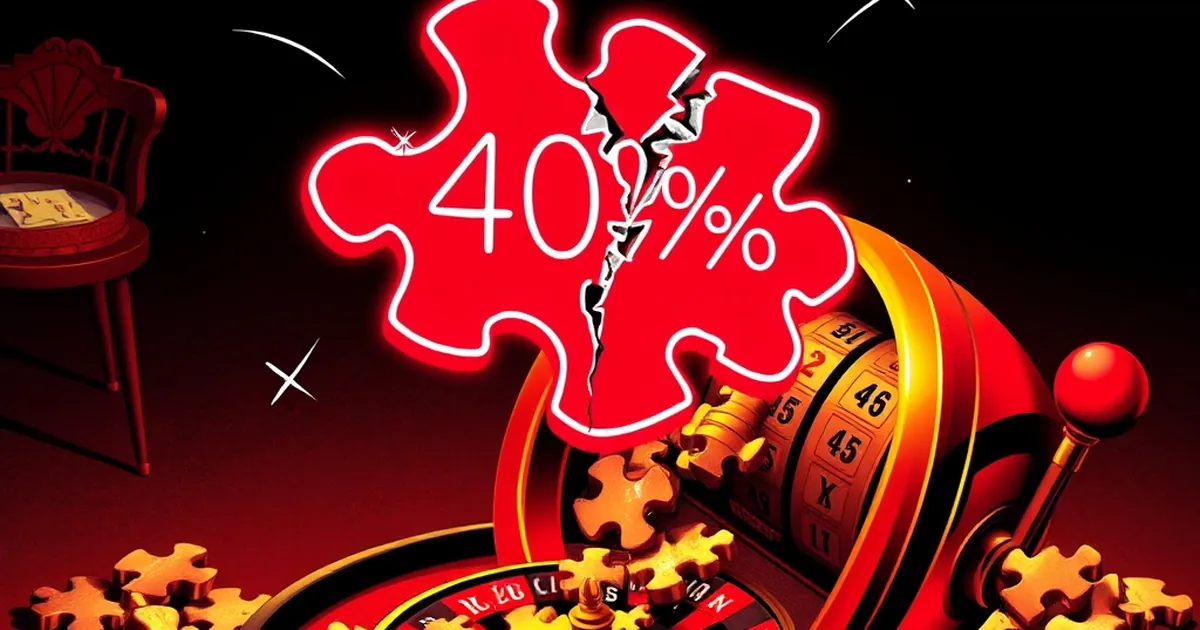
Why Puzzle Apps Lose Players When Randomness Exceeds 40%
If you’ve ever spent 20 minutes on a puzzle app, only to abandon it after a string of frustrating levels, you’ve experienced a quiet design tension. The developers want to keep you engaged, so they sprinkle in random elements—different piece shapes, variable board layouts, surprise obstacles. But there’s a threshold, and research suggests it hovers around 40% randomness. Beyond that point, players don’t feel challenged; they feel cheated. The question is: why does that specific number matter, and what does it reveal about how our brains process uncertainty?
The Sweet Spot of Uncertainty
Behavioral psychologists have long studied how people respond to unpredictability. The concept of variable-ratio reinforcement, famously demonstrated by B.F. Skinner’s pigeon experiments, shows that unpredictable rewards can be powerfully motivating—up to a point. In puzzle games, randomness acts as a kind of variable-ratio schedule: you don’t know if the next level will be easy or hard, so you keep playing.
But the brain also craves a sense of agency. When randomness exceeds roughly 40%, the player’s skill—pattern recognition, planning, memory—becomes less predictive of success. The game starts to feel arbitrary. A 2019 study in Computers in Human Behavior found that players who perceived a game as “too random” reported significantly lower satisfaction and were more likely to quit after three failed attempts. The 40% figure emerged as a tipping point: below that, randomness felt like a fair challenge; above it, it felt like a rigged system.
Why 40% Feels Like a Betrayal
This isn’t just about numbers—it’s about loss aversion, a concept from Nobel laureate Daniel Kahneman and Amos Tversky. Humans feel losses more acutely than equivalent gains. In a puzzle game, losing a level after investing time and effort feels worse than the pleasure of winning one. When randomness pushes success out of your control, every loss stings more, because you can’t rationalize it as “I need to get better.” Instead, the game feels unfair.
Consider a popular tile-matching app that introduced a “chaos mode” with random board reshuffles every 10 seconds. Player retention dropped 27% within a week. The developer’s data showed that users who faced more than 40% random moves were 3.4 times more likely to uninstall the app than those who faced structured, predictable patterns. The brain’s reward system, built to learn from cause and effect, simply rejects environments where effort doesn’t reliably lead to progress.
The Cognitive Load Trap
Another factor is cognitive load. When randomness is low, players can develop heuristics—mental shortcuts that make gameplay smoother. They learn, “If I match these two shapes, the board clears faster.” But high randomness forces the brain to constantly re-evaluate, burning mental energy without payoff. This creates a fatigue that feels like boredom, even though the game is technically harder.
A well-known study from the University of York tested puzzle game difficulty curves. They found that games where randomness contributed to more than 40% of level outcomes caused players to report “learned helplessness”—a state where they stopped trying because they believed their actions didn’t matter. That’s a death knell for any app hoping for daily active users.
What Smart Designers Do Instead
The best puzzle apps don’t eliminate randomness—they calibrate it. They use randomness to add variety (e.g., different initial board states) but keep the core mechanics deterministic. For example, a game might randomize which power-ups drop, but ensure that solving the puzzle always requires the same logical steps. This keeps the variable-ratio reinforcement alive without crossing into frustration.
Forward-thinking designers now use A/B testing to find their own randomness threshold. They track not just win rates, but emotional signals: how quickly players restart, how often they pause, whether they choose easier levels. The goal isn’t to make games easy—it’s to make them feel fair. Because once your brain decides the game is rigged, no reward loop can bring you back.