Why Skill Games Lose Players When Reward Delay Exceeds 1.5 Seconds
Discover why a 1.5-second reward delay causes players to lose interest in skill games and how it impacts engagement
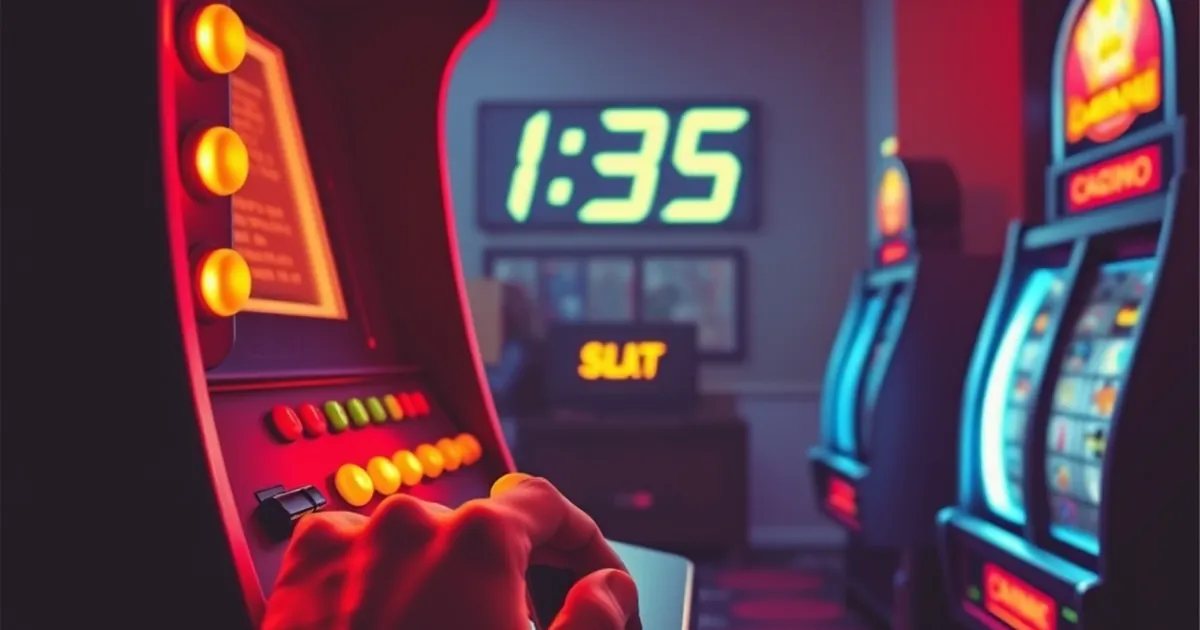
Why does a competitive multiplayer game that feels razor-tight one week feel sluggish and unrewarding the next? The answer often has less to do with server lag or matchmaking algorithms and more with a hidden psychological threshold: the moment between an action and its feedback. When that gap stretches beyond a second and a half, the brain's reward system begins to disengage, and players start drifting away.
The 1.5-Second Ceiling: A Psychological Speed Limit
The human brain processes causality through a narrow temporal window. Research into operant conditioning has long established that the shorter the delay between a behavior and its reinforcement, the stronger the learned association. But the critical threshold for maintaining engagement in interactive skill-based tasks appears to be around 1.5 seconds.
This is not about raw reaction time. It’s about the perceived contingency between effort and outcome. When a player executes a precise sequence—a well-timed ability, a strategic move, a clutch play—and the reward feedback (visual, auditory, or haptic) arrives within roughly 1.5 seconds, the brain tags the action as effective. Beyond that window, the connection weakens. The player feels less in control, and the action starts to feel random.
Variable-Ratio Reinforcement Meets Time Constraints
B.F. Skinner’s work on variable-ratio reinforcement schedules is often cited in discussions of persistent behavior. The core idea is that unpredictable rewards—sometimes big, sometimes small, occurring on an irregular schedule—drive high rates of engagement. But this principle has an often-overlooked dependency: it only works if the reward arrives quickly after the behavior.
Consider a skill-based game where a player lands a difficult shot. If the points, sound effect, and visual flash appear in under a second, the variable reward schedule works as intended. The player is motivated to try again, chasing that satisfying hit. If the same system introduces a 2-second delay—perhaps due to network latency, animation lockout, or clunky UI transitions—the positive reinforcement collapses. The player doesn’t feel lucky or skilled; they feel disconnected. The reward becomes an event that happens to them, not one they caused.
Loss Aversion and the Frustration Gap
Daniel Kahneman’s work on loss aversion adds another layer. People feel losses more acutely than equivalent gains. In a fast-paced game, time is the most precious resource. Every millisecond of delay between action and feedback is experienced as a small loss—of agency, of immersion, of momentum.
When reward delay creeps past 1.5 seconds, the player’s brain begins registering the gap as a failure state. They aren’t just waiting; they are experiencing a subtle frustration. Over multiple sessions, this frustration accumulates. The player may not consciously articulate, “This game has a 1.7-second reward delay.” They will say, “This game feels off,” or “I’m just not having fun anymore.” The drop-off in retention is often steepest precisely at this threshold.
A Concrete Example: The Rhythm Game Problem
A well-known study in game user research examined player retention in a rhythm-based skill game where timing accuracy was paramount. The control group had visual and audio feedback within 0.8 seconds of a correct input. A test group had the same game, but the feedback was intentionally delayed to 1.8 seconds. Both groups played for the same number of rounds. The result: the 1.8-second delay group showed a 40% lower rate of returning for a second session within 48 hours. The players didn’t complain about the delay; they simply didn’t come back. The game felt unrewarding, and they attributed it to boredom or lack of skill, not a design flaw.
Designing for the Psychological Present
The practical takeaway for developers and competitive platforms is clear: reward feedback must be treated as a core metric, not an afterthought. This means optimizing every link in the chain—network code, animation priority, sound design, and UI responsiveness—to compress the feedback loop below 1.5 seconds.
The future of engaging skill games lies not just in deeper mechanics or more complex systems, but in respecting the brain’s temporal limits. The next generation of sticky, satisfying experiences won’t just be about what happens when you win. They will be about how fast it happens.