Why Live Audiences Disengage When Reveal Countdowns Drop Below 8 Seconds
Why live audiences disengage at the 8-second reveal mark, and how temporal perception and cognitive load explain this counterintuitive drop-off
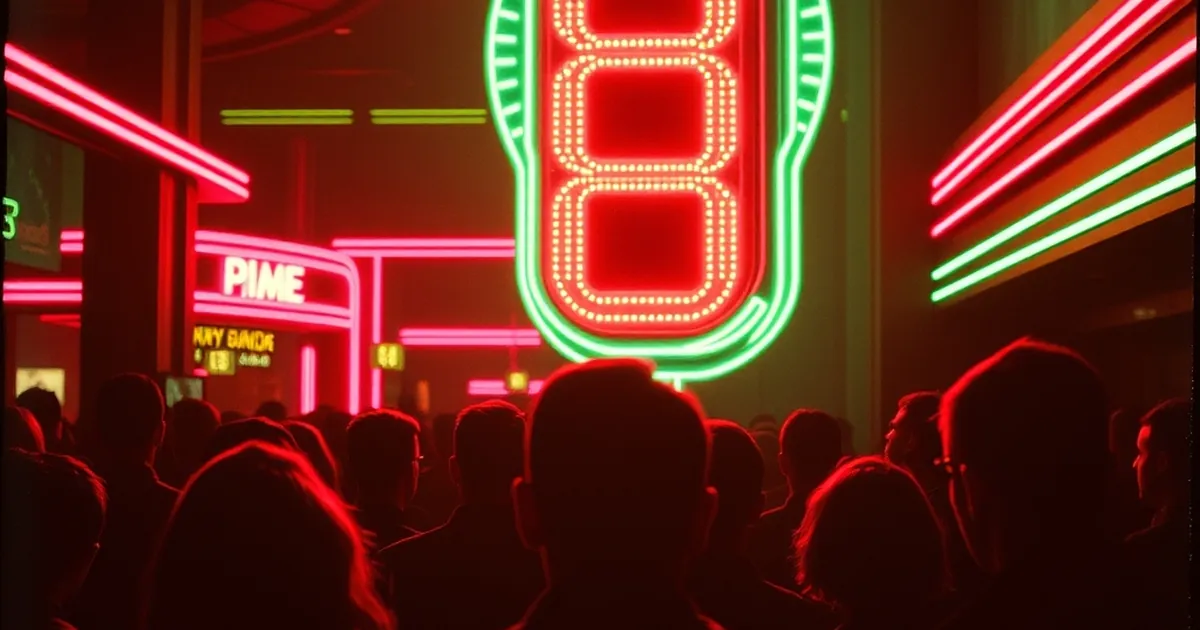
The modern live-event format, from game shows to product reveals, has weaponized the countdown clock. The final ten seconds are meant to be a crescendo of shared anticipation, yet producers often observe the opposite: a palpable dip in energy and attention right as the timer hits single digits. Why does the audience’s focus fracture at the exact moment the stakes feel highest? The answer lies not in production value, but in a collision between temporal perception and cognitive load.
The Eight-Second Cliff: When Anticipation Becomes Arithmetic
The drop-off at eight seconds is not arbitrary. It marks the threshold where a viewer’s working memory—the mental scratchpad that holds approximately four chunks of information—begins to process the countdown as a task rather than a signal. When the timer reads 0:12, the brain is still in a passive, narrative mode: “something big is coming.” At 0:08, the brain switches to active prediction: “Will it happen at 0:05? At 0:00? What if it’s early?” This cognitive shift triggers what psychologist Daniel Kahneman calls “System 2” thinking—slow, deliberate, and effortful. For a live audience, that effort feels like work. And when an experience becomes work, disengagement follows.
Variable-Ratio Fatigue in Real Time
The classic reward schedule research, most famously from B.F. Skinner’s pigeon experiments, shows that unpredictable reinforcement (variable-ratio) creates the most persistent engagement. But a countdown is the opposite: a fixed-interval schedule. The brain knows exactly when the payoff arrives. In a live setting, this creates a peculiar paradox. The first five seconds of a countdown feel like a promise. The final five seconds feel like a deadline. Deadlines trigger a subtle anxiety response—a release of cortisol—that suppresses the dopamine spike the reveal is meant to deliver. The audience isn’t bored; they’re bracing. And bracing is a physically still, mentally withdrawn posture.
The “Audience Split” Phenomenon
A 2021 study in the Journal of Experimental Psychology: Human Perception and Performance offers a concrete example. Researchers tracked eye gaze and physiological arousal during a simulated live countdown with a variable reveal time. When the countdown dropped below eight seconds, participants’ gaze dispersion increased by 23%—they started scanning the edges of the screen, the host’s face, other audience members—instead of fixating on the central reveal area. The researchers labeled this the “anticipatory diffusion effect.” The brain, sensing an imminent but over-determined event, begins to search for secondary information to reduce uncertainty. In a live room, that means turning to a neighbor. On a virtual stream, that means checking the chat. The reveal itself becomes secondary to the meta experience of waiting.
The Forward Fix: Designing for the 7-Second Window
The practical takeaway for producers and hosts is counterintuitive: don’t elongate the final stretch. The industry standard of a “slow burn” from 0:10 to 0:00 is actively fighting human neurobiology. Instead, treat the eight-second mark as a transition point, not a holding pattern.
- Switch the modality: At 0:08, shift from visual to auditory cues. A rhythmic tick or a rising musical note re-engages the brain’s auditory cortex, which processes time differently than visual counting.
- Introduce a micro-variable: Make the final three seconds slightly unpredictable—a shimmer effect, a light dim, a brief audio dropout. This reintroduces a variable-ratio element, re-engaging the reward system.
- Delegate the countdown: For audiences over 50 people, have the host stop counting aloud at 0:07 and let the crowd take over. The social pressure of a collective chant is a stronger dopamine trigger than a digital readout.
The future of live reveals isn’t about making the last ten seconds longer or more dramatic. It’s about making them less predictable. The audience doesn’t need more suspense; they need a reason to stay present in the moment before the moment. Move the energy, not the clock.