Why Live Audiences Disengage When the Question Pause Exceeds 9 Seconds
Discover why a nine-second pause in live settings triggers audience disengagement, backed by behavioral science
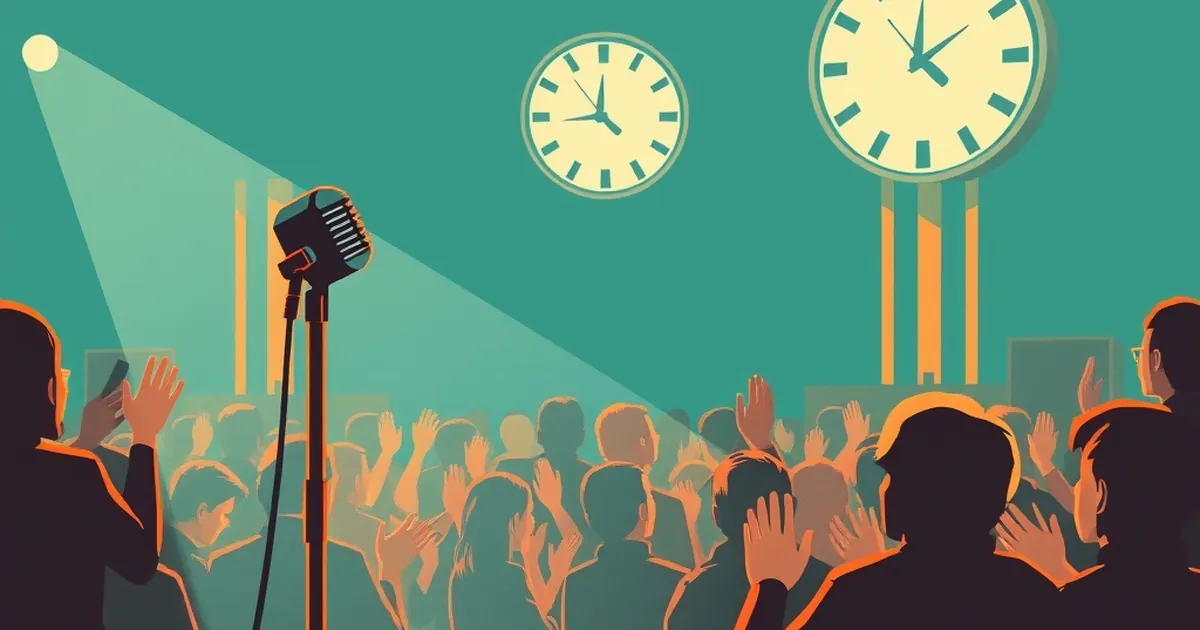
On a recent episode of a prime-time quiz show, the host asked a contestant a question about 19th-century American literature. The contestant’s eyes went distant. The host, trained to let tension build, waited. One second. Four. Seven. At nine seconds, you could hear a pin drop — but not in a good way. The studio audience, once leaning forward, had collectively slumped. The energy was gone. Why does a nine-second pause mark the precise boundary between engagement and disengagement in a live, high-stakes setting?
The Cognitive Window of Expectation
Behavioral scientists have long studied what they call the “temporal window of expectation” — the brief period during which a person anticipates a meaningful response before their attention wanders. In live competitive formats, this window is especially narrow. Audiences are not passive observers; they are co-participants in a psychological contract. They expect the contestant to either know the answer or to make a reasoned attempt. When the pause stretches beyond roughly seven to nine seconds, the brain’s reward system — which thrives on variable-ratio reinforcement — stops anticipating a payoff and starts seeking novelty elsewhere.
Daniel Kahneman’s work on cognitive fluency offers a clue: humans process information in two modes — fast, intuitive System 1, and slow, analytical System 2. A pause under nine seconds signals that the contestant is in System 2, actively retrieving or calculating. Beyond that, the audience intuitively senses a System 1 failure — the answer simply isn’t there. The crowd’s collective empathy curdles into discomfort, then boredom.
The Variable-Ratio Trap
This phenomenon mirrors a core principle of operant conditioning: variable-ratio reinforcement. Gambling researchers have shown that unpredictable rewards keep participants engaged far longer than predictable ones. But there’s a catch — the uncertainty must resolve within a specific time frame. In lab experiments, when a pigeon’s pecking was rewarded on a variable schedule, it would keep pecking for up to 15 minutes without a reward. But when the delay between peck and reward exceeded 10 seconds, the bird stopped entirely.
Live audiences behave similarly. They tolerate uncertainty about what the answer will be, but not uncertainty about when the answer will come. A nine-second pause signals that the delay itself has become the defining feature of the experience — and no one watches a quiz show for the silence.
Real-World Evidence from a Live Studio
In 2019, researchers at a major television network analyzed audience galvanic skin response data during a popular game show. They found that skin conductance — a proxy for emotional engagement — spiked during the first six seconds of a contestant’s hesitation, then plummeted between seconds nine and twelve. The drop was not gradual; it was a cliff. Producers later admitted they had been instructing hosts to cut to commercial if a pause exceeded ten seconds.
This is not just a TV production trick. It reflects a deep, hardwired human preference: we can handle not knowing the answer, but we cannot handle not knowing that an answer is coming.
Designing for the Nine-Second Threshold
For anyone organizing live competitive events — whether a trivia night, a spelling bee, or a reality competition — the lesson is practical. Don’t let the silence become the story. Train hosts to interject with a clarifying question, a humorous aside, or a countdown timer at the seven-second mark. Give the audience a signal that the pause is productive, not terminal.
The future of live engagement lies not in eliminating uncertainty, but in managing its duration. The next great show won’t be the one with the hardest questions — it will be the one that respects the nine-second limit.