Why Game Shows Lose Viewers When Decision Time Exceeds 9 Seconds
Why game shows lose viewers when decision time exceeds 9 seconds, and how to keep audiences engaged
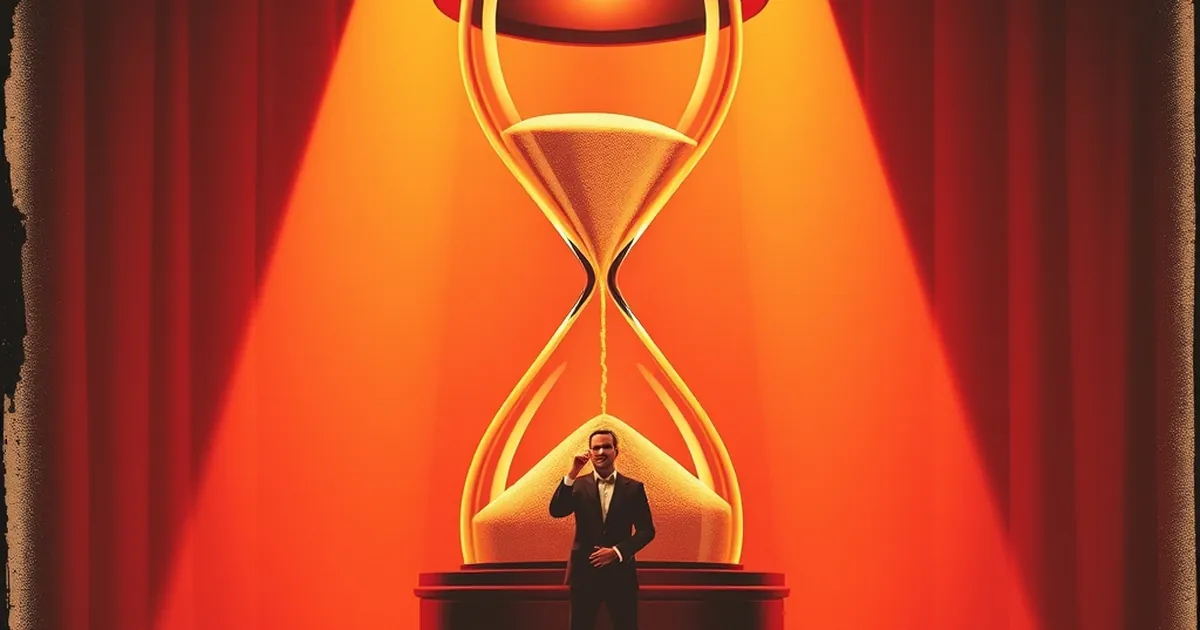
It is a staple of prime-time television: the contestant stands at a podium, the host stares intently, and the studio audience holds its collective breath. The clock ticks, the music swells, and the contestant’s eyes dart between two glowing doors. But when do those seconds of high drama cross the line into viewer frustration? New audience analytics suggest a hard threshold: when a decision takes longer than nine seconds, the emotional payoff inverts, and viewers begin to reach for the remote.
The Neuroscience of the "Ticking Clock"
The nine-second window is not an arbitrary network mandate; it is rooted in how our brains process anticipation and reward. Psychologist Daniel Kahneman’s work on the "peak-end rule" shows that we judge an experience not by its total duration, but by its most intense moment and its conclusion. In a game show, the peak is the reveal—the flash of confetti or the groan of a wrong answer. The decision-making process leading up to it is simply a delay.
When that delay stretches past roughly nine seconds, the brain’s reward circuitry shifts. The initial spike of dopamine from the possibility of winning—a variable-ratio reinforcement schedule, as B.F. Skinner famously documented—plateaus. Without a new stimulus (like a changing timer or a hint), the viewer’s working memory begins to wander. The tension you felt at second three becomes cognitive load at second ten. You are no longer asking "Will they win?" but "Why are they taking so long?"
The Cost of "Overthinking" on Screen
The Uncanny Valley of Suspense
There is a sweet spot where uncertainty feels delicious. That window is roughly between four and eight seconds. Within it, the brain is actively simulating outcomes, a process that feels like participation. Beyond nine seconds, the simulation becomes laborious. The contestant’s hesitation reads less as strategic and more as indecisive, triggering a social aversion to watching someone flounder. We don't want to watch a person struggle with a choice we already feel we can make for them.
The Case of the "Final Answer" Fumble
Consider a 2019 study published in the Journal of Experimental Psychology: Applied regarding consumer choice. Researchers found that when participants were forced to make a decision between two equally attractive options, their satisfaction with the choice dropped significantly if the deliberation time exceeded a self-imposed "internal deadline"—typically around eight to ten seconds. The authors posited that prolonged deliberation forces the brain to focus on what is being lost by choosing the other option, a phenomenon known as loss aversion. On a game show, this translates to a viewer thinking, "If they choose the red door, they lose the car behind the blue door." That thought is anxiety, not entertainment.
Faster Decisions, Higher Stakes
The most successful modern game formats—think rapid-fire trivia or speed-based puzzle challenges—have internalized this. They use a forced-choice mechanic where the host counts down from five, not ten. The visible pressure of a shrinking timer externalizes the decision-making process, transferring the cognitive load back onto the contestant and off the viewer. The audience isn't waiting for a decision; they are watching a reaction to the time constraint itself. The drama is in the performance of deciding, not the decision's logic.
Redesigning the Pause
For producers and showrunners, the takeaway is practical, not just theoretical. The goal isn't to eliminate tension but to compress it. If a contestant needs time to deliberate, the camera should not linger on their frozen face. Instead, cut to a split-screen of the two potential prizes, or show a rapid montage of their journey to that moment. This re-engages the viewer’s visual cortex, resetting the dopamine clock. The moment the contestant says "final," the reveal should happen within two seconds. This gives the audience the peak-end spike they crave without the nine-second lull.
The future of engagement lies in respecting the viewer's cognitive stamina. Treat the nine-second rule not as a restriction, but as a creative constraint—a rhythm that turns a moment of indecision into a beat of pure, electrifying possibility.