Why Live Audiences Disengage When Reaction Time Exceeds 2 Seconds
Discover why a two-second delay destroys audience engagement and what neuroscience reveals about sustaining attention in live settings
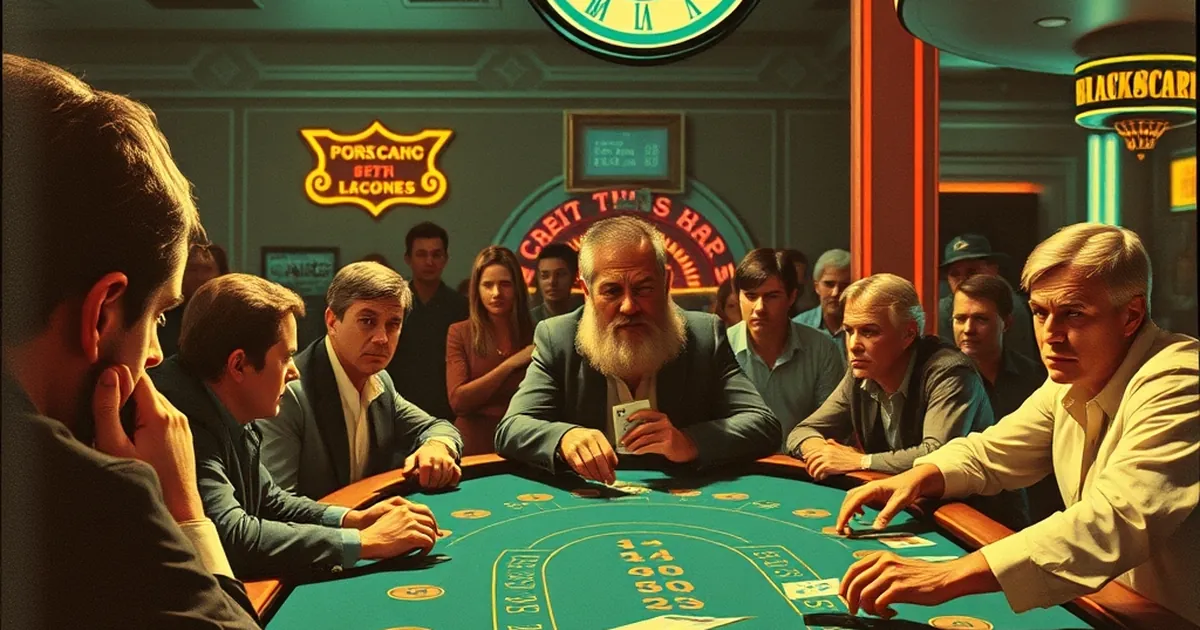
The pause hangs in the air. A contestant stares at a screen, the crowd holds its breath, and the clock ticks past two seconds. The energy in the room doesn’t just dip—it collapses. This isn’t about impatience; it’s about a fundamental shift in how our brains process reward under uncertainty. Why does a two-second delay feel like an eternity, and what does it reveal about the mechanics of engagement?
The Dopamine Window
Neuroscience offers a clear culprit: the dopamine reward system operates on a tight schedule. When we anticipate a meaningful outcome—whether it’s a correct answer, a buzzer beat, or a reveal—our brain releases a small pulse of dopamine in the moment of expectation. If the resolution arrives within roughly one second, that pulse merges seamlessly with the outcome, reinforcing the loop. At two seconds, the signal begins to decay.
Research by Wolfram Schultz, a pioneer in reward prediction, shows that dopamine neurons fire most strongly when a reward occurs earlier than predicted. Delays beyond a second or two trigger a different response: the brain starts to devalue the outcome itself. In a live audience setting, this means the collective neural reward system of the room resets. The tension that was building breaks, and the group shifts from “What happens next?” to “When will this be over?”
The Variable-Ratio Trap
This is where the intersection of behavioral psychology and competitive play becomes critical. Games that rely on variable-ratio reinforcement—the principle that unpredictable rewards are the most compelling—are especially vulnerable to timing flaws. The unpredictability is the engine. But that engine stalls if the reveal interval is too long.
Consider the classic “box opening” format: a contestant chooses from several identical containers. The audience knows the outcome is random, yet they lean forward. The suspense is fueled by the imminence of the reveal. If the host delays by two seconds to build drama, the audience’s arousal actually drops. Researchers at the University of Chicago found that in ambiguous decision-making scenarios, participants’ heart rates and self-reported excitement peaked just before the 1.5-second mark, then declined steadily. The brain interprets a longer wait not as suspense, but as a failed prediction.
Loss Aversion in Real Time
Kahneman and Tversky’s loss aversion framework also applies here. Live audiences are constantly computing a mental ledger: “Was that wait worth the information?” When the delay exceeds two seconds, the audience perceives the time itself as a cost. They have already invested attention, and now they are losing more of it. The eventual outcome—even if positive—feels less satisfying because it arrives after a perceived loss.
This is not abstract. In live competition shows, producers have long known that eliminating “dead air” is critical. But the two-second threshold is more precise than general pacing advice. It’s a biological constraint. The brain’s default mode network, which activates during downtime, begins to dominate after that window. The audience stops tracking the game and starts tracking their own boredom.
A Practical Forward Look
The implication for anyone designing live experiences—whether stage shows, interactive events, or even team-based challenges—is straightforward: treat the two-second delay as a design constraint, not a suggestion. Instead of trying to build suspense with silence, use compressed reveals. Show the outcome visually before it’s announced verbally. Use sound cues that anticipate the visual. Let the audience compute the result faster than the host can speak it.
The next generation of live engagement will not come from longer pauses or bigger reveals. It will come from tighter loops. The audience’s reward system is already optimized for speed. The job of the designer is simply not to get in its way.