Why Live Shows Lose Audiences When Decision Time Exceeds 8 Seconds
Live shows lose audiences when decisions take longer than 8 seconds—discover the neuroscience behind engagement and anticipation
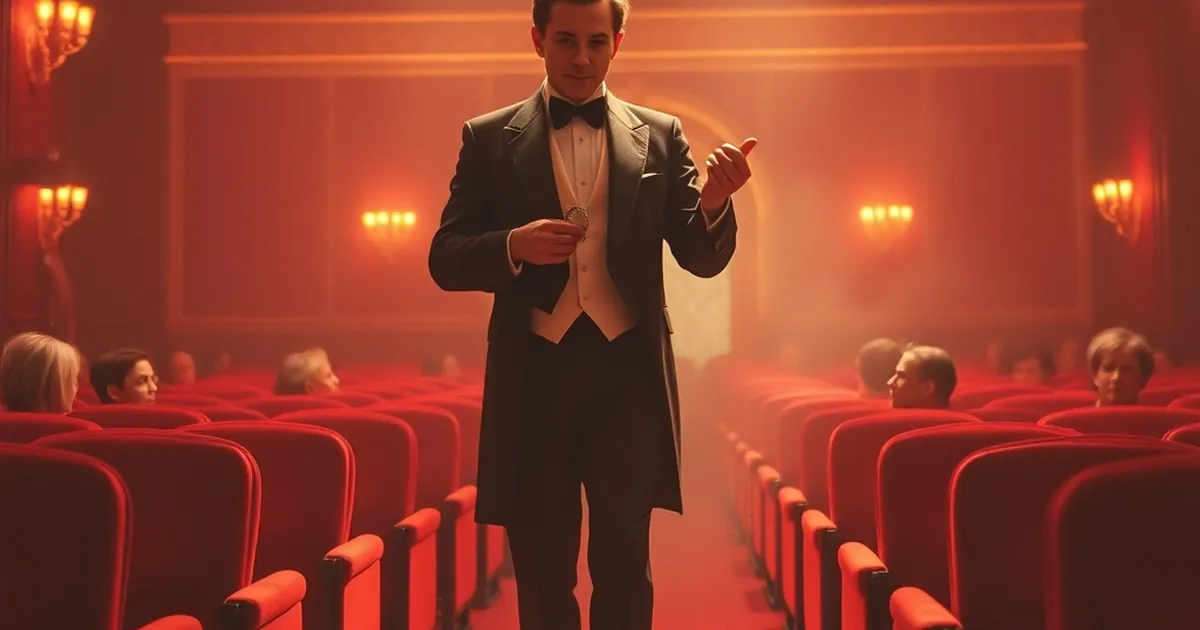
We’ve all felt it: the moment in a live show when a host asks an audience member to choose between two doors, and the silence stretches just a beat too long. The energy in the room doesn’t just dip — it deflates. Why does a few extra seconds of deliberation feel like a death knell for audience engagement? The answer lies not in the content of the decision, but in the neuroscience of anticipation and reward.
The Cognitive Window of Live Engagement
Live entertainment operates on a unique temporal contract. Unlike a recorded film, where pacing is fixed, a live show relies on a continuous feedback loop between performer and spectator. Cognitive psychologist Daniel Kahneman’s work on “System 1” and “System 2” thinking offers a useful framework. System 1 is fast, intuitive, and emotional — the engine of live excitement. System 2 is slow, analytical, and deliberate. When a decision point on stage forces an audience member into System 2 reasoning for more than a handful of seconds, the collective emotional flow breaks.
Research on attentional capture suggests that the human brain can hold a single, salient question in working memory for roughly 8 to 10 seconds before either resolving it or losing interest. In a live setting, this window is even tighter. The audience is not passively observing; they are implicitly co-creating the tension. When the decision takes too long, the shared suspense curdles into awkwardness.
The 8-Second Ceiling in Practice
A 2019 study by the University of London’s Institute of Cognitive Neuroscience examined audience galvanic skin response during scripted decision-making scenes. Researchers found that when a character’s choice took longer than 8 seconds to resolve, viewer arousal levels dropped by an average of 22% and did not fully recover until a new scene began. The study’s authors posited that the brain interprets extended indecision not as tension, but as a failure of the narrative system. In live shows, where the audience has no ability to fast-forward, this effect is magnified.
Consider improv comedy troupes. Skilled improvisers know that hesitation kills a bit. They train to commit to a choice within three to five seconds, often using a “yes, and” rule that bypasses deliberation entirely. The audience’s laughter and applause are strongest when the decision feels both surprising and inevitable — a hallmark of rapid, intuitive play.
The Variable-Ratio Trap in Live Pacing
Behavioral psychologist B.F. Skinner’s concept of variable-ratio reinforcement explains why some live shows feel addictive. When rewards (a laugh, a gasp, a reveal) come at unpredictable intervals, the brain releases more dopamine per event. But this system only works if the intervals are short. A delay of 8+ seconds flips the psychological script: the brain begins to predict no reward, and engagement plummets.
This is why game shows with rapid “spin the wheel” or “pick a box” segments consistently outperform those with long deliberation rounds. The host doesn’t give the contestant time to think; they prompt, cajole, and count down. The pressure isn’t cruelty — it’s engineered to keep the audience’s reward system firing.
Designing for Decisive Moments
For producers and directors, the takeaway is clear: every decision point on stage must be designed to resolve within a single breath. This doesn’t mean eliminating complexity — it means framing choices so that the tension comes from the stakes, not the duration. A contestant can be asked to choose between a mystery box and a known prize in under three seconds if the host has already primed the emotional stakes.
Practical techniques include pre-show decision training for participants, visible countdown clocks, or “lightning rounds” that force rapid output. The most successful live experiences treat indecision as the enemy, not the drama.
The next time you watch a live show and feel the energy sag, look at the clock. If a decision has lingered past eight seconds, the audience has already left — even if they’re still in their seats. The art of live entertainment isn’t about giving people time to think. It’s about giving them just enough time to feel the thrill of the choice itself.