Trivia Streaks Break at Question 7 When the Timer Turns Red
Why trivia streaks so often break at question seven, when a red timer turns confidence into a split-second decision under pressure
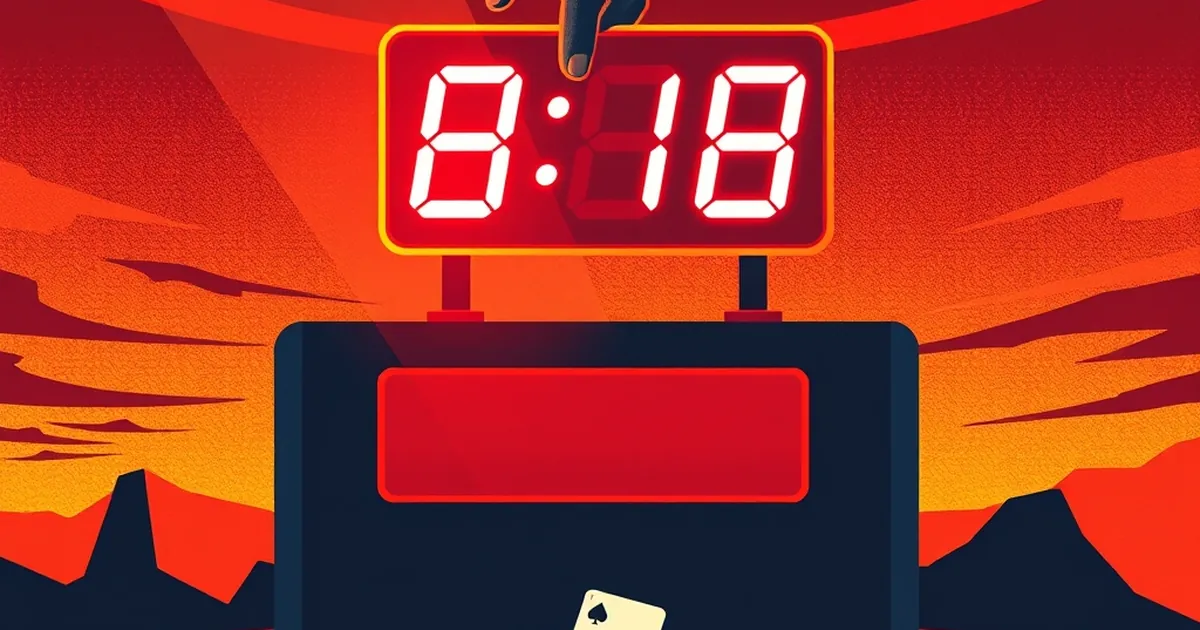
Why does a trivia run so often die at question seven? Watch enough bar-league playoffs or late-night quiz apps and a pattern emerges: players sail through the first six, then the seventh question arrives with a red timer, and something in the brain flinches. The stopwatch isn't just measuring knowledge anymore. It's measuring what happens when a confident person suddenly has to decide fast.
The Seventh Question Is Where Confidence Meets a Clock
Quiz formats tend to escalate. Early questions are gimmes, middle questions reward recall, and by the seventh slot the writers start mixing categories and shrinking the window. That's not sadism; it's pacing. But it collides with a well-documented quirk of human decision-making: under time pressure, people don't just get faster. They get different. They lean on gut feelings, abandon deliberate retrieval, and start pattern-matching on fragments.
Daniel Kahneman's distinction between fast, intuitive System 1 thinking and slow, deliberate System 2 thinking is the standard frame here. A trivia question with thirty seconds left is a System 2 task wearing a System 1 costume. The red timer pushes you toward the fast system right when the question demands the slow one.
Variable Rewards Keep Players Coming Back
Behavioral psychologists have known since B.F. Skinner's work in the 1950s that unpredictable rewards produce the most persistent behavior. Skinner called it variable-ratio reinforcement, and it's why a streak feels so much stickier than a single win. You don't know which question will be the one that feels great to nail, so you keep playing to find out.
Trivia apps and league nights are built on this. The reward schedule is irregular by design. Some nights you run the table. Some nights you flame out at seven. The unpredictability is the engine, not a bug.
Loss Aversion Turns a Streak Into a Trap
Here's where it gets interesting. Once you have a streak going — six correct in a row, a personal best, a bar-league record — the psychology flips. Kahneman and Amos Tversky's loss aversion research showed that people feel losses roughly twice as intensely as equivalent gains. A seventh correct answer is nice. Losing the streak you already built feels terrible.
That asymmetry changes how players answer. They get conservative. They second-guess a first instinct. They burn eight seconds deciding between two options they already knew, and the timer turns red while they're still negotiating with themselves. The streak, which should be a confidence boost, becomes a liability.
A Concrete Case
Researchers studying "choking under pressure" — Sian Beilock's work at the University of Chicago is the classic reference — found that skilled performers often fail precisely because they start monitoring their own automatic processes. A golfer who thinks about her putting stroke mid-swing misses. A trivia player who thinks about the streak mid-question stalls. The overthinking is the error.
What Actually Helps
The players who break through question seven tend to do three things differently. They commit to a first answer faster and only revise if a specific fact surfaces. They treat the timer as information rather than threat. And they practice under a clock, because pressure tolerance is trainable, not innate.
Quiz writers know all this, which is why the seventh question exists in the first place. It's engineered to separate recall from composure. The next time the screen goes red, the useful question isn't "do I know this?" It's "can I trust that I know this?" That's a skill worth building, whether you're chasing a bar-league trophy or just trying to beat your own record on a Tuesday night.