Team Quiz Answers Converge at Question 7, Then Diverge
Pub trivia teams mysteriously cluster at question seven before scattering again, revealing how groups make decisions under uncertainty
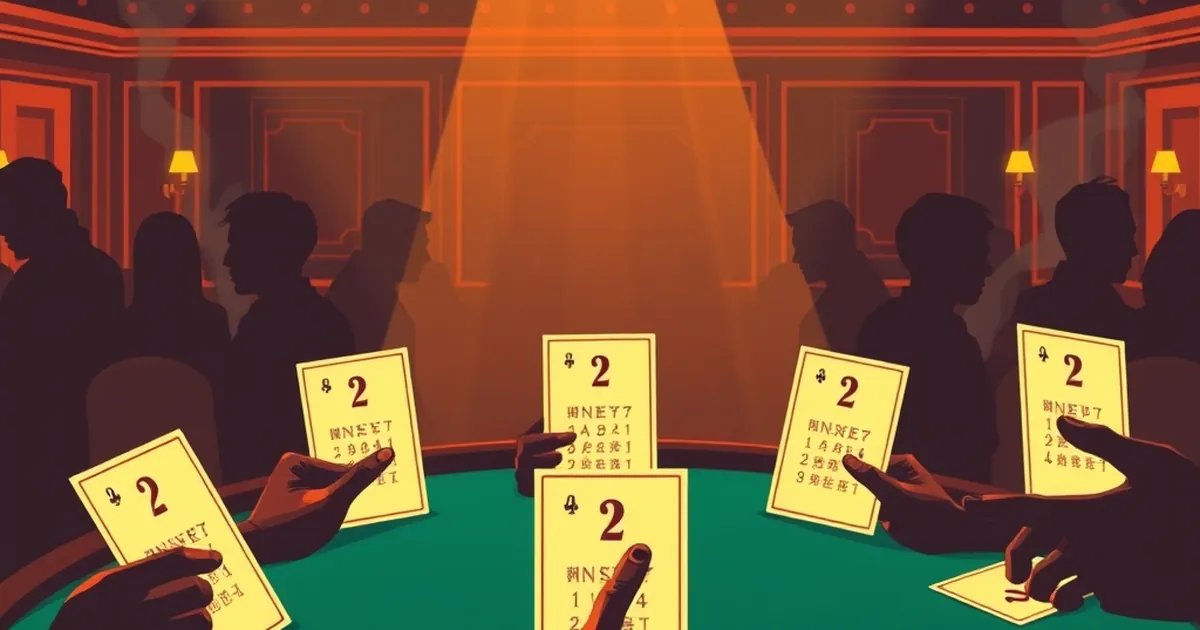
Something peculiar happens in pub trivia around the seventh question. Teams that have spent the first half of the night scattered across wildly different scores suddenly cluster together. Then, just as reliably, they scatter again. Regulars at quiz nights across the country have noticed it, and the pattern is not a quirk of one bar's question-writing. It shows up in how groups make decisions under uncertainty, and it maps onto a much older body of research about confidence, consensus, and the strange arithmetic of collective judgment.
The Mid-Game Convergence
The first six questions of a typical quiz tend to reward raw recall. Either you know the capital of Burkina Faso or you don't. Scores drift apart based on who happens to hold which facts. By question seven, though, quizmasters usually pivot to questions that reward a different skill: inference, estimation, and the willingness to commit to a guess.
That shift changes the group dynamics. Teams stop arguing about facts and start negotiating about probabilities. A team that guessed badly early can catch up with a single well-reasoned answer, while a team that led on recall can stall. The result is a statistical compression — scores that were spread out at question three look suspiciously similar at question seven.
Why Confidence Beats Knowledge in the Middle
Behavioral economists have documented this effect for decades. Amos Tversky and Daniel Kahneman showed that people overweight vivid, recent information when estimating odds, and underweight base rates. In a quiz, that means a team that just nailed a hard question feels hotter than the evidence justifies. They bet bigger on the next answer.
The convergence at question seven is partly an artifact of that overconfidence evening out. Teams that were cautious early start taking risks. Teams that were reckless early start hedging. The two behaviors meet in the middle.
There's also a social component. Research on group polarization, going back to James Stoner's work in the 1960s, found that discussion tends to push groups toward more extreme positions than individual members held alone. But that effect reverses when the group faces a genuinely uncertain answer with no strong anchor. In that case, groups drift toward the average — which is exactly what convergence looks like on a scoreboard.
The Divergence That Follows
Then question eight arrives, and the field splits again. Why?
One explanation is that the middle questions expose which teams have a coherent strategy and which are just reacting. A team that agrees on how to handle a category it doesn't know — say, by assigning a designated guesser or by using a confidence-weighted vote — will pull ahead once the questions get harder. A team that argues every point from scratch burns time and emotional energy.
Variable-ratio reinforcement, the schedule that makes unpredictable rewards so compelling, plays a role here too. Teams that got lucky on a mid-game guess feel a dopamine hit that makes them trust their instincts more. Sometimes that pays off. Often it doesn't. The divergence after question seven is where luck and process separate.
What This Means for Groups Making Decisions
The trivia-night pattern is a small-scale version of something that happens in boardrooms, trading floors, and fantasy leagues. Early performance measures raw talent or information. Mid-game performance measures how a group handles uncertainty. Late performance measures whether the group built a repeatable process.
The practical takeaway is not to avoid the middle stretch but to recognize it for what it is. If your team converges with the field around the midpoint, that's not a sign you're average. It's a sign the questions have shifted from knowledge to judgment. The teams that pull away afterward are usually the ones that decided in advance how they would disagree.
Next time you're at a quiz night, watch the scoreboard at question seven. Then watch what happens at question ten. The gap that opens is not about who knows more. It's about who decided, before the pressure hit, how they would make a call.