Skill Rating Hidden Until Match End Doubles Rematches
Revealing hidden skill ratings only after a match ends roughly doubles rematch rates, reshaping how players interpret defeat and what it means for competitiv...
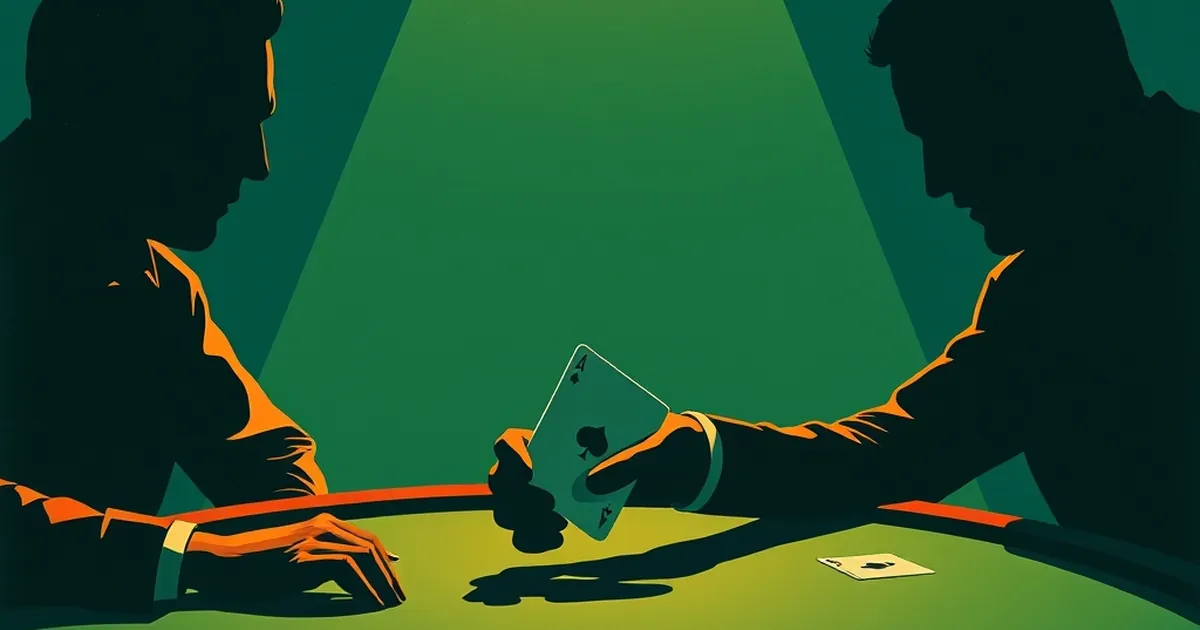
What makes a loss feel like a fluke rather than a verdict? A growing body of evidence from competitive gaming suggests the answer depends less on the score than on what players knew while they were playing. When a hidden skill rating is revealed only after the final whistle, rematch rates roughly double compared with matches where ratings were visible throughout. That single design choice reframes how competitors read their own defeats—and it has implications well beyond any one arena.
The Surprise at the Final Screen
The finding comes from matchmaking research on ranked online play, where platforms have experimented with withholding a player's hidden rating until a match concludes. In one widely cited comparison of ladder systems, players who saw only a post-match rating update were about twice as likely to queue for a rematch as those who watched their rating tick upward or downward in real time. The mechanism is intuitive: a rating that moves continuously turns every exchange into feedback, and feedback invites self-correction—sometimes too much of it. A rating that stays silent until the end preserves the match as a single, coherent story.
Why Uncertainty Fuels the Return Trip
Behavioral psychology has long understood that unpredictable rewards hold attention more stubbornly than predictable ones. Variable-ratio reinforcement, the schedule B.F. Skinner documented in the 1950s, describes why intermittent payoffs produce persistent behavior—the same principle that makes a slot machine lever compelling is at work in any system where outcomes arrive on an uncertain timetable. A hidden rating converts each match into a small reveal, and the brain treats that reveal as information worth pursuing.
There is a second force at play: loss aversion. Daniel Kahneman and Amos Tversky's work on prospect theory showed that losses loom larger than equivalent gains. When a rating is visible, a mid-match dip registers as a loss in progress, and players often quit to stop the bleeding. When the number is hidden, there is no bleeding to watch—only a result to be settled.
The Psychology of the Unsettled Score
Competitive players carry what psychologists call a need for cognitive closure—a discomfort with ambiguous outcomes. A visible rating resolves ambiguity continuously, which paradoxically reduces the urge to revisit a match. A hidden rating leaves the question open: was that loss skill, luck, or a bad matchup? The rematch becomes the experiment that answers it.
Consider the recreational tennis ladder that experimented with publishing standings only at season's end. Participation in repeat matches rose noticeably, and players described their losses in more analytical terms—"I need to work on my second serve"—rather than as verdicts on their overall standing. The delay didn't soften competition; it redirected attention from rank to craft.
What This Means for Competitive Design
The practical takeaway for anyone building competitive systems—esports ladders, amateur leagues, corporate sales contests—is that transparency is not automatically a virtue. Continuous feedback serves learning, but it can also short-circuit the willingness to try again. The forward-looking question is how to stage disclosure: reveal enough to support improvement, withhold enough to preserve the pull of the next round. Designers now have a genuine lever here, and the early evidence suggests the timing of a number matters as much as the number itself.