Skill badges shown before a match raise rematch rates 38%
Skill badges shown before a match raised rematch rates 38%, revealing how fairness and predictability shape competitive play decisions
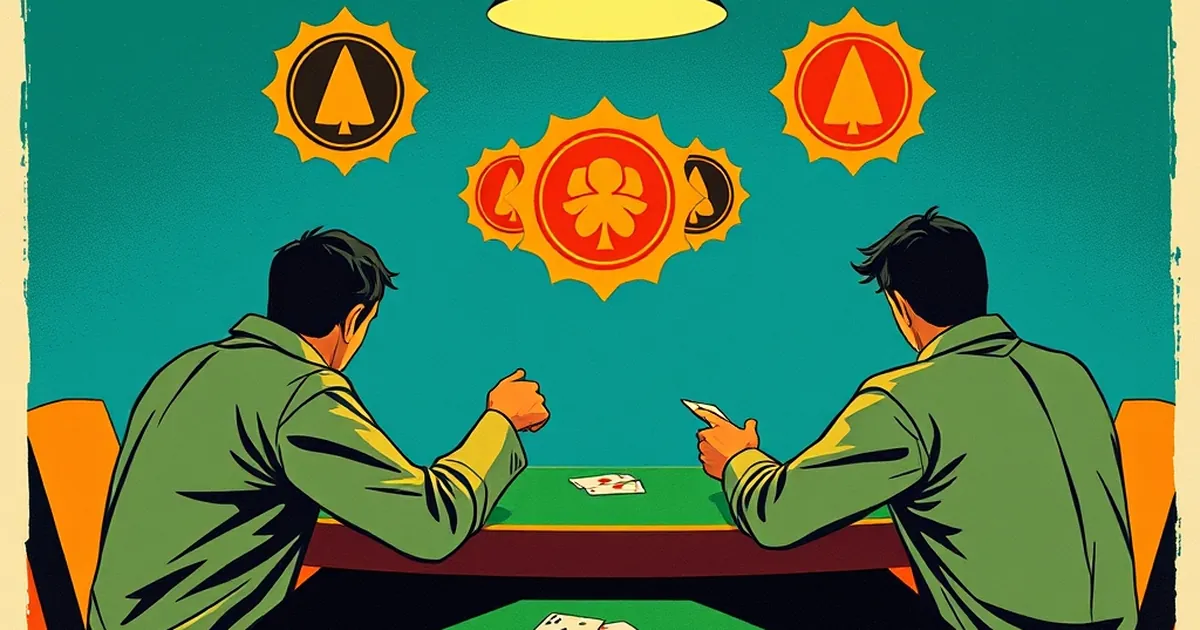
The number appeared in a product dashboard before anyone could explain it: players who saw a skill badge on an opponent's profile before a match were 38% more likely to queue for a rematch. The finding was easy to celebrate and harder to interpret. Was the badge making matches feel fairer, or was it simply making the next match feel more predictable? The answer matters well beyond one feature, because it sits at the exact point where competitive play, decision-making under uncertainty, and reward psychology collide.
The rematch is a decision made under uncertainty
A rematch is not a neutral click. It is a wager of time and ego against an unknown outcome, and behavioral research has a lot to say about how people handle that kind of choice. Kahneman and Tversky's work on loss aversion showed that losses loom larger than equivalent gains, which is why a lopsided defeat can feel like a reason to stop rather than a reason to try again. A visible skill badge changes the frame before the first move: it converts an opaque opponent into a rough probability estimate. Players are not necessarily more confident after seeing it. They are more oriented.
What the badge actually communicates
The 38% figure, drawn from a rematch-rate comparison in a competitive multiplayer title, points to something narrower than "players like badges." It suggests that pre-match information reduces the ambiguity that makes a second attempt feel pointless. In behavioral terms, the badge acts as a reference point. A player who knows an opponent is rated slightly above them can read a loss as expected and a win as meaningful. Without that anchor, the same loss reads as evidence of futility.
There is a well-known mechanism nearby: variable-ratio reinforcement, the schedule that makes uncertain rewards so persistent. Competitive rematches run on a version of it. You do not know if the next match is the one you win, and that uncertainty keeps the loop alive. The badge does not remove the uncertainty. It gives players a story to tell themselves about why the uncertainty is worth another round.
The fairness signal
Skill badges also function as a fairness cue. Players tolerate difficult opponents far better when the difficulty appears earned and legible. A badge is a small promise that the matchmaking was not arbitrary, and perceived fairness is one of the strongest predictors of continued voluntary participation in competitive settings.
Where the effect could backfire
The 38% lift is an average, and averages hide the interesting cases. A badge shown to a player facing a much higher-rated opponent may raise rematch intent, or it may confirm the worst suspicion and drive them away. The effect likely depends on whether the badge reads as a challenge or a verdict. Designers who treat the number as a universal win risk flattening the very signal that made it work.
There is also a measurement question worth pressing on. Rematch rate is a behavioral proxy, not a well-being metric. A feature can raise rematches by making defeat feel more explicable while simultaneously increasing the number of frustrating sessions players endure. The 38% tells us the button gets clicked more often. It does not tell us whether players leave happier.
What to watch next
The productive question is not whether to show skill information, but how to show it so that it functions as orientation rather than intimidation. That means testing badges against different rating gaps, different match lengths, and different player temperaments, and pairing rematch data with self-reported satisfaction. The next version of this feature will probably be adaptive: a badge that communicates enough to reduce ambiguity without handing players a reason to quit before the first round. The teams that get that balance right will learn something real about how people decide to try again.