Unlocked Rewards Bar at Level 2 Doubles Skill-Mode Replays
A level-two rewards bar now doubles skill-mode replays, revealing how unpredictable rewards shape persistence even when pride is the only payout
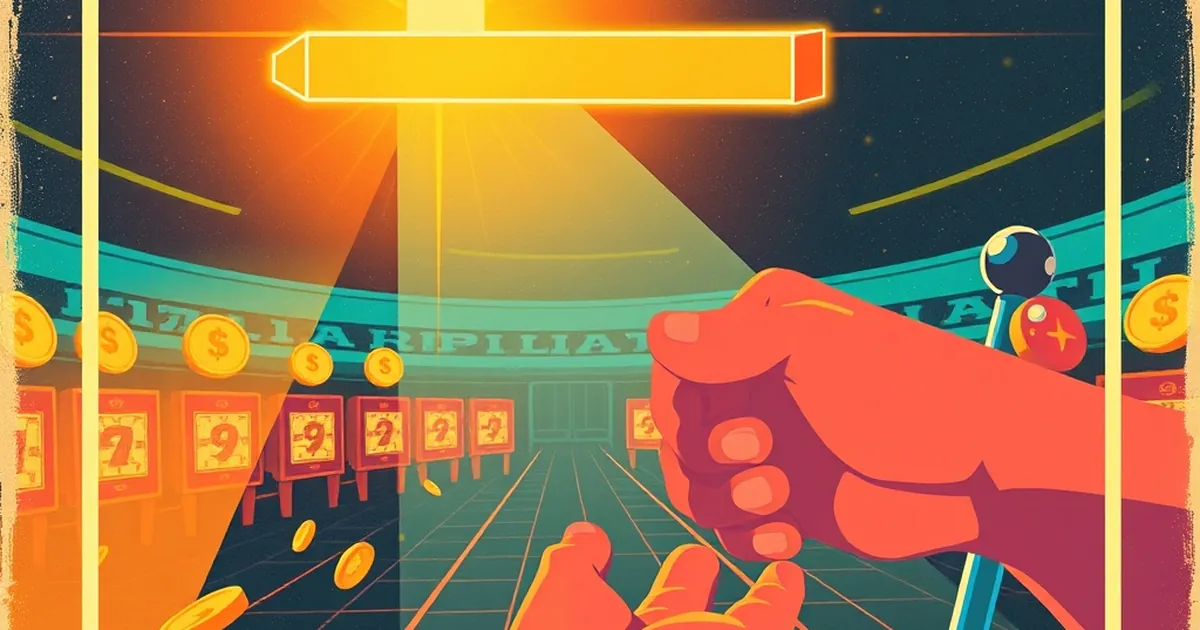
What happens when the reward you've been chasing suddenly doubles — but only for a mode that doesn't pay out in anything but pride? That's the question raised by the recent change to the skill-mode replay system, where an unlocked rewards bar at level two now doubles replays. It's a small mechanical tweak with outsized psychological weight, and it sits right at the intersection of behavioral economics, competitive play, and the strange human appetite for risk.
The Variable-Ratio Hook, Minus the Money
Behavioral psychologists have known for decades that unpredictable rewards drive persistent behavior more effectively than predictable ones. B.F. Skinner's work on variable-ratio reinforcement — where a reward arrives after an unpredictable number of responses — produced the highest and most durable response rates of any schedule he tested. The doubling of skill-mode replays at level two is a textbook example, even if no money changes hands. Players can't know exactly when the bonus lands, so they keep playing to find out.
What makes this iteration interesting is that it strips the mechanic down to its purest form. There's no cash-out, no house edge, no financial stake. What remains is the reward loop itself, and watching it operate in isolation is genuinely instructive.
Loss Aversion in a No-Stakes Setting
Daniel Kahneman and Amos Tversky's prospect theory showed that losses loom roughly twice as large as equivalent gains. That asymmetry shapes decisions even when the stakes are reputational rather than financial. In skill-mode play, a lost replay feels like a forfeited opportunity — a small but real loss — while a doubled replay reads as a windfall.
The level-two unlock amplifies this by creating a reference point. Before the unlock, players calibrate to a baseline number of replays. After it, that baseline shifts, and any return to the old number registers as a loss. This is the same anchoring effect that explains why a promotion feels like a raise and its removal feels like a pay cut, regardless of the actual numbers.
Skill, Chance, and the Illusion of Control
One of the more durable findings in decision science is that people overestimate their influence over outcomes that are partly random. Ellen Langer's classic 1975 experiments demonstrated that subjects behaved as though they could control chance events — choosing their own lottery tickets, for instance, made them demand more money to sell those tickets back.
Skill-mode play complicates this in a productive way. Genuine skill is involved, which makes the randomness feel more earned. But the replay bonus is not skill-contingent in the same way. Players who track their performance closely may notice the disconnect between effort and reward, and that noticing is itself a useful exercise in calibration — a chance to practice separating what you control from what you don't.
What Competitive Players Actually Learn
The practical takeaway isn't about the bonus at all. It's about the meta-skill of recognizing reward structures for what they are. A 2019 study in Nature Human Behaviour on reinforcement learning found that participants who explicitly modeled the reward schedule — rather than reacting to it — made measurably better decisions under uncertainty.
That's the forward-looking opportunity here. As more competitive and skill-based systems adopt layered reward mechanics, the players who thrive will be the ones who can name the loop they're in: variable reinforcement, loss aversion, anchoring, illusion of control. The doubled replays at level two are a low-stakes classroom for exactly that kind of literacy. The next time a reward bar shifts, the question worth asking isn't "how do I get more?" but "what is this structure designed to make me feel?" Answer that, and the replays take care of themselves.