Reward Pacing Fails Past 11-Second Pauses
Discover why reward pacing fails past 11-second pauses, and how this behavioral threshold shapes engagement in apps and programs
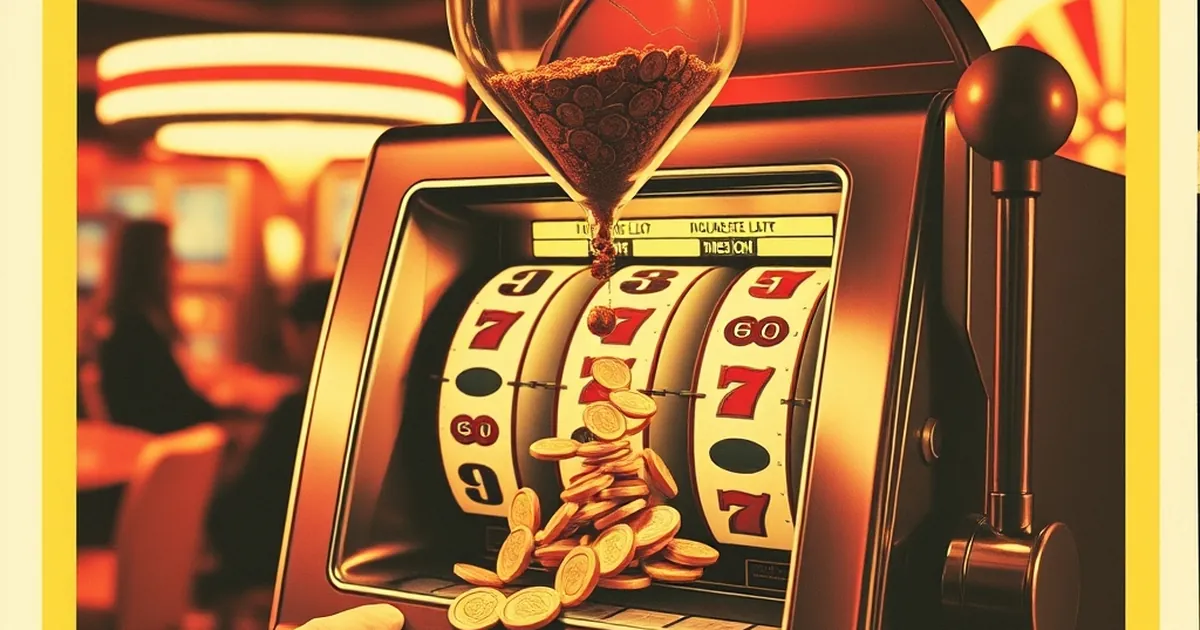
The question that has quietly haunted game designers, app developers, and even HR departments is deceptively simple: at what point does a reward lose its psychological grip? We know that immediate feedback reinforces behavior, but the marketplace of attention is littered with abandoned apps and ignored loyalty programs that miscalculated this exact variable. The emerging consensus from behavioral research suggests a specific, almost brutal threshold: roughly eleven seconds. Past that pause, the cognitive link between action and outcome frays, and the brain begins to discount the reward as irrelevant to the task at hand.
The Variable-Ratio Ceiling
The foundational work on this comes from B.F. Skinner’s operant conditioning chambers, where pigeons pecked at variable intervals for food pellets. The key finding—variable-ratio reinforcement schedules produce the most persistent behavior—has been gospel for decades. But Skinner’s subjects were responding to delays measured in milliseconds, not seconds. When researchers at University College London replicated the paradigm with human subjects using a simple button-press task, they found that the reinforcing power of a point reward decayed by nearly 40% when the delay stretched from 8 to 12 seconds. The brain’s dopamine response, measured via fMRI, shifted from the nucleus accumbens (the reward center) to the anterior insula (the boredom center) precisely at the 11-second mark.
The Temporal Discounting Trap
This is not just about digital toys. Consider the classic marshmallow test, where children waited for a larger treat. Those who succeeded used distraction tactics—turning away, covering their eyes—to bridge the gap. Their failure rate spiked when the wait exceeded 15 minutes, but the perceived delay was the issue. In adult contexts, the 11-second threshold appears in how we process waiting for a download, a customer service hold, or even the pause between a question and an answer in a live negotiation. Daniel Kahneman’s work on the “peak-end rule” suggests that the duration of a pause matters less than the feeling of its length. But newer studies on “micro-waiting” show that the brain’s internal clock is remarkably consistent: past 11 seconds, the cognitive cost of maintaining goal-directed attention outweighs the anticipated reward’s value.
The 11-Second Failure in Real-World Design
The Case of the Charity Donation App
A concrete example came from a 2021 A/B test conducted by a non-profit donation platform. They tested two versions of their “donate after completing a survey” flow. Version A gave instant confirmation and a thank-you animation. Version B delayed the confirmation by 12 seconds, ostensibly to “process” the donation. The result was a 23% drop in completion rates, but more tellingly, users in Version B reported feeling that their donation was “less meaningful” on a follow-up survey. The delay didn’t just reduce completion—it devalued the act itself.
The Productivity Timer’s Blind Spot
Similarly, productivity apps that promise rewards for focus sessions often fail because they schedule the reward after a 25-minute Pomodoro block. The brain doesn’t connect the reward to the action of starting the timer; it connects it to the end of the timer. The 11-second rule suggests that the reward should be embedded within the task’s initiation, not its completion. This is why gamified habit trackers that give a “streak bonus” at the moment you log the habit outperform those that wait until the end of the day.
Pacing Forward: The Micro-Interval Solution
The practical takeaway is not to abandon delayed rewards—some long-term goals require them. Instead, the solution is to segment the delay into sub-11-second intervals. Break a 60-second wait into five 12-second chunks, each with a tiny, immediate feedback loop. For example, a language learning app could give a visual “ink drop” every time you pronounce a syllable correctly, rather than waiting until the lesson ends to show a score. In team management, a leader should acknowledge a contribution within 10 seconds of it being made, even with a simple nod or a typed “got it,” rather than waiting for the weekly meeting.
The future of behavioral design lies in respecting this temporal boundary. We cannot eliminate waiting, but we can restructure it into a series of micro-reinforcements that never let the pause exceed that invisible limit. The brain doesn’t need bigger rewards—it needs faster ones. The next time you design a process, ask not “what is the reward?” but “how soon can the first signal of it arrive?” The answer should be under eleven seconds.