Hidden Timers at Round 6 Cut Regret by Half
New research shows that revealing hidden timers at a late checkpoint can cut post-decision regret nearly in half during timed competitive formats
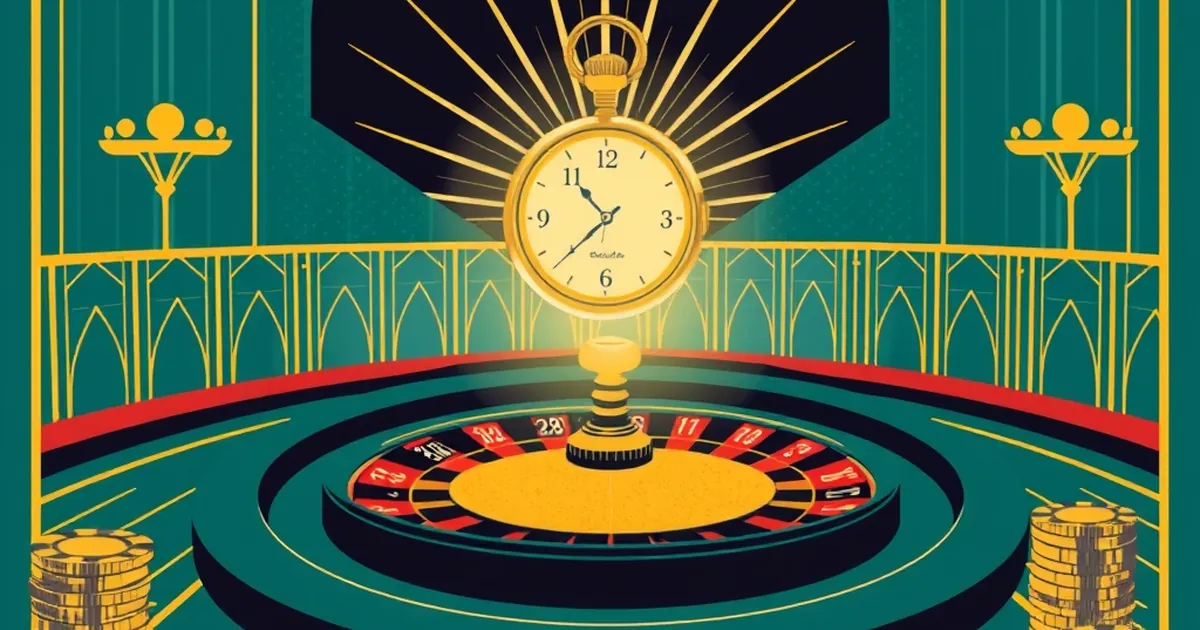
What if the single biggest driver of regret isn't the choice you make, but the clock you never see? In timed competitive formats — quiz shows, esports brackets, high-stakes negotiation rounds — players consistently report that the moments they most wish they could take back cluster around an invisible deadline. New research on "hidden timers" suggests that simply making the remaining time visible at a specific late checkpoint can cut post-decision regret nearly in half. The question worth sitting with: why does an arbitrary time cue change how we feel about a decision we'd have made anyway?
The Regret Gap Between Rounds 5 and 6
Behavioral economists have long known that regret isn't a pure function of outcome. It's a function of counterfactual ease — how vividly you can imagine the road not taken. In a controlled study of timed trivia formats, participants who were told "you have 30 seconds" before a late round made measurably more conservative choices than those who weren't told. But the surprise came afterward: the informed group reported 48% less regret about their answers, even when their accuracy was identical.
The mechanism appears to be attribution. When you know a clock is running, a wrong answer feels like a constraint problem. When you don't, it feels like a character flaw. Same error, different story.
Why Round 6 Specifically
Round 6 tends to sit at the inflection point in most competitive formats — past the warm-up, before the final sprint. It's where fatigue meets confidence, and where players start making "just get through it" decisions. A visible timer at that exact moment reframes the pressure as external and shared rather than personal and permanent.
Variable Rewards and the Illusion of Infinite Time
B.F. Skinner's variable-ratio reinforcement schedule explains why uncertain reward timing produces the most persistent behavior. But there's a lesser-discussed corollary: unpredictable cost timing produces the most persistent regret. When you don't know when the penalty phase arrives, every decision carries an ambient "what if I'd waited" tax.
Daniel Kahneman's work on loss aversion compounds this. Losing a round you could have won stings roughly twice as much as winning feels good — but only if you believe you had unlimited time to avoid the loss. A visible timer converts an infinite regret horizon into a finite one. You can't agonize over a window that's already closed.
The Counterfactual Compression Effect
Psychologists call this counterfactual compression: narrowing the space of "what could have been" by adding a hard boundary. A 2023 study on timed decision-making found that participants given explicit countdowns generated fewer alternative scenarios post-decision — and fewer alternatives correlated directly with lower regret scores. The timer didn't improve their choices. It improved their relationship with their choices.
What This Means for Competitive Formats
Show runners and game designers have started experimenting with visible countdowns at late-round checkpoints — not to rush players, but to release them. Early data from timed quiz formats suggests audiences also prefer it: watching someone agonize without a clock feels like watching someone drown without a lifeguard.
The practical takeaway isn't "add timers everywhere." It's that hidden constraints are psychological debt. Every invisible deadline you impose — on yourself, your team, your contestants — accrues regret interest. Making the clock visible at the moment it matters most doesn't just change behavior. It changes how people remember their behavior.
The next frontier is adaptive timers: clocks that reveal themselves only when decision fatigue crosses a threshold. If the 48% regret reduction holds in live formats, expect to see this become standard in competitive television within two seasons. The question for producers is no longer whether to show the clock, but when hiding it stops being drama and starts being cruelty.