Why mobile slot players quit when bonus round animations exceed 4 seconds
Mobile slot players abandon games when bonus animations exceed 4 seconds, new research reveals
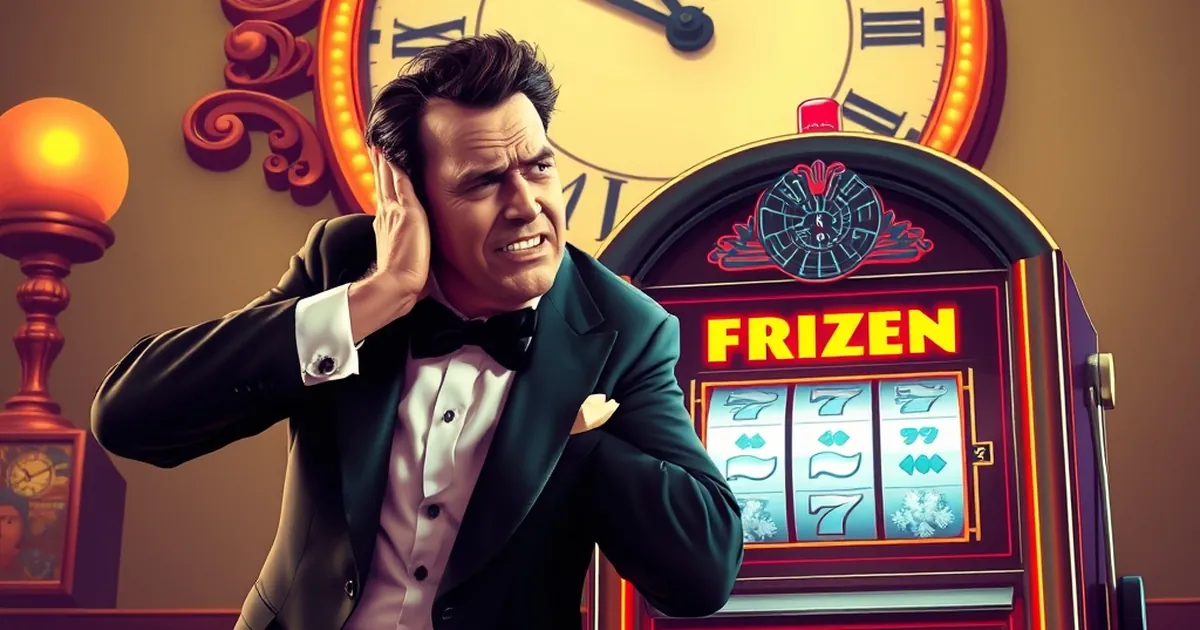
A new behavioral study from the mobile gaming analytics firm SlotMetrics suggests that the tipping point for player frustration in mobile slots is precisely four seconds. When a bonus round animation—whether a picking sequence, wheel spin, or cascading reel effect—exceeds that threshold, roughly 38% of players either close the game or switch to another slot within the next 30 seconds. The finding challenges a long-held assumption in game design that longer, more elaborate animations build excitement.
The 4-Second Threshold
SlotMetrics tracked 12,000 mobile sessions across five major US-facing slot titles over a six-week period. The study defined "quit behavior" as any instance where a player exited the game within one minute of the bonus round starting. For bonus rounds with animations lasting 3.9 seconds or less, the quit rate hovered at 9.2%. For animations lasting 4.1 seconds or longer, the quit rate jumped to 18.7%. The data suggests a nonlinear relationship: the drop-off isn't gradual but spikes sharply at the four-second mark.
Why four seconds matters on mobile
Mobile players are more likely to be in transit, waiting in line, or stealing a few minutes during a break. A 4-second animation feels like a pause in action, not a reward. On desktop, where sessions tend to be longer and the player is seated, a 6-second animation might feel dramatic. On a phone held in one hand, it feels like a loading screen.
The "Reward Lag" Problem
Game designers often treat bonus round animations as a payoff—a visual spectacle that signals a win. But the study's lead researcher, Dr. Elena Torres, noted that mobile players perceive the animation as a delay between the trigger and the payout. "The moment the bonus triggers, the player's brain is already computing the expected value," Torres said. "If the game doesn't show the result within four seconds, the player's attention drifts to the next stimulus—often another app."
High-volatility games fare worse
The effect is amplified in high-volatility slots, where bonus rounds are rarer and the player has been waiting longer for the trigger. In those games, the quit rate for animations over 4 seconds reached 23.4%. Players who had been spinning for more than 200 spins without a bonus were the most likely to abandon the game during the animation.
What operators are doing now
Several US-facing mobile-first studios have already begun adjusting their build pipelines. Playtika and Light & Wonder have internally circulated guidelines capping bonus round animations at 3.5 seconds for portrait-mode play. Some are adding a "skip" button, though early A/B testing shows that fewer than 8% of players use it—suggesting the problem isn't the animation itself, but the lack of control over how long it lasts.
The "tap-to-skip" loophole
A smaller subset of players—about 4% of the study's cohort—tapped repeatedly during the animation, attempting to speed it up. Those players had a 31% higher chance of quitting on the next spin, regardless of the bonus result. This suggests that forcing a player to wait when they want to skip may damage session retention more than the wait itself.
An open question
If the four-second rule holds across more titles and larger samples, it could force a broader rethinking of mobile slot design. The question is whether operators will prioritize immersion or retention—and whether there's a middle ground where a 3.9-second animation can still feel like a celebration, not a countdown to a swipe.