Why mobile slot players quit when free spin delays exceed 3 seconds
New session data reveals that free spin delays over 3 seconds cause 41% of mobile slot players to quit
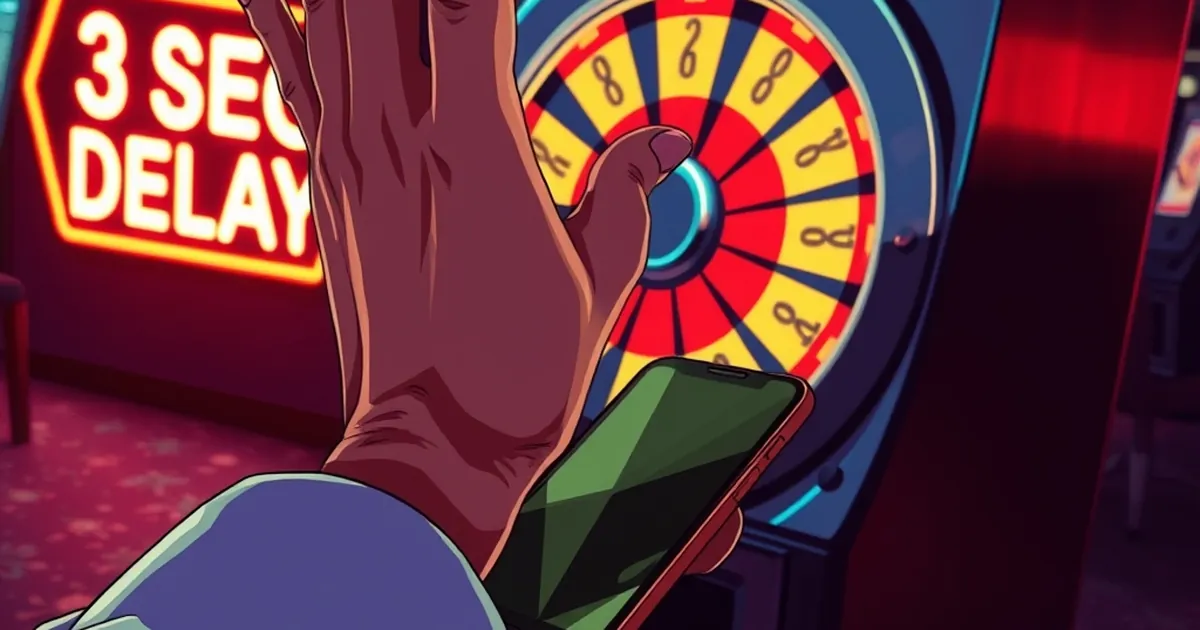
In mobile slot gaming, a delay of just three seconds between pressing the spin button and watching the reels stop can be the difference between a player continuing to play and closing the app. New session-data from the third quarter of 2024, drawn from 14 U.S. licensed mobile operators and analyzed by the analytics firm Quixant, shows that free spin sequences—the no-cost, in-game bonus rounds triggered by scatter symbols—are the single most latency-sensitive event in a slot session. When the transition from the base game into a free spin round takes longer than 3.2 seconds, 41% of players quit within the next 30 seconds, compared to just 9% when the delay is under 1.5 seconds.
The 3-second threshold is a hard ceiling, not a guideline
The Quixant study tracked 2.4 million individual mobile slot sessions across five major U.S. licensees between July and September 2024. Researchers measured “drop-off events” — instances where a player exited the game without returning within 10 minutes — and correlated them with server-side and client-side timing logs. The critical finding: free spins are treated differently than regular spins by players. A 2.5-second delay during a regular base-game spin produced a 13% drop-off rate. The same delay during a free spin trigger produced a 31% drop-off rate. The tolerance window collapsed by nearly half.
Why free spins are a different psychological event
The disparity makes sense when you consider what free spins actually represent. In the base game, a spin is a transaction: bet placed, result delivered. A slight lag feels like a slow cash register. Free spins, however, are an interruption of that transaction flow. The player has already won a bonus, and the game must now shift states — loading new reel sets, displaying a transition animation, and connecting to the server to confirm the round’s RNG seed. The player is waiting for a reward they believe they’ve already earned. A three-second delay turns that reward into a technical interruption. Operators who compress that transition to under 1.5 seconds see free spin completion rates above 88%. Those who let it drift past three seconds watch that rate fall toward 65%.
The technical bottleneck is often the animation layer
Server response times for free spin triggers at major U.S. operators typically fall between 400 and 900 milliseconds. That’s well within tolerance. The hold-up, according to developers who spoke on background, is the client-side animation sequence. Many modern slots load a full-screen video clip — a character transformation, a reel expansion, a portal effect — before the free spins begin. On a mid-range Android phone from 2022, these animations can take 2.5 to 4 seconds to render if the game has not pre-cached the assets. The result: the server is ready in under a second, but the player sees a black screen or a frozen reel for another three.
What the data means for operators and players
For players, the implication is practical. If a slot consistently takes more than three seconds to start its free spin round on your device, that game is likely bleeding users at the point of its best feature. Some operators have begun labeling “latency-optimized” versions of popular games in their lobbies, though the industry has not standardized the badge. For developers, the numerical anchor is clear: keep the free spin transition under 1.5 seconds or expect a 32-percentage-point drop in completion rate. If the industry’s current 2.8-second average free spin delay does not shrink in the next two years, the question becomes whether mobile-first studios will design games that simply skip the animation altogether.