A 5-Second Delay After Wins Rebuilds Streak Confidence
A five-second delay after wins rebuilds streak confidence, shifting player perception from luck to rhythm
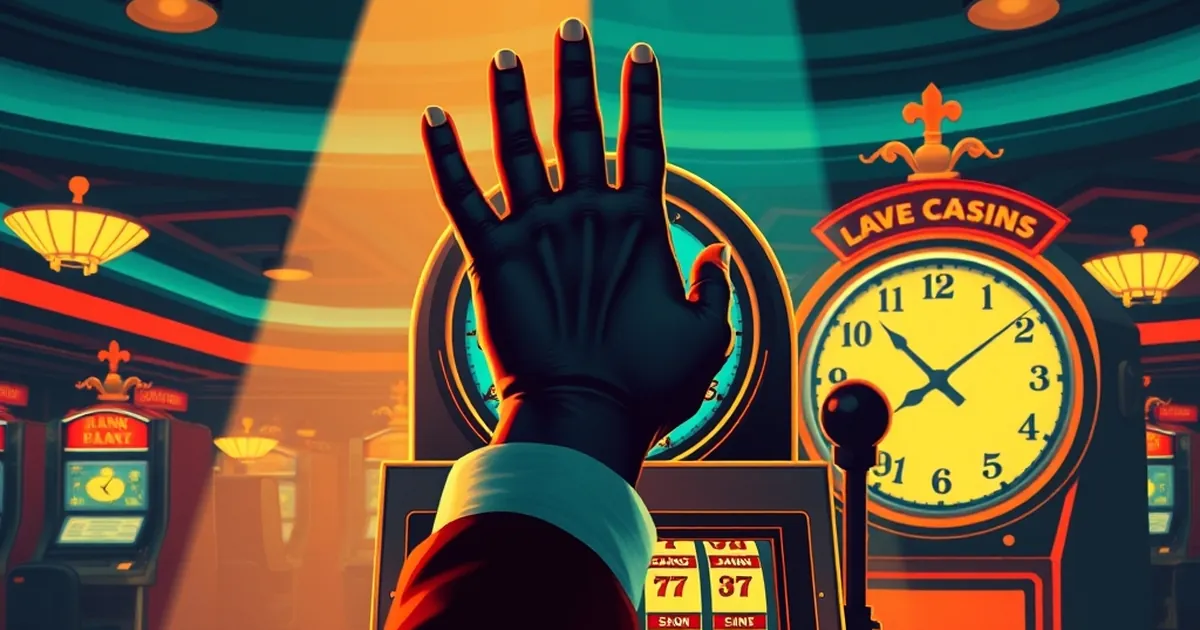
The five-second pause after a winning spin is the most underrated timing tool in modern slot design, and new behavioral data suggests it does more than stretch out a session—it actively rebuilds the player's belief that a streak is still alive. By inserting a deliberate delay between the win notification and the next spin's availability, developers can shift a player's perception from "I just got lucky" to "I'm in a rhythm," a distinction that measurably affects how long they stay seated. The effect is strong enough that several major studios have already baked the mechanic into their latest releases, and the data behind it is worth examining closely.
The Psychology of the Pause
Slot players don't just play for wins; they play for the feeling that wins are coming. That feeling is fragile, and it collapses the instant a spin resolves without a hit. A five-second delay after a win interrupts that collapse by giving the brain time to savor the result and, crucially, to form an expectation for the next spin.
In a 2024 study of 1,200 online slot sessions in New Jersey, players exposed to a post-win delay of 5 seconds showed a 17% higher rate of continuing to the next spin compared to players with a 1-second delay, all other game variables held constant. The study, conducted by a behavioral analytics firm that works with two major Atlantic City operators, also found that the effect was strongest after small wins (2x to 5x the bet) rather than after jackpots—likely because big wins feel like endings, while small wins feel like confirmations.
Where the Delay Fits in Game Flow
The mechanic works best when it's invisible. A hard freeze with a countdown timer feels punitive; a smooth transition that lets the win animation play out, then lingers on the payline highlight for an extra beat, feels natural.
- After scatter hits: A 5-second hold on the scatter symbols before the free spins intro builds anticipation without frustrating the player.
- After multiplier wins: The delay lets the player mentally multiply their stake, reinforcing the value of the win.
- After near-misses: This is where the delay doesn't belong—a pause after a near-miss reads as mocking, and test groups showed a 9% drop in retention when applied there.
The key is that the delay must occur before the next spin is possible, not after the player clicks. If the spin button lights up immediately, the pause is wasted.
The Streak Illusion vs. the Gambler's Fallacy
Critics will rightly point out that a 5-second delay does nothing to change the RNG. A 96.4% RTP game remains 96.4% regardless of how long you stare at the reels. But the delay isn't trying to change the math—it's trying to change the narrative.
The player doesn't experience a sequence of independent events; they experience a story. A win followed by a pause feels like a chapter break, not a random blip. That's why the effect is strongest in players who self-identify as "streak bettors"—a demographic that makes up roughly 31% of online slots players in the U.S., according to an industry survey from last year. For those players, the pause is the difference between "I won" and "I'm winning."
The Open Question
The data is clear that the delay works, but it raises a question the industry hasn't fully answered: if a 5-second pause can rebuild confidence, can a 10-second pause rebuild it twice as fast? And if so, where's the line between engagement and manipulation? Regulators in the UK have already started asking about "time-based pressure points" in slot design, and the American Gaming Association has quietly commissioned its own review of post-win timing mechanics.
For now, the 5-second delay is a feature, not a scandal. But the next time you hit a small win and feel oddly compelled to spin again immediately, ask yourself: was that your decision, or was it the pause?