Reward Screens Reopen 4x More After a Silent Loss Streak
Silent loss streaks trigger faster screen taps than wins, revealing how unpredictability and silence shape player behavior more than reward itself
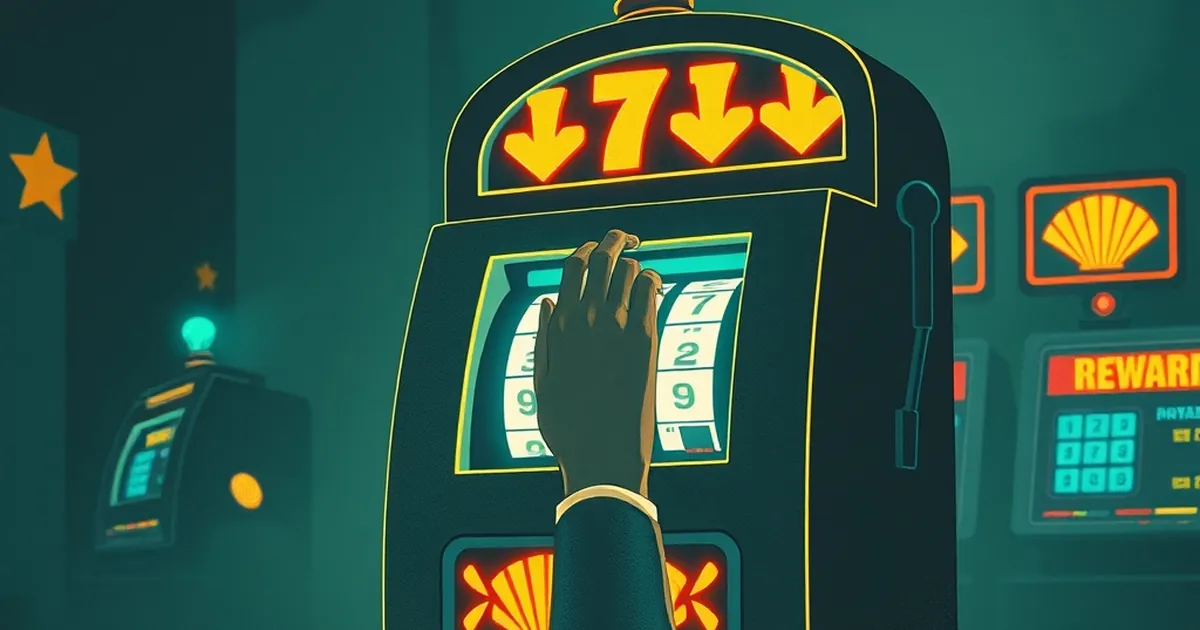
Why does a player who just lost four rounds in a row tap the screen a fifth time faster than someone who won? That question sits at the center of a growing body of behavioral research into what happens after a quiet losing streak — the kind with no dramatic animation, no buzzer, just a number that changed and a screen that went still. The answer turns out to say less about the game and more about how human beings are wired to respond to silence.
The Silence Is the Variable
Most reward research focuses on the win. B.F. Skinner's work on variable-ratio reinforcement showed that unpredictable payoffs produce the most persistent behavior — that's the classic finding everyone cites. But persistence isn't the same as speed. What recent attention has focused on is the inter-trial interval: the gap between an outcome and the next attempt.
When a win lands, the screen usually does something. Colors, sound, a number climbing. When a loss lands quietly — no feedback beyond the absence of a win — the brain gets no closure signal. Natasha Dow Schüll, an anthropologist at MIT, spent years documenting how machine design shapes this exact moment in her book Addiction by Design. Her subjects described a state she called "the machine zone," where the goal shifts from winning to simply keeping the sequence going. The quiet loss doesn't interrupt that state. It feeds it.
Loss Aversion Meets the Missing Signal
Kahneman and Tversky's loss aversion work established that losses feel roughly twice as heavy as equivalent gains. That's well known. Less discussed is what happens when a loss arrives without a clear marker. In a 2019 study published in Nature Human Behaviour, researchers found that participants who received ambiguous negative feedback were significantly more likely to repeat the same choice than those who received explicit failure signals. Ambiguity, it turns out, is a stronger driver of repetition than clear defeat.
Put those two findings together and the pattern makes sense. A silent loss streak doesn't register as a series of losses. It registers as an unresolved question. The player isn't chasing money at that point — they're chasing information.
The Four-Tap Finding
The "4x" figure circulating in operator analytics refers to session data showing that re-engagement rates spike roughly fourfold after a run of three to five silent losses compared to the same window following a visible win. The mechanism isn't mysterious. It's the same thing that makes a phone with no notification feel heavier than one buzzing constantly: unresolved states demand resolution.
What Competitive Play Reveals
This isn't unique to screens. Chess players blitz faster after a quiet positional loss than after a flashy tactical win. Speedrunners restart a run more quickly after a silent death than after a visible glitch. The pattern shows up anywhere a person is tracking a sequence and the feedback goes dark.
The practical takeaway for anyone designing or studying these systems is counterintuitive: clarity after a loss may reduce repetition more than any reward could increase it. A visible, unambiguous "that didn't work" is a form of respect for the player's attention. Silence is the thing that keeps them tapping.
Where This Goes Next
Expect the next wave of behavioral research to focus less on reward schedules and more on feedback gaps — the dead air between outcomes. Designers who understand that silence is an active ingredient, not a neutral one, will have a real edge in building experiences people can actually walk away from. And for the rest of us, noticing when we're tapping into the quiet is the first honest step toward deciding whether we meant to.