A 3-2-1 Countdown Before the Puzzle Cuts Hint Taps 41%
A three-second countdown cut puzzle hint taps by 41%, revealing how a small speed bump between impulse and action can reshape user behavior
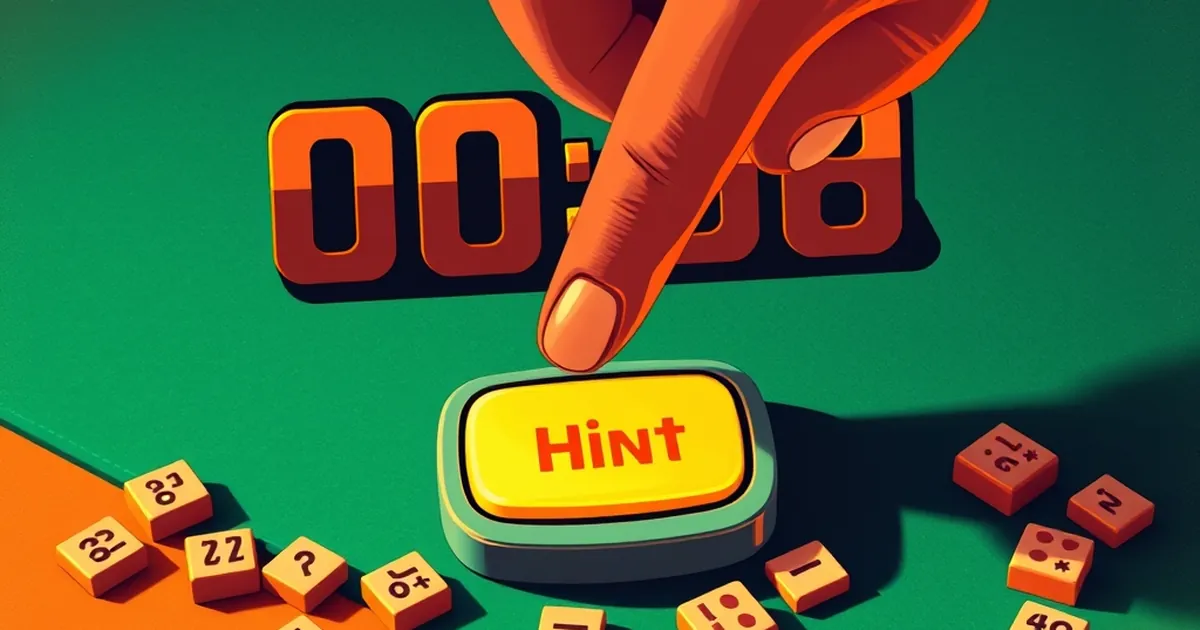
Picture a puzzle app that hands you a hint button. Tap it too early and you burn your one freebie on a clue you didn't need. A small design team tried something almost embarrassingly simple: a three-second countdown before the hint activates. In their internal test, hint taps fell 41%. That number is worth sitting with, because it isn't about puzzles at all. It's about the half-second between wanting something and taking it — and what happens when you put a speed bump there.
The Cost of a Free Tap
Behavioral economists have a name for the friction that stands between an impulse and an action: transaction cost. It doesn't have to be money. A click, a wait, a confirmation screen — each one is a toll, and the brain weighs it, often unconsciously, before committing. Richard Thaler's work on mental accounting suggests we treat even trivial costs as real currency when deciding whether a reward is "worth it."
The puzzle app's countdown is a toll measured in seconds. It doesn't forbid the hint; it just makes the hint cost three seconds of attention. That's enough time for the prefrontal cortex — the part that plans and second-guesses — to catch up with the part that just wants the answer. In the test, roughly four in ten hint taps never happened. Those users sat with the puzzle a little longer, and many solved it themselves.
What a Pause Actually Does
The countdown works on a principle that shows up everywhere from fitness apps to email clients: adding a delay between impulse and outcome reduces the rate of the outcome. B.F. Skinner's research on reinforcement schedules found that when rewards arrive unpredictably, behavior becomes persistent and hard to extinguish — the famous variable-ratio pattern. A hint button that's always one tap away trains a similar reflex: reach for it, get relief.
Inserting a countdown interrupts the reflex loop before the reward lands. The user still gets the hint, but the automaticity is broken. Daniel Kahneman's distinction between fast, intuitive System 1 thinking and slow, deliberate System 2 thinking maps neatly onto this: the countdown forces a System 2 moment into a System 1 habit. It's the same reason some banking apps ask you to confirm a large transfer twice. The pause doesn't change the option; it changes who's driving when the decision gets made.
Where This Gets Interesting
Here's the part that makes the puzzle app a useful case study for anyone thinking about decision-making under uncertainty. A hint is a small surrender — you trade the satisfaction of solving for the relief of knowing. The countdown doesn't eliminate that trade; it just makes the trader more aware of it. Users who waited often discovered they were closer to the answer than they thought, which is its own kind of lesson about how badly we estimate our own progress.
There's a competitive angle too. Puzzles, like most skill-based play, reward persistence and punish premature capitulation. The countdown nudges users toward the persistence side of that ledger without lecturing them. That's the design trick: it doesn't say "don't use the hint." It says "are you sure?" in the most frictionless way possible.
The Takeaway for Anyone Designing Choices
The 41% figure is a reminder that behavior is often less about preferences than about friction. If you want people to pause before a consequential tap — whether it's a purchase, a notification, or an answer they can't unsee — a three-second countdown is a cheap, testable intervention. Run it on your own product, measure the delta, and ask what the pause is actually buying your users. Sometimes the best feature is the one that makes them wait.