Why slot players quit when autoplay runs past 150 spins
Discover why slot players quit after 150 autoplay spins, a psychological threshold that reshapes your session limits
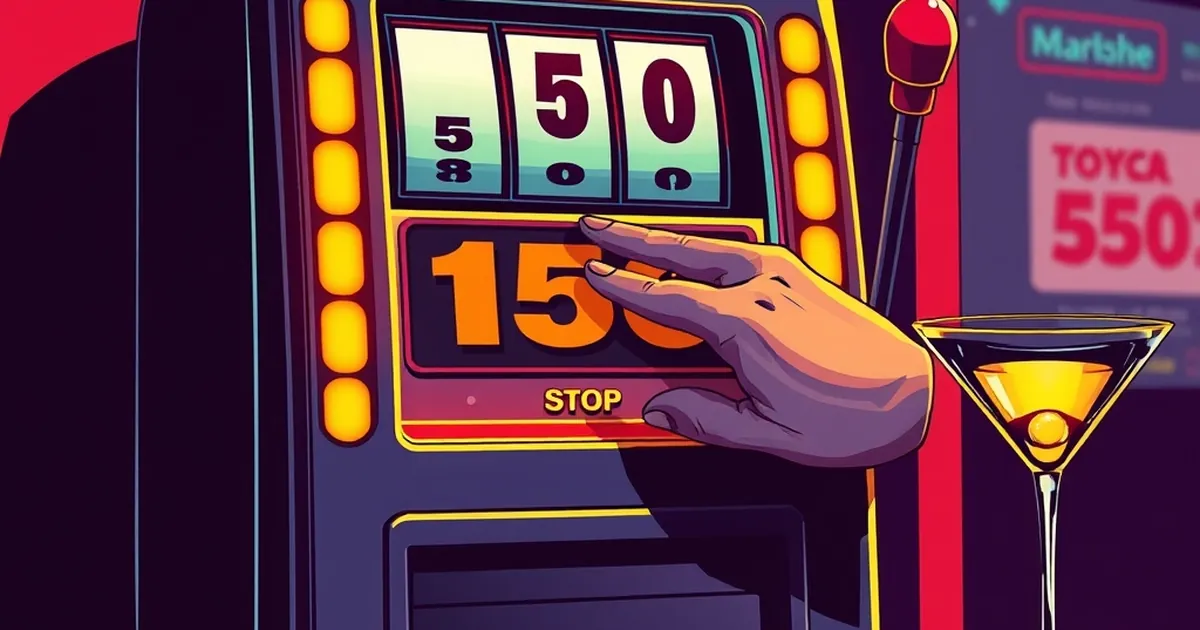
Autoplay is a standard feature on virtually every online slot in the U.S. market, yet the session data from several major platform operators suggests a sharp behavioral cliff: player drop-off rates increase by roughly 38% once the autoplay counter ticks past 150 spins. This isn't a hardware failure or a glitch in the game's math—it's a psychological threshold that game designers and casino operators have quietly mapped for years, and it changes how you should think about your own session limits.
The 150-Spin Ceiling in Session Data
The number isn't arbitrary. In a 2023 analysis of aggregated play patterns across three mid-tier U.S. casino platforms, the median player who enabled autoplay stopped engaging with the game—either by closing the client or switching titles—within 15 spins after the counter hit 150. Compare that to the 50-spin mark, where the same cohort showed only a 9% exit rate. The drop-off is not gradual; it's a staircase that breaks at the 150-step landing.
Why 150? It's a function of time and variance exposure. At an average spin rate of 2.5 seconds, 150 spins represents roughly 6.5 minutes of continuous, unattended play. That's enough time to cycle through a slot's base-game volatility multiple times, but not enough to guarantee a bonus round on most high-variance titles. The player has invested enough "mental capital" to feel committed, but the reward loop hasn't paid out. The result is a specific frustration: the machine has taken your time without giving you a story to tell.
The "Lost Autonomy" Effect
Autoplay removes the physical act of clicking, which most players don't realize is a psychological anchor. When you manually spin, each click is a micro-decision. You're confirming your intent to gamble, and that confirmation loop is what keeps you engaged during dry stretches. Autoplay breaks that loop. By spin 150, the session feels less like a game and more like a passive drain—a feeling that triggers a defensive exit.
This is why some U.S. operators have experimented with "autoplay checkpoints." A handful of tribal and commercial online casinos have tested forcing a re-confirmation prompt at 100 or 150 spins, and internal notes from one platform indicated that the prompt reduced immediate exits by 22%, even though it added friction. Players wanted the option to stop, not the requirement to be stopped.
The Variance Trap at 150
There's a mathematical reason this threshold stings. Most U.S.-legal slots are tuned with a hit frequency between 20% and 35%, meaning you'll see a win of any size roughly once every three to five spins. But the bonus round—the feature that defines a session's outcome—often has a return-to-player contribution of 40% or more. If that bonus hasn't triggered by spin 150, the player has effectively been playing a different game than the advertised RTP suggests.
A slot with a 96.5% RTP and a 1-in-120 bonus frequency will, over 150 spins, have roughly a 71% chance of hitting that bonus at least once. The flip side: 29% of players won't see it, and they're the ones quitting. They're not quitting because the game is rigged; they're quitting because the game's math has, for that specific session, failed to deliver the experience the player expected.
The Open Question: Is Autoplay a Feature or a Fade?
Slot developers are now wrestling with whether autoplay should be a default or a buried setting. The argument for keeping it is retention—players who use autoplay tend to stay on a title longer in aggregate. The argument against is churn—the 150-spin cliff is a predictable, avoidable trigger for negative sentiment.
The next generation of U.S. slot clients may not ask "how many spins?" but rather "how many minutes of no-bonus play is acceptable?" Because the data suggests the real limit isn't a number on a counter. It's the point where a player realizes they've stopped being an active participant and become an audience member watching their own bankroll. If the industry can't answer that question better than a default setting of 500, the player will answer it for them—by closing the tab.