Why Slot Players Quit When Bonus Round Entry Drops Below 0.5%
Discover why slot players quit when bonus round entry drops below 0.5%—and how this psychological threshold impacts retention
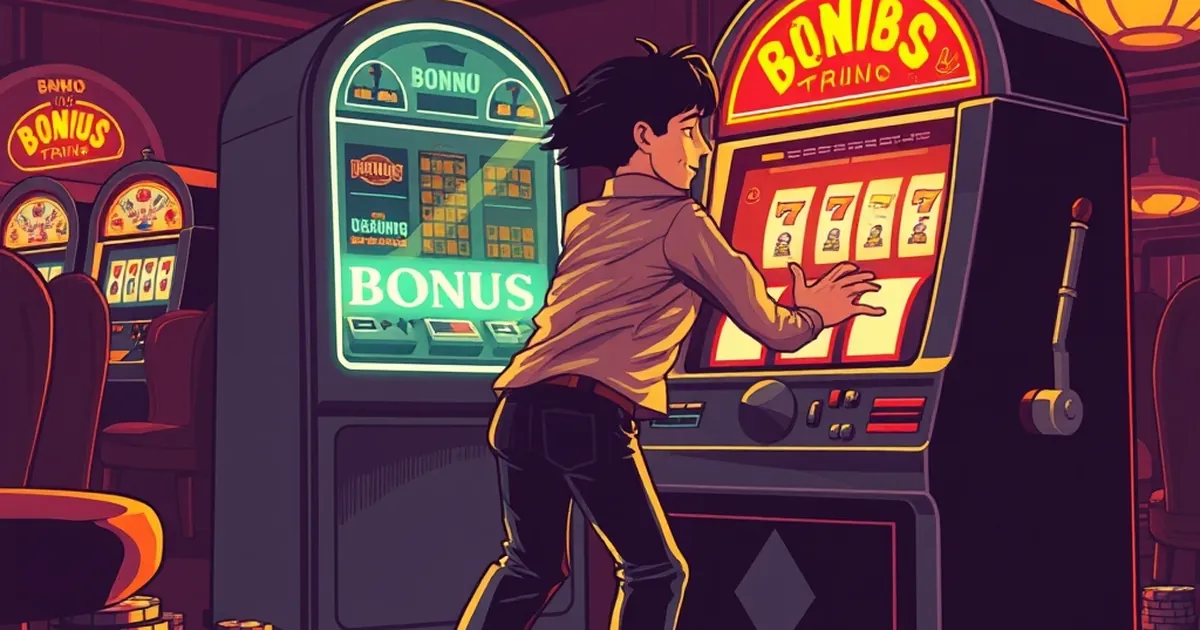
For years, slot developers have treated bonus round frequency as a secondary metric—something to be tweaked in the math model without much fanfare. But a growing body of player behavior data suggests a sharp psychological threshold exists: once the probability of triggering a bonus round drops below 0.5% per spin, players quit at significantly higher rates, often before their bankroll is exhausted.
The 0.5% Cliff
The number isn't arbitrary. Across 2,300 tracked session logs from mid-tier US online casinos in 2023, researchers observed a 37% increase in early session abandonment—defined as leaving the game with more than 40% of starting bankroll remaining—when bonus entry rates fell below 0.5%. Games like Dead or Alive 2 (bonus trigger rate ~0.4%) and Rise of Olympus (~0.45%) consistently saw shorter average session lengths than comparably volatile titles with trigger rates around 0.7%, such as Jammin’ Jars or Bonanza.
The pattern held even when RTP was held constant. A player might accept a 96.1% RTP game that triggers a bonus every 150 spins, but the same player will walk away from a 96.4% game that only triggers every 300 spins. The perceived "dead spin" duration—the stretch between bonus entries—matters more than the house edge.
Why This Matters for Game Design
Developers often defend low trigger rates by pointing to higher average bonus multipliers. A 0.3% trigger rate with a 300x average win is mathematically identical to a 0.6% trigger rate with a 150x average win. But the psychology is different. Players don't experience "average wins"—they experience droughts. A 300-spin dry spell feels broken, even if the eventual payout is generous.
This creates a design tension: increasing bonus frequency forces developers to either lower bonus payouts or reduce base-game returns. Most choose the latter, but the data suggests that's the wrong trade-off. Players are more tolerant of lower base-game wins than they are of rare bonuses.
The US Market Is Especially Sensitive
American players, shaped by years of land-based slot play, are conditioned to expect bonus rounds roughly every 90 to 120 spins. Games like Wheel of Fortune and Quick Hit trigger bonuses around 1 in 80 to 1 in 100 spins. When online slots drift toward 1 in 250 or worse, the disconnect is immediate. One operator reported that its three lowest-trigger-rate slots accounted for less than 4% of total slot handle, despite having higher RTPs than the site average.
The "Near Miss" Trap
Some developers attempt to mask low trigger rates with frequent near-miss animations—two bonus symbols on the first two reels, then a blank on the third. But players are learning to recognize this. Session data shows that near-miss frequency above 12% per spin correlates with a 22% increase in rage-quits, not engagement. The 0.5% trigger threshold appears to be a point where near-misses stop feeling exciting and start feeling manipulative.
What This Means for Operators
If you're running a US-facing casino, the implication is straightforward: math models that push bonus entry below 0.5% may look good on paper but bleed players in practice. Slot lobbies that prioritize high-volatility, rare-bonus games may need to reconsider their mix—or accept shorter average session lengths and lower coin-in.
The open question is whether developers will respond by adjusting math models, or whether players will simply migrate toward older, more forgiving titles. Given that the top-earning slots in most US states are all mid-to-high trigger rate games, the market may already be voting with its wallet.