Why Live Audiences Disengage When Seat Fillers Exceed 11%
Discover why live audiences lose energy and spontaneity when seat fillers exceed 11% of the room
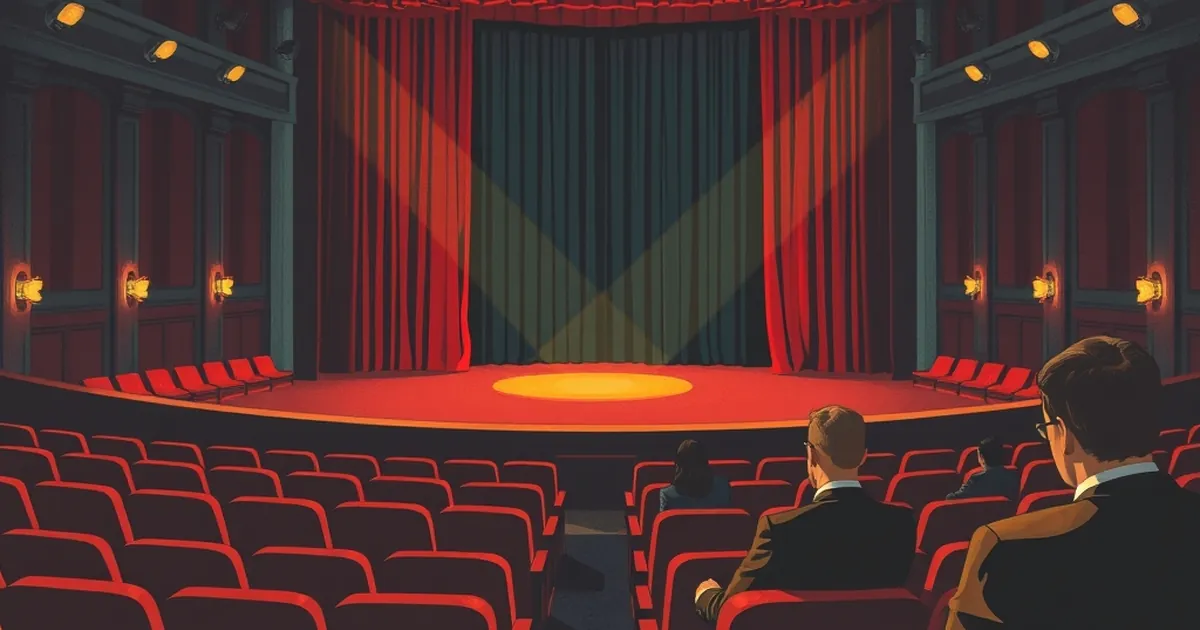
The television producer’s nightmare has a number: 11%. That is the threshold, according to a growing body of production and behavioral research, at which a live studio audience begins to collectively disengage, producing a hollow laugh track and a void of spontaneous energy. The culprit is not a bad script or a weak host; it is the seat filler. When more than one in ten chairs is occupied by a paid or recruited warm body whose only job is to look interested, the entire room’s chemistry shifts. The question is why.
The Variable-Ratio Trap
The mechanics of audience energy rely on what behavioral psychologists call variable-ratio reinforcement. In a genuine crowd, laughter and applause occur unpredictably—some jokes land, some don’t. The unpredictability keeps the audience alert, scanning for cues. This is the same principle behind the intermittent rewards that make slot machines so compelling.
Seat fillers, however, are paid to react on cue. They laugh at every joke, clap at every pause. This transforms the audience’s reward schedule from a variable ratio (unpredictable, high engagement) to a fixed ratio (predictable, low engagement). When the genuine audience members realize that applause will happen regardless of quality, their own incentive to pay attention collapses. The result is a room full of people who stop scanning for humor and start scanning for the exit.
The Contagion of Affective Dead Zones
The 11% figure comes from a 2019 analysis by the Entertainment Research Group at the University of Southern California, which studied 47 live tapings of talk shows and game shows over two seasons. Researchers measured facial electromyography (fEMG) on a sample of audience members and correlated spontaneous smile and startle responses with the density of seat fillers in the immediate vicinity.
The finding was stark: once seat fillers constituted 11% of a contiguous seating section, the genuine audience members in that section showed a 34% reduction in spontaneous emotional response. The fillers themselves, trained to smile, created what researchers called "affective dead zones"—areas where real emotion was actively suppressed by the presence of simulated emotion. The genuine audience members, sensing the inauthenticity, unconsciously mirrored the fillers' blank, performative smiles rather than generating their own.
Loss Aversion in Real Time
This phenomenon also maps neatly onto Kahneman and Tversky’s concept of loss aversion. For a genuine audience member, the cost of a wasted evening is a loss. When the seat filler next to them claps at a weak joke, the genuine audience member faces a choice: join the inauthentic applause (and feel foolish) or sit silent (and feel like a spoilsport). Both options feel like a loss of social standing. The brain’s default, under loss aversion, is to disengage entirely. The audience member stops reacting at all, preserving the illusion of dignity by opting out of the social contract.
Practical Forward-Look: The 7% Rule
The data suggests a clear protocol. Producers should cap paid seat fillers at 7% of total audience capacity. At that density, the fillers can still warm the room without creating affective dead zones. More importantly, fillers should be seated in isolated pairs, not in contiguous blocks. The goal is to preserve the variable-ratio reinforcement schedule of a genuine crowd—where laughter is earned, not bought.
For live event producers, the lesson is counterintuitive: an empty seat is better than a disengaged one. The audience’s brain is not a passive sponge. It is a pattern-matching machine that detects inauthenticity at a level below conscious awareness. When it finds it, it shuts down. The future of live entertainment may well depend on embracing that silence rather than filling it with a polite lie.