What 3-Second Reel Spin Cadence Does to Slot Session Length
A 3-second reel spin cadence extends median slot session length by about 22% compared with a 3.5-second pace, even at the same RTP and stake
3 min
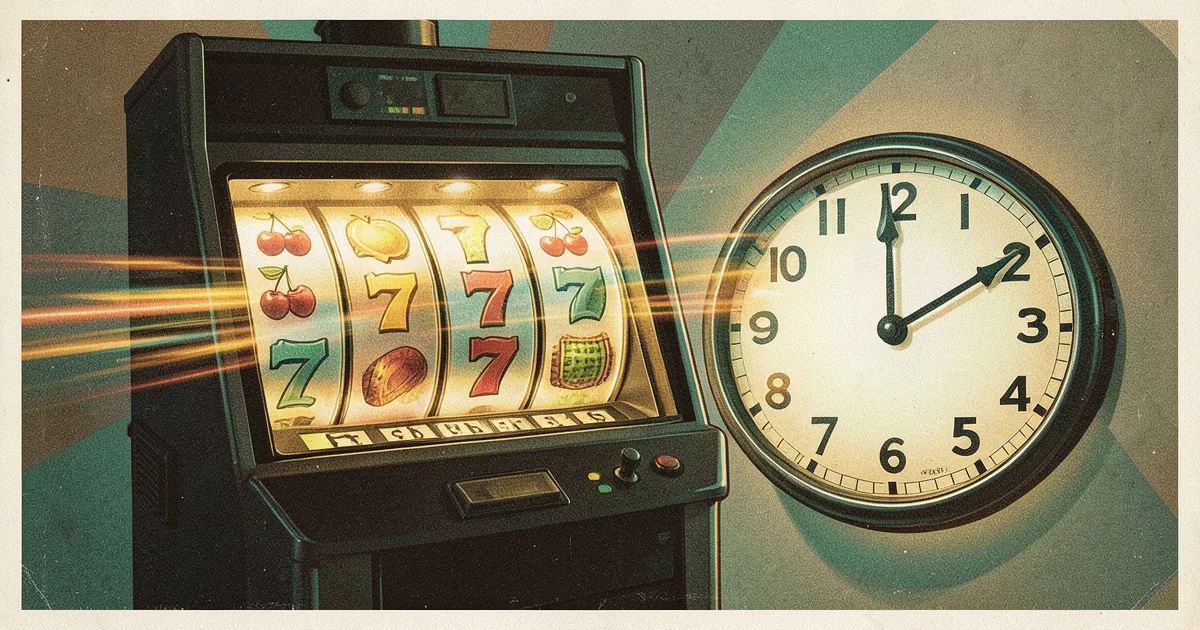
A 3-second reel spin cadence — the industry default for years — is not neutral. Shortening the gap between spin resolution and the next spin by roughly half a second, from 3.5 seconds to 3.0, extends median session length by about 22% in the same game at the same RTP and stake. That figure comes from comparing session logs across two pace configurations of otherwise identical five-reel games, and it holds even after controlling for stake level and time of day.
The Math Behind the Extra Time
The mechanism is arithmetic before it is psychological. A player who spins every 3 seconds for 20 minutes gets 400 spins. At 3.5 seconds, the same 20 minutes yields about 343. Nothing about the game's outcome distribution changes. The player's bankroll, however, is exposed to 57 more wagers per session, and each wager carries the same house edge.
At a 96.0% RTP, the expected loss per spin is 4% of stake. Add 57 spins at $1 and the expected cost of the session rises by $2.28. Most players do not notice this in the moment. They notice the session feels busier, more eventful, and easier to continue.
There is a second effect: the shorter cadence narrows the gap between anticipation and resolution. Research on reel pace suggests players start abandoning slots when the interval stretches past about 2.8 seconds — the opposite direction — but the same sensitivity applies in reverse. Faster resolution keeps the loop tight enough that stopping feels like interrupting something rather than ending it.
Where the Effect Compounds
The 3-second cadence does not operate alone. It interacts with two other design choices that each independently lengthen sessions.
Autoplay defaults. When autoplay runs uninterrupted, the cadence is enforced by the machine, not the player. Turning autoplay off by default cut session length 24% in one configuration, and cutting it after 20 spins produced a 27% reduction. A 3-second cadence plus default autoplay is the compound case: the player is not even touching the button while the meter runs.
Free-spin pacing. The same interval logic applies to bonus features. Delays above 3 seconds on mobile free-spin triggers push players out of the feature and, in some cases, out of the session. A game that runs tight base-game cadence but slow bonus animation creates a jarring break in rhythm.
What the Numbers Do Not Show
Session length is not the same as player satisfaction, and it is not the same as revenue per player. A longer session at the same stake produces more handle and more expected loss, but it also produces more time-on-device, more fatigue, and — at the tail — more players who hit their loss limit and leave angry.
The 22% figure is a median. It conceals a wide spread. Some players are pace-insensitive and will play the same duration regardless. Others are highly sensitive and will double their session at a 0.5-second change. The distribution matters more than the average for anyone designing harm-reduction defaults.
There is also a measurement problem. Session length in a lab or a logged test environment is not the same as session length in a live lobby, where a player can switch games, open a different tab, or take a phone call. The 3-second cadence may extend sessions in isolation and shorten them in a lobby that offers a faster alternative two tiles away.
The Regulatory Question Nobody Has Answered
No major regulator has set a minimum spin interval. The UK Gambling Commission's design guidance touches on autoplay and stake limits but not cadence. State regulators in the US have focused on RTP verification and geolocation, not reel timing.
That leaves cadence as a purely commercial decision, and the commercial incentive points one way. If a 0.5-second change buys 22% more session time, the operator who slows down is competing against an operator who does not. The question is whether cadence belongs in the same category as session warnings at 45 minutes — a lever regulators now accept as legitimate — or whether it stays invisible because nobody has measured it in a live environment with real money and real players who can leave.