The 40-Second Lobby Gap Is Where Momentum Quietly Dies
The forty-second pause between live contests is where momentum quietly dies and the psychology of the next decision gets written
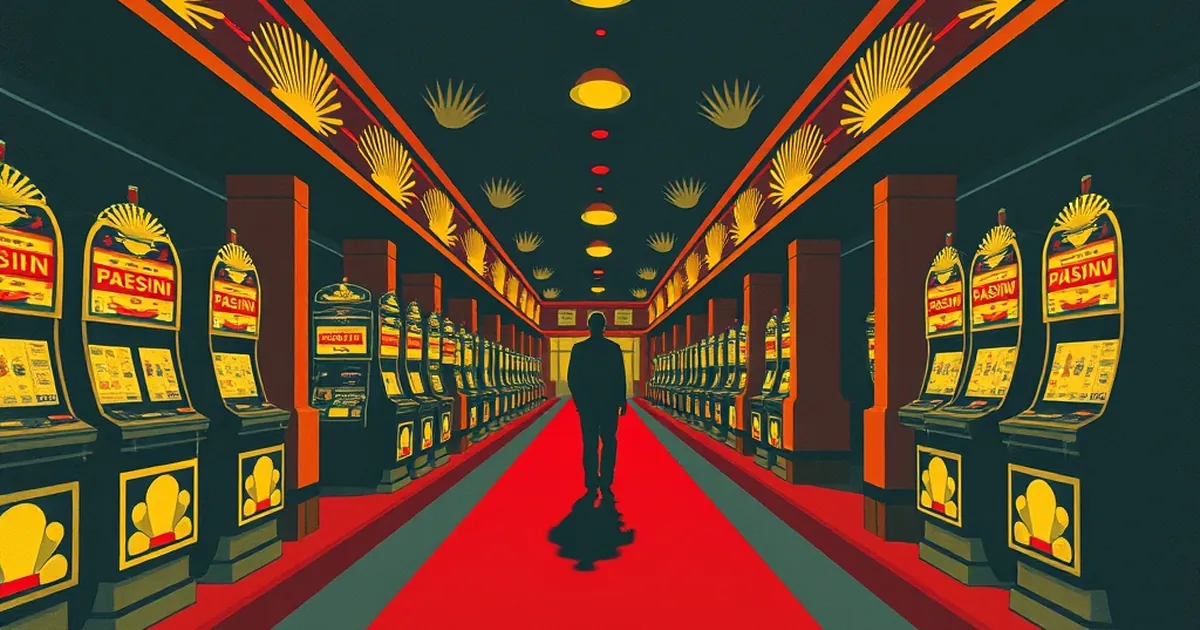
There is a stretch of time between one contest ending and the next beginning that almost nobody studies, because it does not look like anything. The screen goes still. The crowd noise drops. A person who was fully absorbed thirty seconds ago is now just standing there, holding a decision they haven't made yet. I keep coming back to that interval — roughly forty seconds in most live formats — because it seems to be where momentum quietly dies, and where the psychology of the next choice gets written.
The Gap Is Not Empty
Behavioral economists have a name for what happens in unstructured pauses: they call it a hot-cold empathy gap. George Loewenstein at Carnegie Mellon described how people in a "hot" state — excited, invested, mid-action — systematically mispredict what they will want once they cool down. The forty-second lobby gap is a manufactured cold state. You were hot. Now you are not. And the person standing in that gap is a different decision-maker than the one who was just competing.
This is why the gap matters more than the game. It is a reset button that nobody designed on purpose.
Variable Rewards Need Continuity to Work
B.F. Skinner's variable-ratio reinforcement schedule — the finding that unpredictable rewards produce the most persistent behavior — has one underappreciated requirement: the behavior has to keep happening. Pigeons don't peck harder if you take the key away between trials. The unpredictability only binds when the loop is unbroken.
Forty seconds is long enough to break the loop and short enough that the person doesn't leave. That is an unusually precise window. It's long enough to think, short enough to stay. Which means it's long enough to talk yourself out of something and short enough that you probably won't.
What Forty Seconds Actually Costs
Consider a concrete case from competitive environments outside the floor. In professional esports, coaches have measured what they call "tilt windows" — the minutes after a loss where a player's decision quality measurably drops. The finding that surprises people isn't that tilt exists. It's that tilt is worst not immediately after the loss, but after a short pause. The immediate reaction is still hot and fast. The pause lets the loss sink in, and the next decision gets made by someone who is now thinking about the last one.
Kahneman's loss aversion compounds this. A loss registers roughly twice as hard as an equivalent gain. If you give someone forty seconds to sit with that asymmetry, they will make the next call from a defensive posture rather than an open one.
The Design Question Nobody Asks
Most operators in this space obsess over the game itself — the mechanics, the visuals, the payout structure. Very few study the seam between rounds. But the seam is where the player's relationship to the next round gets decided.
Ask the uncomfortable question: is the gap there to give people a breather, or is it there because a breather is the most reliable way to keep someone in their seat? Those are not the same thing, and the honest answer is usually both.
What Comes Next
The frontier here isn't faster games. It's better-designed transitions. Expect to see more attention paid to what fills the forty seconds — not with noise, but with something that respects the fact that a real decision is being made in there. The operators who figure out how to make the gap honest will hold onto people longer than the ones who just make it shorter.