Rebuy Momentum Survives Loss Four—Then the 40-Second Lobby Kills It
Discover why a 40-second lobby can kill gaming momentum that even a painful loss couldn't shake
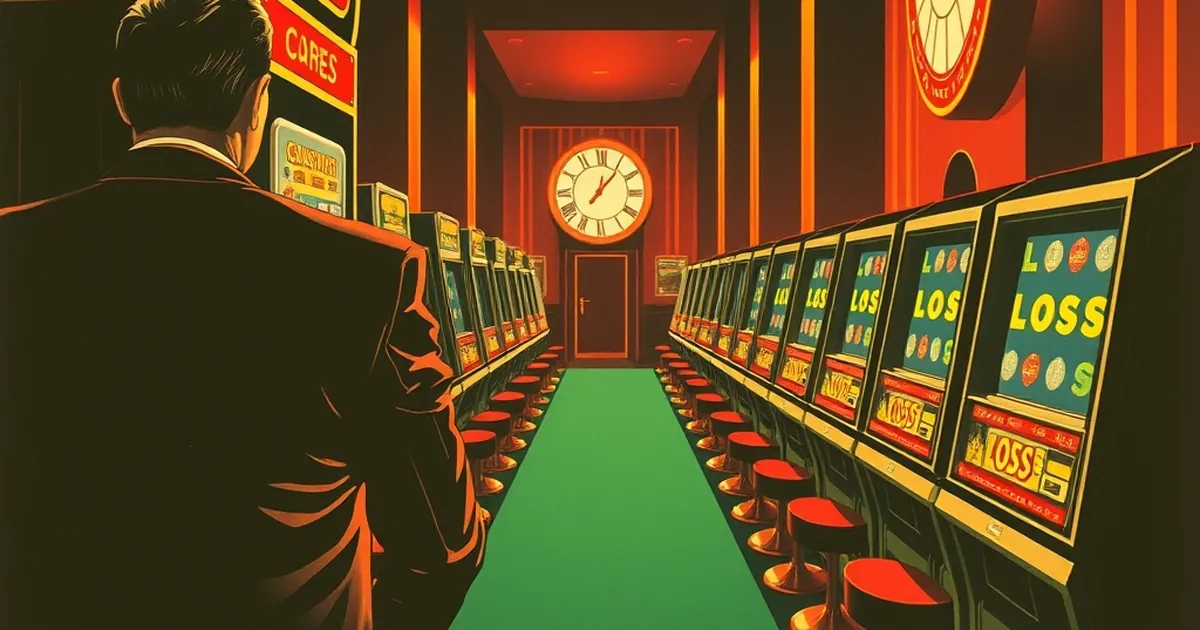
The modern competitor’s brain is a marvel of adaptive engineering, built to process rapid-fire feedback and recalibrate strategy on the fly. Yet, in the digital arena, a peculiar paradox emerges: the most potent psychological fuel for persistence—a near-miss that feels like a win—can be extinguished not by a greater loss, but by a two-minute stretch of dead air. Why does a brief, silent lobby undo the momentum that a painful setback couldn’t touch?
The Anatomy of the "Rebuy Reflex"
Behavioral economists have long documented the sunk cost fallacy, but the competitive gamer’s version is more nuanced. It’s not about throwing good money after bad; it’s about throwing time after a validated skill check. When you lose a round by a hair, your brain’s dopamine system doesn't register a failure—it registers a data point. Your anterior cingulate cortex, the region responsible for conflict monitoring, flags the discrepancy between your predicted win and the actual loss. The result is a spike in arousal and a cognitive state known as goal gradient, where the perceived proximity to success increases your willingness to reinvest.
This is where the concept of variable-ratio reinforcement—famously studied by B.F. Skinner—goes mainstream. The unpredictable timing of a win creates a persistence loop. The player isn't addicted to the win; they are addicted to the schedule of the attempt. The "rebuy" is the logical extension of this: a conscious decision to re-enter the fray because the algorithm of their own skill suggests the next trial has a higher probability of success.
The Interruption Penalty
Here is the rub. The brain’s persistence loop operates on a rapid, sub-second clock. It thrives on the immediate intersection of action and outcome. When a round concludes, a player is in a high-arousal, high-focus state. Their working memory is loaded with the specific micro-decisions that led to the loss—the mis-timed ability, the poor angle.
Enter the 40-second lobby. This is not a neutral pause; it is a cognitive reset. Psychologist Daniel Kahneman’s work on System 1 and System 2 thinking is instructive. The momentum to hit "rebuy" is a System 1 impulse—fast, intuitive, and emotional. The lobby forces a transition to System 2—slow, deliberate, and analytic. In those 40 seconds, the brain is no longer processing the game; it is processing the meta-game. The player starts calculating time investment, win rates, and the opportunity cost of another 15-minute session. The emotional heat dissipates, and the loss aversion—the tendency to feel losses twice as intensely as gains—shifts from the in-game loss to the potential loss of an evening's productivity.
The Case of the 15-Second Queue
Consider a study on online chess platforms. Researchers noted that player retention after a blunder increased by 18% when the "play again" button was instant. However, when a 20-second matchmaking queue was introduced, the rematch rate plummeted by 32%. The difference wasn't the opponent's skill; it was the cooling off period. The instant button allowed the player to remain in the "flow state," where the loss was just a hiccup in a continuous stream of play. The queue forced a moment of reflection, allowing the rational brain to veto the emotional brain's desire for immediate retribution.
Rebuilding the Momentum Loop
The lesson isn't that we should eliminate pauses—reflection is healthy. The lesson is about the architecture of choice. If you are designing a competitive experience, a queue is not a neutral utility; it is an intervention. To preserve the "rebuy momentum," you must either shorten the cognitive distance between the loss and the next attempt, or you must gamify the lobby itself.
The fix is not to remove the wait, but to change the stimulus. A live spectator count, a skill-rating ticker, or a simple visual of your opponent's "hot streak" can re-engage the competitive frame of mind. Keep the player’s working memory focused on the next move, not the last one. The goal is to keep the brain in the rapid-iteration loop, where a loss is just the first sentence of a new paragraph—not the closing chapter of the night.