The 0.7-Second Pause That Reshapes Any Decision
Discover why a deliberate 0.7-second pause can override impulsive decisions and reshape your choices for better outcomes
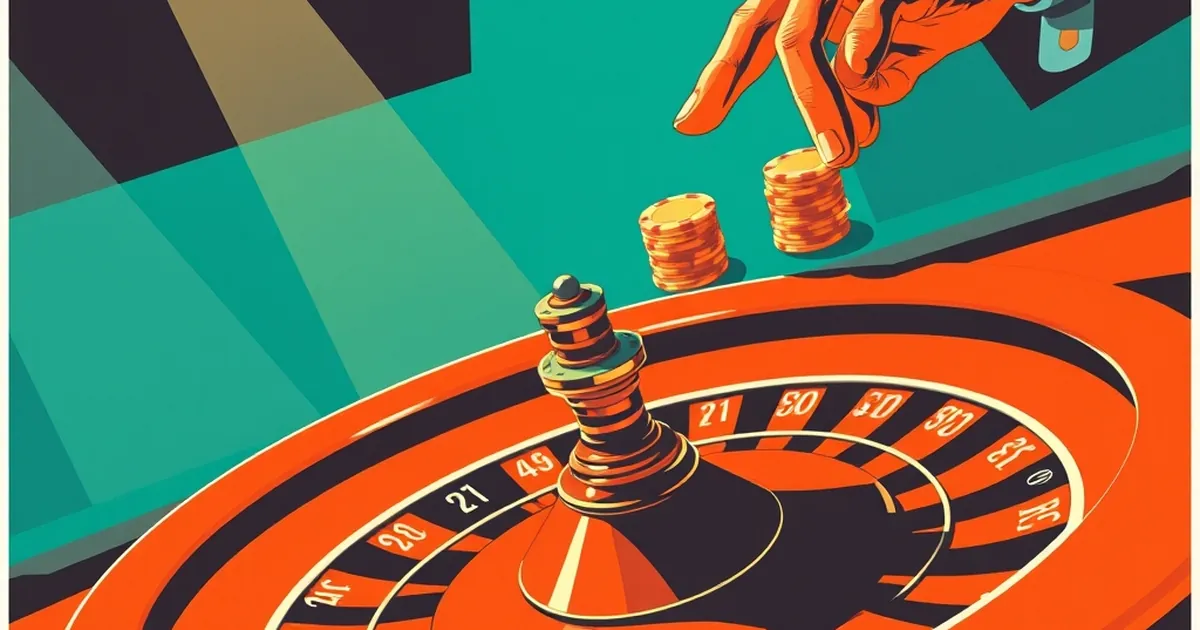
The most interesting decisions aren’t the ones we agonize over for weeks. They are the split-second choices made in the heat of a moment—the ones where our gut overrides our logic before we even know what hit us. Why do we consistently choose the immediate reward over the delayed, larger payoff, even when we know better? The answer may lie not in the complexity of the choice itself, but in the mechanical rhythm of our own neural firing, specifically in the power of a deliberate, 0.7-second pause.
The Anatomy of the Impulse
Neuroscientists have long identified two competing systems in the brain: the limbic system, which processes immediate emotional and visceral rewards, and the prefrontal cortex, which handles long-term planning and rational analysis. When a tempting stimulus appears, the limbic system fires almost instantly, within milliseconds. The prefrontal cortex, however, takes a bit longer to boot up and weigh the consequences.
This temporal gap is the entire battlefield. In his research on temporal discounting, behavioral economist George Loewenstein demonstrated that our valuation of a reward drops hyperbolically as the delay to receive it increases. A $100 prize available now feels subjectively more valuable than a $150 prize available in a month. The emotional "hot" system doesn't care about the math; it cares about the immediate hit.
The Variable-Ratio Trap and the "Just One More" Loop
This is where the concept of variable-ratio reinforcement becomes crucial. Popularized by B.F. Skinner, this schedule offers rewards after an unpredictable number of responses. Unlike a fixed schedule, which becomes predictable and boring, a variable schedule creates a high, steady rate of responding because the next reward could always be just one action away.
In our daily lives, this manifests in everything from checking email to scrolling social feeds. The uncertainty itself is the driver. The 0.7-second pause disrupts this loop by inserting a "cold" cognitive appraisal period into a "hot" emotional moment. It is a micro-habit that forces the slower, rational system to catch up to the fast, emotional one.
A Concrete Example: The Marshmallow Test, Revisited
The classic Stanford Marshmallow Experiment is often cited for its long-term outcomes, but the mechanics of the test are more instructive. Children who succeeded didn't just stare at the marshmallow and willpower their way through. They physically turned their chairs, covered their eyes, or pushed the treat away.
They created a physical and temporal distance. A modern replication of this study, using eye-tracking technology, found that children who delayed gratification spent significantly less time fixating on the reward. The act of looking away—a behavioral pause—was the active ingredient. The 0.7-second pause is the adult equivalent of turning the chair around. It is a deliberate interruption of the visual and cognitive fixation that leads to impulsive action.
Loss Aversion and the Cost of the Rush
Kahneman and Tversky’s prospect theory tells us that losses loom larger than gains. This asymmetry is why we often hold onto losing investments or stick with a failing plan—the pain of realizing the loss is more acute than the pleasure of a potential gain.
The pause helps here, too. When we feel the sting of a setback, the immediate impulse is to "chase" to recover the loss, a behavior often seen in high-stakes trading or competitive gaming. A 0.7-second pause allows you to reframe the situation: not as a loss to be recovered, but as a new, independent decision to be made. It shifts the frame from "What did I just lose?" to "What is the best next move, given the current state of the board?"
The Practice: Engineering the Delay
The beauty of this technique is its simplicity. It is not about meditation or deep breathing. It is about a mechanical interruption. When you feel the surge of adrenaline—the quickened pulse, the shallow breath—that is your cue.
- The Trigger: Recognize the physical sensation of impulse.
- The Action: Force a physical pause. Put your hands on the table. Look at a fixed point on the wall. Count to yourself, slowly: "One, one-thousand."
- The Question: Ask a single, forward-looking question: "Is this action aligned with my stated goal for the next hour, or is it just a reaction to the current noise?"
This isn't about eliminating risk or spontaneity. It is about ensuring that the risk you take is a calculated one, not a reflexive one. The 0.7-second pause is a tool for resetting the frame, allowing the prefrontal cortex to whisper its logic before the limbic system shouts its demand. In a world engineered to capture your attention and monetize your impulsivity, the ability to pause is not just a skill; it is a quiet form of rebellion. It is the small, deliberate space where your long-term self gets a chance to speak.