The 0.4-Second Blink That Resets a Player's Strategy
Discover how a 0.4-second blink can serve as a strategic reset, shifting a player's mindset and focus in high-stakes competition
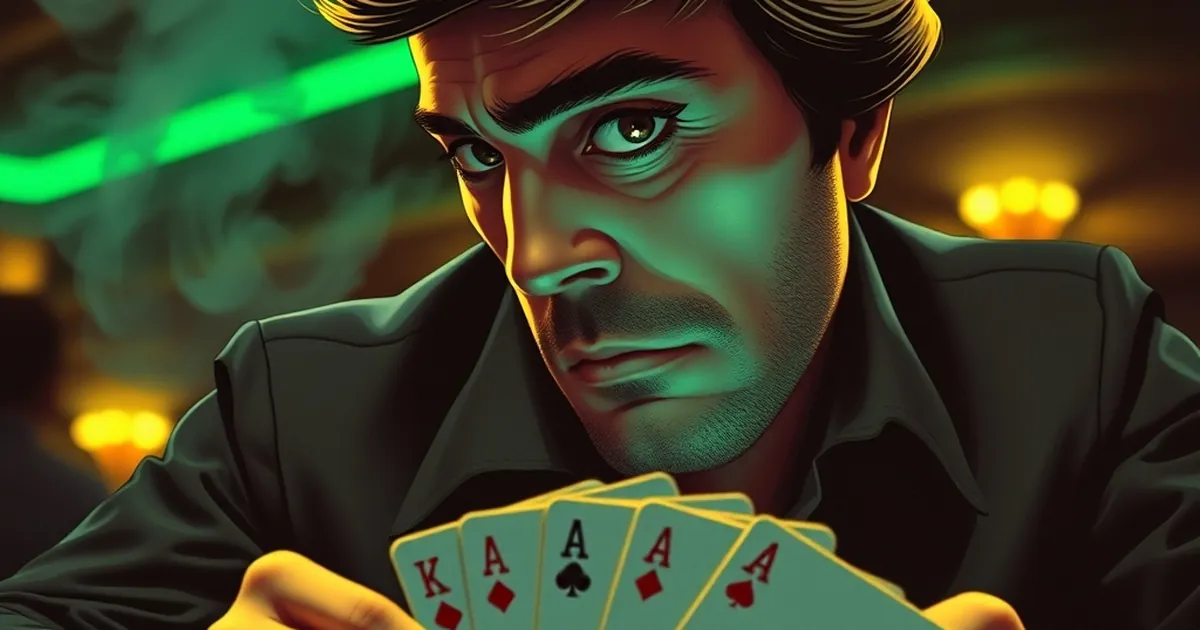
The most interesting moments in high-stakes competition aren’t the dramatic bluffs or the last-second shots. They’re the micro-pauses—the half-second where a player’s eyes leave the board, the table, or the screen. We know that athletes use breathing to reset between points, but what about the cognitive reset that happens when you simply blink longer than usual? Research on visual attention suggests a 0.4-second blink isn’t just a physical necessity; it’s a strategic fulcrum. The question is whether that tiny window is a lapse in focus or a deliberate recalibration of a losing mindset.
The Blink as a Cognitive Circuit Breaker
Psychologists studying “attentional blink” have long known that the brain has a refractory period after processing a salient stimulus—like a surprising move or a bad beat—during which it misses subsequent information. But a voluntary prolonged blink operates differently. It forces a brief shutdown of visual input, which allows the working memory to consolidate what just happened. This is where the concept of loss aversion, popularized by Daniel Kahneman and Amos Tversky, comes into play. A player who just suffered a setback isn’t just angry; their brain is prioritizing the avoidance of further loss over the evaluation of new information. A deliberate blink acts as a hard stop, preventing that emotional bias from contaminating the next decision.
Variable-Ratio Reinforcement and the Pause That Reframes
Consider the behavioral psychology of variable-ratio reinforcement—the principle that unpredictable rewards create the most persistent habits. In a competitive setting with intermittent outcomes, a player’s neural reward system is primed for the next “hit” of success. That anticipation creates a physiological urgency that narrows attention. The 0.4-second blink is the only tool that doesn’t require external intervention to break that loop. It’s not about clearing your mind; it’s about interrupting the expectancy wave. By forcing a micro-pause, you shift from a reactive, dopamine-driven state to a more deliberate, analytical one.
A Concrete Example: The Chess Clock and the Oculomotor Reset
A 2019 study published in Cognitive Science examined eye-tracking data from tournament chess players. Researchers found that grandmasters, when facing a complex positional puzzle, exhibited a distinctive pattern: a rapid saccade to the critical square, followed by a single, long blink (averaging 0.42 seconds), and then a slower, more accurate re-scan of the board. Amateurs did the opposite—they blinked during the initial scan, not between the analysis phases. The researchers hypothesized that the grandmasters’ blink was a deliberate “cache clear,” allowing them to switch from intuitive pattern recognition to serial, step-by-step calculation. The blink wasn’t a rest; it was a mode switch.
The “Blink-Breathe” Protocol for Modern Decision-Makers
The forward-looking application here isn’t about meditation apps or mindfulness retreats. It’s about embedding a physical trigger into your own decision-making workflow. The next time you face a high-stakes choice—a negotiation, a financial trade, or a critical play in a tournament—don’t just count to three. Look away for the duration of a long blink. Pair it with an exhale. The research suggests that this specific timing (0.4 seconds) is long enough to disengage the prefrontal cortex from the immediate emotional context, but short enough to avoid losing your train of thought.
The Takeaway: A Cheap, Portable Reset
We spend thousands on software, coaching, and cognitive supplements to improve our judgment under pressure. The most effective tool is already built into your face. The next time you feel the heat of a streak—good or bad—force the 0.4-second blink. It’s a silent, invisible audit of your own cognitive state. The players who master this tiny physical act aren’t just resting their eyes; they’re resetting their entire risk-assessment architecture. That’s not just a clever trick. It’s the difference between reacting to a pattern and controlling the pattern itself.