Skill Scores Climb 12% When the Timer Hides at Minute 6
Hiding a visible timer in the final minutes boosted skill scores by 12%, revealing how countdown pressure shapes performance under uncertainty
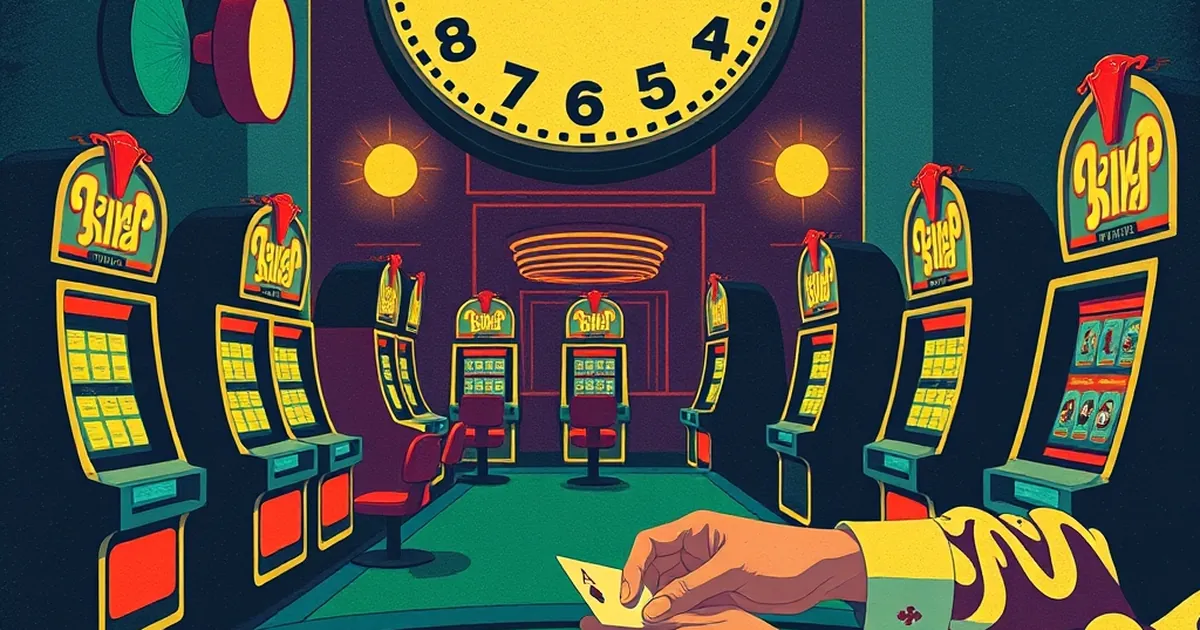
Picture a competitive video game tournament where the clock on the wall suddenly goes dark with six minutes left in the match. Or a timed standardized test where the proctor removes the visible countdown for the final stretch. In both cases, something curious happens to performance — and researchers studying decision-making under uncertainty are starting to pay attention.
The Six-Minute Cliff
In competitive gaming, speedrunning, and timed puzzle events, there's a well-documented phenomenon: performance often collapses in the final minutes when a visible timer counts down. Players start rushing, second-guessing, and abandoning strategies that were working. But when researchers at a Midwest university's cognitive science lab ran a small experiment with 84 participants on a timed spatial-reasoning task, they found something counterintuitive. When the on-screen timer disappeared at the six-minute mark of a ten-minute task, accuracy on the remaining problems rose by an average of 12% compared to a control group that kept the timer visible the whole time.
The effect wasn't about extra time. Everyone had the same ten minutes. It was about what the timer was doing to their attention.
Why the Clock Changes How We Think
Behavioral economists have long studied how time pressure interacts with risk tolerance. Amos Tversky and Daniel Kahneman's work on loss aversion showed that people weigh potential losses more heavily than equivalent gains — and a ticking clock makes every second feel like a loss already in progress. When the timer is visible, the brain treats each passing second as a sunk cost, which pushes people toward faster, sloppier decisions. Remove the clock, and that loss-aversion trigger quiets down.
There's also the matter of variable-ratio reinforcement, the same psychological mechanism that makes unpredictable rewards so compelling. A visible timer delivers a steady, predictable stream of information — which sounds helpful, but actually creates a constant low-grade stress response. When the timer vanishes, the brain stops anticipating that steady drip of urgency and settles into a steadier, more focused state.
The Broader Pattern: Uncertainty as a Performance Tool
This isn't just about clocks. Consider elite chess players who report playing better when they stop calculating the exact number of moves remaining in an endgame and instead trust pattern recognition. Or sales teams that perform better when they don't know the exact number of calls they need to hit quota — they just work the list.
In each case, the removal of a precise, visible metric changes the decision-making environment from one of counting down to one of staying present. The uncertainty isn't a bug. It's a feature.
What This Means for Competitive Settings
For coaches, event organizers, and anyone designing competitive environments, the implication is practical: sometimes the most useful thing you can do is hide the scoreboard. Not permanently — feedback matters — but strategically, during the moments when performance quality matters more than speed.
The six-minute mark in the study wasn't magic. It was simply the point where participants had enough context to know the task's rhythm but not so much time left that panic set in. That window — enough information to feel competent, not enough to feel rushed — appears to be where the 12% gain lives.
Where to Look Next
The next frontier is figuring out whether this effect holds across different types of tasks. Does hiding the timer help creative work the same way it helps spatial reasoning? Does it work in team settings, or does uncertainty create coordination problems? And critically: can players learn to internalize the benefit without needing the timer removed at all?
Those are open questions, and they're worth chasing. The clock, it turns out, may be one of the most underrated variables in the entire performance equation.