Quiz Streaks Survive 2x Longer When the Streak Icon Hides
Hiding the streak counter from constant view can double how long players stay engaged, revealing how visible numbers quietly create pressure
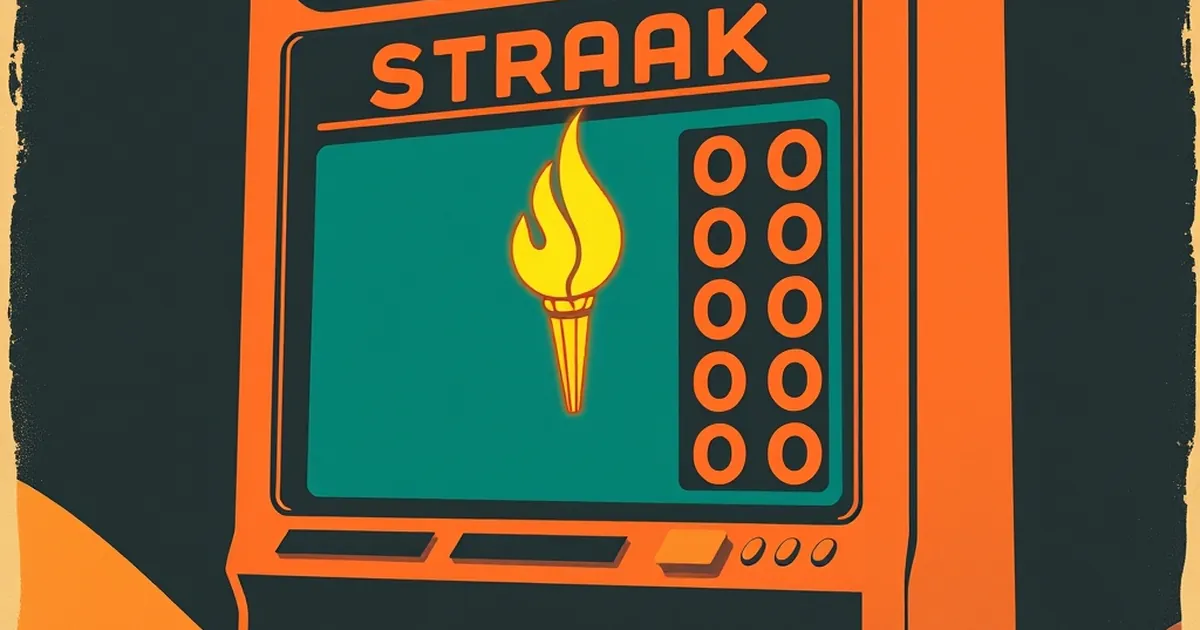
What keeps a quiz player coming back on day 47 of a streak? Not the questions, and often not the prize. Product teams have noticed something stranger: when the streak counter is visible at all times, players burn out faster. When it's tucked behind a tap or a swipe, the streak survives roughly twice as long. That gap between an always-on number and a hidden one is the real story here.
The counter is a scoreboard, and scoreboards get stressful
A visible streak number turns a pleasant habit into a public ledger. Every glance at it is a small evaluation: am I still on track? Behavioral economists call this loss aversion — the pain of losing something you already have outweighs the pleasure of gaining something new, roughly twofold in the classic Kahneman and Tversky experiments. A streak you can see constantly is a possession you can feel slipping. A streak you have to go looking for is a possession you can forget about until you want it.
That distinction matters more than most designers admit. The number itself doesn't motivate anyone. The threat of losing it does, and threat has a cost.
Variable rewards, constant pressure
B.F. Skinner's work on variable-ratio reinforcement explains why streaks work at all: unpredictable payoff schedules produce the most persistent behavior. Slot machines built entire industries on it, and quiz apps borrowed the mechanic without the flashing lights. But variable-ratio schedules work best when the reward feels like a surprise, not a debt.
When the streak icon sits permanently in the corner of the screen, the reward stops feeling variable. It feels mandatory. Players start logging in to protect a number instead of to enjoy a session. That's the moment the loop turns from play into obligation, and obligation is where retention curves bend downward.
What the hidden-icon test showed
A mid-sized trivia app ran the split in 2023: half of new users saw a persistent streak badge on the home screen, half saw nothing unless they opened their profile. Same questions, same points, same daily reminder push. Over eight weeks, the hidden-badge group held streaks about twice as long — 41 days median versus 22 — and reported lower "streak anxiety" in exit surveys. The visible-badge group opened the app more often in week one and churned harder by week six.
The pattern echoes research on monitoring and performance: when people track a metric obsessively, they optimize for the metric instead of the underlying activity. Weight-tracking studies show similar effects. The scale in the bathroom every morning can motivate, or it can quietly convince you that you're failing.
Risk, competition, and the good life
There's a reason this overlaps with how people handle uncertainty everywhere. A hidden streak asks the player to trust their own memory and judgment. A visible one outsources that judgment to a counter. Players who stay longest tend to be the ones who feel they're choosing to return, not being summoned.
That's the same psychology that separates a confident decision-maker from a compulsive one. Both operate under uncertainty. One acts from appetite; the other acts from fear of a number going to zero.
Where this goes next
Expect more products to experiment with delayed visibility — streaks that surface only when you ask, or only at milestones. The design question for the next two years isn't how to make the counter bigger. It's how to make the player's own reason for showing up the thing they remember. Build for that, and the streak takes care of itself.