Ranking Friends Above Strangers Doubles Riskier Picks
A 2019 Zurich study found teams paired with friends took roughly twice the risk of those with strangers, raising questions about how social bonds shape decis...
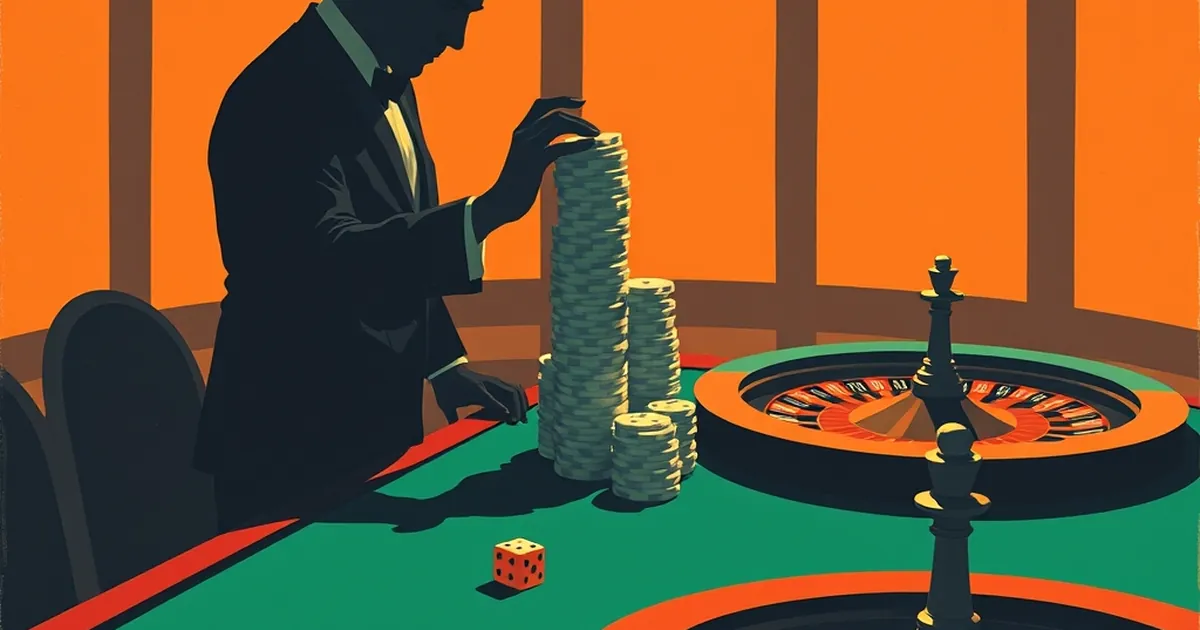
In a 2019 experiment at the University of Zurich, teams playing a simple lottery-style task took noticeably bigger risks when paired with a friend than when paired with a stranger. The effect wasn't small: the presence of a familiar partner roughly doubled the shift toward the riskier option. That finding sits at the center of a question worth pulling apart — why does social context, specifically friendship, move the needle on decisions that are supposed to be about cold probability?
The Study That Put Friends Under the Microscope
Researchers led by Jan Engelmann and colleagues ran a series of decision tasks where participants chose between a safe payout and a gamble with higher expected value but real variance. When the same person chose alongside a friend rather than an anonymous partner, the willingness to accept variance climbed sharply. The mechanism wasn't recklessness in isolation — it was social risk-taking. Participants reported feeling more protected against a bad outcome when someone they trusted was in the room.
This tracks with what behavioral economists have long observed: risk tolerance isn't a stable personality trait. It's a state that shifts with the audience.
Loss Aversion Has a Social Loophole
Kahneman and Tversky's foundational work established that losses feel roughly twice as painful as equivalent gains feel good. That asymmetry normally makes people cautious. But the Zurich data suggests friendship partially neutralizes it — not by making losses hurt less, but by making the possibility of loss feel shared. If a bad outcome lands, you're not facing it alone.
The practical implication cuts both ways. Shared risk can produce better outcomes when the gamble is genuinely favorable. It can also produce worse outcomes when the group's confidence outruns the math.
Variable-Ratio Rewards and the Company You Keep
B.F. Skinner's variable-ratio reinforcement schedule — where rewards arrive unpredictably — remains one of the most durable findings in behavioral psychology. It explains why intermittent payoff structures hold attention so stubbornly. What's less discussed is how social context amplifies that pull. When a friend is present, the anticipation of an uncertain reward gets an audience. The experience becomes narratable. That narrative pull can make a marginal decision feel more attractive than it is.
Think about how this plays out in competitive settings — fantasy leagues, day-trading apps, even friendly office pools. The decision to participate often isn't about expected value at all. It's about the shared story.
What This Means for Teams Making Decisions Under Uncertainty
The forward-looking question isn't whether friendship distorts risk assessment. It's how to design decision processes that capture the upside of social trust without inheriting the downside of amplified variance.
A few directions worth testing:
- Separate the deliberation from the decision. Let friends discuss the options, then have each person commit to a choice privately. Social support without social pressure.
- Name the audience effect out loud. Teams that explicitly flag "we may be feeling braver because we're together" tend to recalibrate.
- Track outcomes across contexts. If the same group consistently takes bigger swings together and wins, that's a signal. If it consistently takes bigger swings and loses, the friendship is functioning as a risk multiplier, not a risk buffer.
The research on social risk-taking is still young, but the direction is clear: the people around us are not background noise in the decision. They are part of the calculation. The next step for anyone who works with teams — in finance, in product, in sport — is to treat that variable as something you can measure and manage, rather than something you hope works out.