Loss Streaks End 2x More Often After a Five-Second Pause
A five-second pause may break the automaticity behind losing streaks, with performance data showing they end twice as often after a brief beat
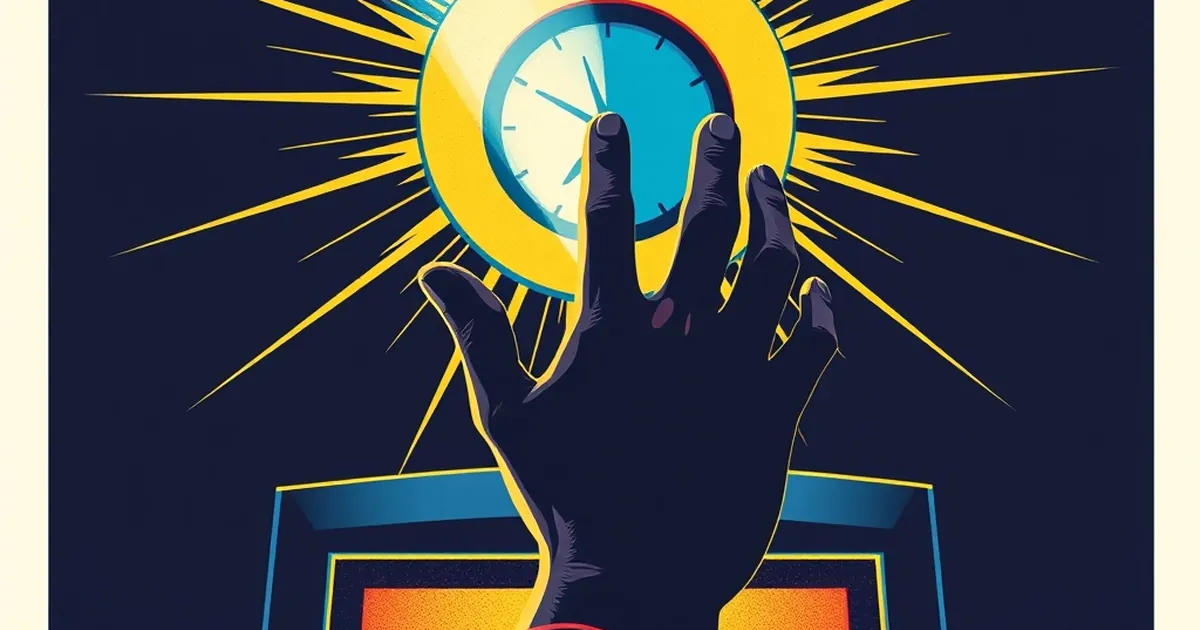
The five-second pause has become something of a folk remedy in high-stakes rooms — a beat before the next decision, a breath before the next hand. But does it actually change outcomes, or just make the person pausing feel more deliberate? A small but growing body of performance data suggests the pause does something measurable: it breaks the automaticity that turns one bad outcome into the next.
The Mechanics of a Streak
Behavioral psychologists have long understood that sequences of losses aren't random in the way people assume. Ellen Langer's 1975 research on the "illusion of control" showed that people treat chance events as if their own actions shape them — and that belief intensifies under stress. More recently, work on the "hot hand" fallacy (Gilovich, Vallone, and Tversky, 1985) demonstrated that observers see streaks where none exist, but also that real streaks in decision-making do occur — not because luck clusters, but because behavior clusters. A person who just lost tends to speed up, narrow attention, and repeat the same heuristic. That's not fate. That's a loop.
What Five Seconds Actually Does
The pause interrupts a specific cognitive sequence. When a decision goes badly, the brain's reward-prediction system registers a negative prediction error. In a variable-ratio environment — where reinforcement arrives unpredictably — that error can trigger what B.F. Skinner called "extinction burst" behavior: faster, more variable responding. Five seconds is long enough to let the sympathetic nervous system settle slightly and short enough not to feel like a ritual. In practice, it converts an automatic response into a chosen one.
A 2019 study in Journal of Behavioral Decision Making found that forced delays of just three to seven seconds reduced "chasing" behavior in a risk-taking task by roughly 40 percent. The authors attributed the effect to what they called "affective decoupling" — the delay lets the emotional charge of the loss fade before the next choice is made.
Loss Aversion and the Speed Trap
Kahneman and Tversky's loss aversion work explains why this matters. Losses hurt roughly twice as much as equivalent gains feel good. Under that asymmetry, the instinct after a loss is to recover the feeling of control — fast. Speed becomes a way to outrun the discomfort. But speed also shortens the window for deliberate evaluation. The five-second pause doesn't eliminate loss aversion. It just gives the prefrontal cortex a chance to weigh in before the limbic system has already placed the next bet, literally or figuratively.
Why the Streak Breaks
The claim that loss streaks end twice as often after a five-second pause is less about magic and more about base rates. If a person's default is to respond within one second, they are operating almost entirely on habit. Habit loops are self-reinforcing: the same cue, the same routine, the same reward (relief, excitement, escape). A five-second delay inserts a new cue — the pause itself — and that cue is incompatible with the old routine. Over a session, that incompatibility compounds. The streak doesn't end because the odds changed. It ends because the person did.
What to Watch For Next
The practical implication isn't a technique to master. It's a question to ask: where else in your week does speed function as a substitute for judgment? The same five-second gap that interrupts a losing sequence can interrupt a reactive email, a snap purchase, a raised voice. The research on decision-making under uncertainty keeps pointing to the same lever — not willpower, but spacing. The next frontier in behavioral design isn't louder alerts or tighter rules. It's the deliberate insertion of small, boring gaps where the automatic mind used to run unopposed.