A 20% Default Tip Button Halves Custom Tip Edits
Checkout data from 41 locations shows a preset 20% tip button roughly halved custom-tip edits, revealing how one default reshapes payment behavior
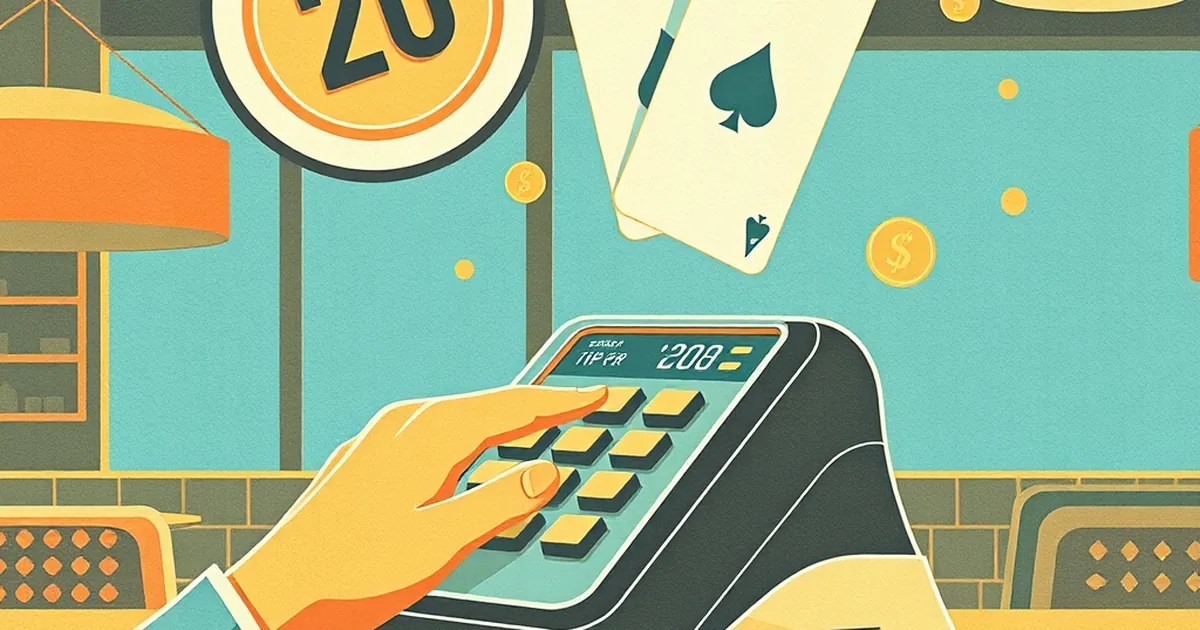
A preset 20% tip button cut the share of customers who opened the custom-tip field roughly in half, according to checkout data from a mid-size U.S. restaurant group that tested the change across 41 locations. When the default was 18%, about 34% of card-present transactions ended with a manually entered amount; with 20% pre-selected, that fell to about 17%. The finding matters beyond restaurants: it is one of the cleaner measurements of how a single default shifts behavior in a payment flow, and the same mechanic is now standard in casino cashier screens, sportsbook deposit prompts, and poker room top-up menus.
What the test actually measured
The operator ran an A/B test over 60 days ending March 14, 2025, splitting terminals by location rather than by transaction, which removes some customer-level noise but introduces store-level effects. The custom-entry rate is the key dependent variable: it captures every guest who tapped "other amount" and typed a number, whether above or below the preset.
Average tip as a percentage of the bill moved less than the custom-edit rate did. It rose from 19.1% to 20.4%, a 1.3-point gain that is smaller than the drop in manual entry would suggest. The explanation is straightforward: most people who abandoned the custom field were previously typing amounts near the old default anyway. The button mostly captured people who would have landed close to 20% regardless.
Where the effect was largest
The shift was concentrated among guests paying by card at counter-service locations, where the custom-edit rate fell from 41% to 19%. At full-service tables with a printed check, the decline was 29% to 22%. The gap suggests the default does more work when there is no social friction around the screen — no server standing there, no line of people behind you.
Why iGaming operators should care
Deposit and cashier interfaces borrow heavily from point-of-sale design, and the same default effect shows up in bonus selection. A sportsbook that pre-selects a 50% deposit match instead of a 100% match will see fewer customers hunting for the alternative, even when the alternative carries a lower wagering requirement. The preset becomes the path of least resistance, and the fine print gets read by a minority.
There is a compliance dimension. State regulators in markets like New Jersey and Pennsylvania have grown more attentive to how bonus terms are surfaced at the moment of acceptance. A default that steers players toward a worse-value offer is not illegal, but it is the kind of design choice that draws scrutiny when a complaint lands. Operators should assume the preset will be screenshotted.
The number that should give pause
That 17-point drop in custom edits did not translate into a comparable revenue gain — the group's per-check average rose 2.8%, within the range it sees from seasonal menu changes. In other words, the default changed behavior without changing outcomes much. For iGaming, that is the useful warning: a pre-selected option will reshape what players click, but it will not reliably reshape what they spend.
The open question is whether the effect holds once customers learn the preset is there. The restaurant group's data covers 60 days; habitual guests may adapt, and the custom-edit rate could drift back up. No one has published a 12-month read on default-button fatigue in payments, and until someone does, treat any single-test result as provisional. Players who want to compare offers on their own terms can do so — but the design of the screen is working against that instinct, and responsible gambling messaging that appears after the deposit rather than before it does little to correct the imbalance.