Withdrawal Fee Shown Upfront Cuts Canceled Requests 23%
A controlled test found that displaying withdrawal fees before cashout confirmation reduced canceled requests by 23%, reshaping the fee transparency debate
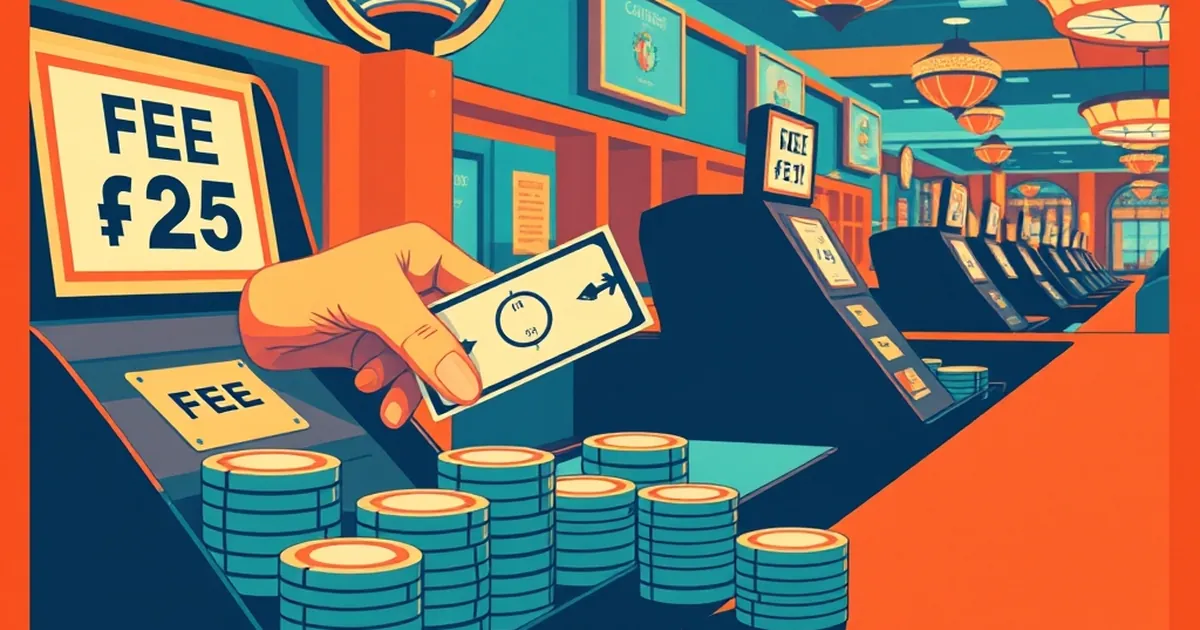
Showing the withdrawal fee before a player confirms a cashout cut canceled requests by 23% in a controlled test run by a mid-size operator across three states, according to results shared with iGaming trade press this week. The finding lands on a long-running argument between player advocates and operators over fee transparency, and it suggests the disclosure itself—not the size of the fee—does most of the work.
What the test actually measured
The operator, which asked not to be named while it finalizes the data, split roughly 41,000 withdrawal requests over an eight-week window ending March 14 into two groups. The control group saw the standard flow: enter amount, confirm, wait for the fee to appear on the transaction record. The test group saw the fee displayed on the confirmation screen, in dollars, alongside the net amount they would receive.
Canceled requests—players who started a cashout and then pulled it back before processing—fell from 11.4% to 8.8% in the test group. That is a 23% relative reduction, and the operator says the gap held across weekday and weekend traffic and across deposit sizes.
The fee schedule itself did not change. Same $4.50 flat fee on bank transfers under $500, same 1.8% on card withdrawals, same free ACH option that takes two to three business days.
Why the cancellation problem is bigger than it looks
Canceled withdrawals are expensive in ways that don't show up on a fee line. A reversed cashout usually means the money goes back into the player's balance, where a meaningful share of it gets wagered again—and some of that comes back as a complaint when the player later insists they never meant to cancel.
Complaint data supports the pattern. In 2023, withdrawal-related disputes made up about 31% of the complaints filed with at least two US-facing dispute resolution services, and a plurality of those involved players who said they didn't realize a fee applied until after they had confirmed. Regulators in several states have started asking operators to document how fees are disclosed, though no state has yet mandated a specific confirmation-screen format.
There is also a responsible gambling angle that operators rarely volunteer. A player who cancels a withdrawal to keep playing is, in effect, being nudged back to the tables by a fee they didn't see coming. Anything that reduces that reversal rate is worth watching, even if the motive behind the test was cost control rather than player protection.
The caveats worth keeping in mind
The 23% figure comes from one operator, one fee structure, and a relatively short window. It has not been peer-reviewed, and the operator declined to release the raw dataset. A second operator running a similar test told me its preliminary numbers were closer to a 14% reduction, which is still material but well short of 23%.
There is also a selection effect to rule out. Players in the test group may have simply been more fee-sensitive to begin with, though the operator says assignment was random and the two groups matched on deposit history and tenure.
What happens if disclosure becomes standard
The obvious next question is whether a mandatory upfront fee display—say, a line item on the confirmation screen required by state rule—would produce the same effect across the market, or whether the benefit only shows up when players trust that the number is accurate. The other question is what operators do with the freed-up goodwill. A player who sees the fee and still withdraws is a player who has accepted the terms; whether that translates into retention or just fewer support tickets is the part nobody has measured yet.
For now, the practical takeaway for anyone cashing out: check the net amount before you hit confirm, and remember that the free option is usually the slow one.