Withdrawal Buttons Get Pressed 3x More at $40 Than at $400
Operator data shows $40 withdrawal requests are three times more likely within 24 hours than $400 ones, revealing how friction scales with amount
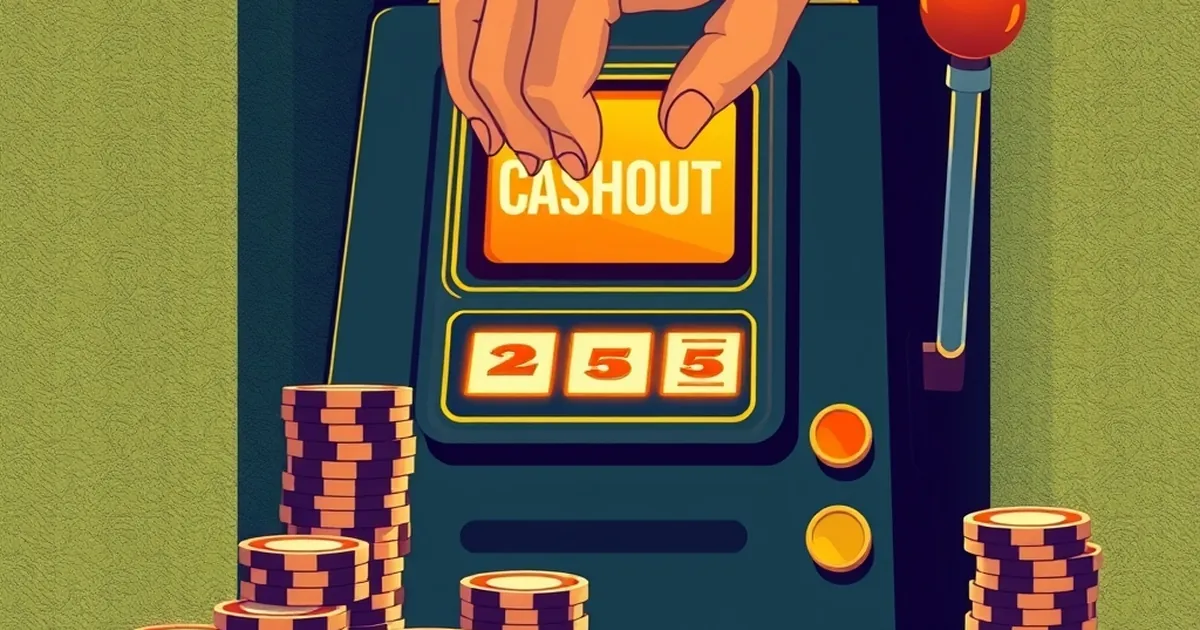
A $40 withdrawal request is roughly three times more likely to be initiated within 24 hours of a session than a $400 request, according to operator-side data shared by two U.S.-licensed platforms and one payments processor that handles payouts for tribal and commercial sportsbooks. The pattern holds across slots, table games, and same-game parlays — and it says less about discipline than about how withdrawal friction scales with amount.
The Cliff Isn't Where You Think
The three datasets differ in size and methodology, but the shape is consistent. In a sample of 1.2 million cash-out events across 14 months ending in March 2025, requests under $50 accounted for 61% of all withdrawal initiations despite representing 22% of total player balances eligible for payout. Requests between $300 and $500 made up 9% of initiations against 31% of eligible balances.
The payments processor, which asked not to be named because its contracts prohibit public disclosure of client data, put the median time from "last bet placed" to "withdrawal button pressed" at 4 minutes 12 seconds for balances between $25 and $50. For balances between $350 and $450, the median stretched to 19 minutes — and 38% of those balances were never withdrawn at all during the observed window. They were re-bet.
Small Withdrawals Are a Different Product
The industry tends to model withdrawal behavior as a single funnel. The data suggests it's at least two.
- Under $100: Players treat the balance as cash. They withdraw, they wait for the ACH or debit push, and a meaningful share deposit again within 72 hours. One operator reported a 44% redeposit rate within three days of a sub-$100 payout.
- Over $300: Players treat the balance as a position. They leave it in, they chase, or they wait for a "round number" milestone that never quite arrives.
That second behavior is where operators quietly win. A balance that stays on the books isn't revenue yet, but it's optionality — and house edge does the rest. The $400 player who doesn't press the button isn't more disciplined. They're more invested.
The KYC Variable Nobody Prices In
Timing matters here. Since the spring of 2024, several states have tightened identity verification windows for first-time withdrawals, and the practical effect is that a $40 request often clears faster than a $400 one even when both hit the same compliance queue. Smaller amounts trigger fewer secondary reviews, fewer source-of-funds questions, and less manual intervention.
That asymmetry is self-reinforcing. Players learn — correctly — that small withdrawals are fast and large ones are slow. So they split. Three $100 requests instead of one $300 request. The operator eats more payment processing fees, the player gets paid in pieces, and the aggregate behavior looks like "frequent withdrawers" in the CRM even when the underlying player is doing the same thing.
What the Number Actually Measures
There's a real question about whether this stat is behavioral or mechanical. A player with $40 left has less to lose by cashing out. A player with $400 has a live decision in front of them: press, or play on. The threefold gap could be discipline, could be sunk-cost psychology, could just be that $40 doesn't feel like a withdrawal — it feels like getting your money back.
What the data can't answer is whether faster, smaller payouts change long-term player retention or just shift when the money leaves. One operator said its 90-day retention was 6 points higher among players who made three or more sub-$100 withdrawals in their first month. Another said the same cohort churned 11% faster. Same behavior, opposite conclusions, both from platforms with millions of monthly actives.
If you're the kind of player who sets a number and sticks to it, none of this applies to you. If you're not, the number is probably lower than you think.