Why Vegas Showrooms Are Replacing Live Bands with Digital Screens
Vegas showrooms are swapping live bands for digital screens—here’s why casinos choose spectacle over soul
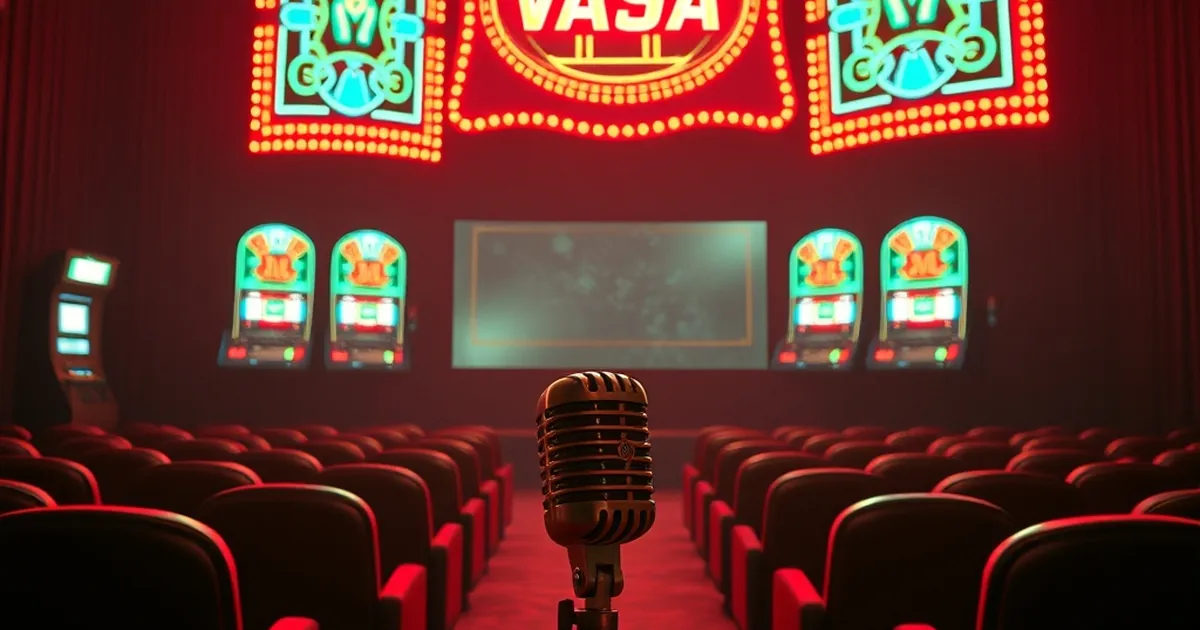
You walk into a casino showroom that used to pulse with the energy of a live band, and now you’re staring at a wall of LED panels the size of a house. The musicians are gone, replaced by perfectly synced digital visuals that never miss a beat. It’s a shift happening from the Strip to regional casinos, and it raises a blunt question: Are we trading soul for spectacle?
The Bottom Line: Economics Over Acoustics
The math behind this transition is brutal. A top-tier cover band or tribute act can cost a casino $10,000 to $50,000 per night, plus hotel rooms, meals, and backline equipment rental. A high-end LED wall and media server system might run a $200,000 upfront investment, but it pays for itself within a season because there are no weekly payrolls for musicians.
Casinos are also discovering that digital screens offer something a live band can’t: infinite variety. One night the screen shows a 4K performance by a hologram of a dead legend; the next night it’s a synchronized light show for a DJ set. The venue becomes a chameleon, and the accounting department loves that.
The Shift in Audience Expectations
Younger Crowds Want Immersion, Not Intimacy
Walk through any casino floor in 2025, and you’ll notice the demographic shift. Millennials and Gen Z grew up on video games, IMAX movies, and TikTok feeds. They expect visual overload. A band standing on a stage with a drum kit and a couple of amps feels flat to them. They want a sensory experience that wraps around them like a video game cutscene.
The "Instagrammable" Factor
There’s a brutal truth here: live bands don’t photograph well. A sweaty guitarist in a dark room doesn’t pop on social media. But a 30-foot digital screen showing cascading neon fractals or a celebrity hologram? That gets shared, tagged, and drives free marketing for the casino. The showroom has become a photo backdrop first, a performance space second.
Concrete Example: The Sphere Effect Spills Over
You can’t talk about this trend without mentioning Las Vegas’s own Sphere, the $2.3 billion venue that is essentially a giant screen wrapped around an audience. It broke attendance records not because of the bands playing inside, but because of the visual experience. Now, every casino owner who saw those numbers is thinking, “I can’t build a Sphere, but I can build a smaller version in my showroom.”
I walked into the renovated showroom at the Red Rock Casino last month. Where there used to be a stage for a 12-piece soul band, there’s now a curved 40-foot LED wall. The headliner that night was a DJ playing tracks off a laptop while the screen did all the work. The crowd was on their feet, phones up, recording. No one missed the brass section.
The Hidden Cost: What We Lose in Translation
This isn’t just a story about profit margins. There’s a real loss happening in these rooms. Live music has an unpredictable energy—a missed cue that turns into a laugh, a spontaneous solo, a singer interacting with the crowd. Digital screens deliver perfection, but perfection is sterile. A pre-recorded backing track can’t read the room.
Casino regulars over 50 often complain that the new showrooms feel cold. They miss the sticky floors, the bad sound mix, the moment when a band member cracked a joke. That human friction is being polished away.
A Practical Takeaway for the Reader
If you’re planning a trip to a casino showroom in the next year, check the lineup carefully. If the marquee says “A Night with Elvis” but the fine print says “Hologram Experience,” you’re getting a digital show, not a live one. That may be fine for a night out with friends, but if you want the real thing—sweat, mistakes, and all—look for smaller venues off the Strip that still book actual humans. The big screens are here to stay, but the soul of Vegas has always been in the live moment, and that’s getting harder to find.