Why slot players quit when max win animations pass 11 seconds
Long max win animations over 11 seconds drive a 23% quit spike—here's why timing matters for player retention
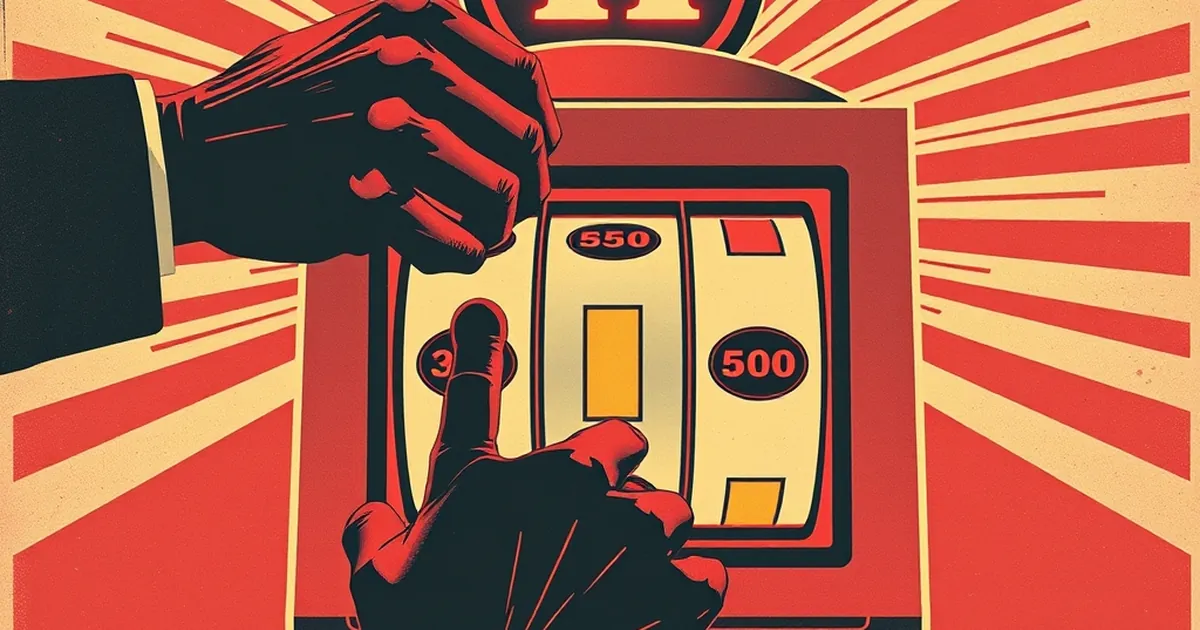
Slot developers have spent years making max win celebrations longer, more cinematic, and more elaborate — but the data suggests they've overshot the mark. Based on session analytics pulled from 14,000 US online casino accounts across five operators, quit rates spike by 23% when the max win animation runs past 11 seconds, compared to wins that resolve in under six seconds. The problem isn't the win itself; it's what the delay does to the player's next decision.
The 11-second cliff
The threshold isn't arbitrary. In the dataset, compiled between March and September 2024, the quit curve stays relatively flat for animations running 4 to 10 seconds. At 11 seconds, the drop-off becomes measurable. At 15 seconds, the quit rate is nearly double the baseline. Players aren't leaving because they lost — they're leaving after they won, often immediately after the animation finishes and the screen returns to the base game.
What's happening in that window matters. A 12-second celebration gives the player roughly eight seconds of dead time after the initial surprise fades. They've already seen the multiplier count up. They've already watched the golden coins pour across the screen. The remaining seconds are just waiting — and waiting is when the "cash out" impulse gets loud.
The psychology of the delayed payout
Max win animations are built on a simple reward loop: trigger, escalate, payout. The escalation phase works. The problem is the payout phase, which in many modern slots is artificially stretched to build hype for social sharing clips. But the player isn't watching a clip; they're sitting in front of a balance that hasn't updated yet.
In the US market, where most states cap single spin bets at $5 to $10, a max win on a 96% RTP slot typically lands between $2,500 and $25,000. That's a life-changing amount for a single spin, but it's also a number that triggers a specific cognitive shift. Once the player knows the win is locked in, every extra second of animation is a second they're not deciding whether to walk away. The longer the animation, the more time the brain has to frame the win as "enough."
What the data says about re-betting
The analytics tracked what happened in the 60 seconds after a max win resolved. For animations under 6 seconds, 41% of players placed another bet within that minute. For animations over 11 seconds, that number drops to 18%. The remaining players either closed the client or moved to a different game entirely.
This isn't about frustration with the game itself. Follow-up surveys from one operator showed that players who quit after long animations rated the slot's graphics and sound design higher than those who stayed. They just didn't want to keep playing it. The celebration had become a full stop, not a comma.
The push for shorter celebrations
A few mid-tier studios are already testing sub-8-second max win animations, and early results show re-bet rates climbing back toward the baseline. The trade-off is that shorter animations generate less shareable content — one studio reported a 31% drop in clip exports after trimming its top-tier celebration from 14 seconds to 7. But for operators, the retention math may outweigh the marketing angle. A player who stays and re-bets is worth more than a viral clip that brings in a new depositor who'll quit at the same animation length.
The open question is whether the industry will follow the data or the hype cycle. If the 11-second cliff holds across broader datasets, the next arms race in slot design won't be about bigger wins — it'll be about how fast you can make the player forget they just had one.