Why Skill-Based Mobile Games Keep You Playing Past the Point of Fun
Discover why skill-based mobile games exploit your brain’s learning systems, keeping you hooked long after the fun fades
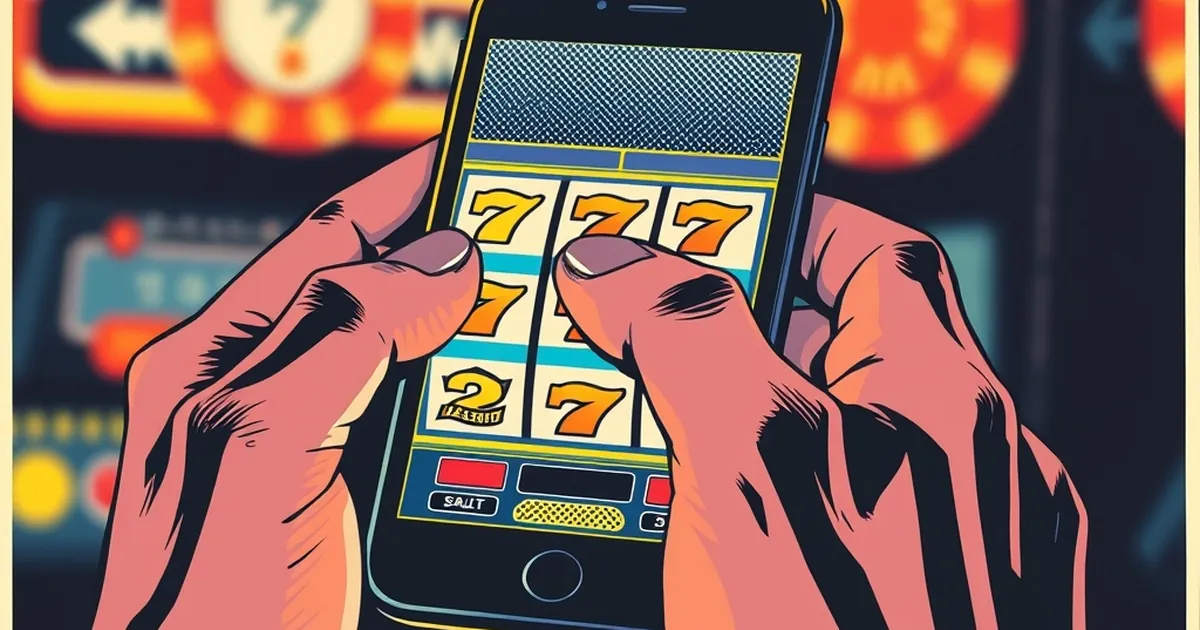
Why Skill-Based Mobile Games Keep You Playing Past the Point of Fun
It’s a familiar evening ritual: you tell yourself you’ll play just one round of your favorite puzzle or strategy game, then go to sleep. Forty-five minutes later, you’re still tapping, swiping, and chasing a high score, no longer enjoying yourself but unable to stop. Why does a game that demands genuine skill—not luck—so effectively override your own sense of satiety?
The answer lies in a potent behavioral cocktail. Skill-based mobile games are masterfully engineered to exploit the very systems our brains use to learn, compete, and feel rewarded. They don’t trap us by chance; they trap us by design, leveraging principles that behavioral scientists have studied for decades.
The Variable-Ratio Reinforcement Trap
The most powerful engine behind compulsive gameplay is a concept B.F. Skinner identified in the 1950s: variable-ratio reinforcement. A pigeon that gets a food pellet after an unpredictable number of pecks will peck far more persistently than one rewarded on a fixed schedule. Mobile games apply this ruthlessly.
In a game like Threes! or Alto’s Odyssey, the “reward” isn’t a random payout—it’s the unpredictable occurrence of a perfect combo, a breathtaking near-miss recovery, or a new high score. You know your skill is the lever, but the timing of that satisfying breakthrough is variable. This uncertainty keeps the dopamine system on a short leash. A 2013 study by researchers at Cambridge University found that unpredictable rewards trigger stronger dopamine release in the striatum than predictable ones, directly linking this design pattern to the neurochemistry of wanting.
Loss Aversion and the “Just One More” Loop
Skill-based games also weaponize a cognitive bias popularized by Daniel Kahneman and Amos Tversky: loss aversion. We feel the sting of a loss roughly twice as powerfully as the pleasure of an equivalent gain. When you fail a level by a hair’s breadth, the game has not just ended; it has created a loss. Your brain registers this as a small failure, and the fastest way to erase that feeling is to immediately try again.
This is why many games show you your “best score” right after a failure, or let you see the exact point where your run ended. They are presenting a clear, immediate opportunity to undo the loss. The next attempt isn’t about fun—it’s about restoring emotional equilibrium.
The Competitive Ratchet
Finally, social and competitive features act as a ratchet, preventing you from stepping away. Leaderboards, friend challenges, and “battle pass” tiers turn a solitary skill activity into an ongoing status negotiation.
A concrete example comes from the mobile game Mini Metro, a minimalist transit-planning game. It has no gambling mechanics, yet its daily and weekly challenge modes, complete with global leaderboards, create a persistent sense of obligation. Players report returning not because the gameplay is novel, but because they must maintain their rank. The game leverages social comparison theory—our innate drive to evaluate ourselves against others—to convert a relaxing puzzle into a recurring performance review.
Playing on Purpose
The forward-looking question isn’t how to ban these mechanics, but how to outsmart them. Recognize that the “fun” of a skill-based game often peaks in the first 10–15 minutes, during the phase of exploration and early mastery. What follows is often the grind of loss-aversion and social maintenance.
A practical step: set a timer before you open the app, not after. Treat the game like a workout—a scheduled, timed activity rather than an open-ended session. When the alarm sounds, stop mid-round, even if you’re winning. This disrupts the variable-ratio loop and reclaims your agency. The most skillful move in any mobile game might just be knowing when to put it down.