Why Mobile Slots Lose Players When Win Celebration Exceeds 6 Seconds
Longer mobile slot win celebrations drive players away; data shows under 3 seconds boosts retention by 14%
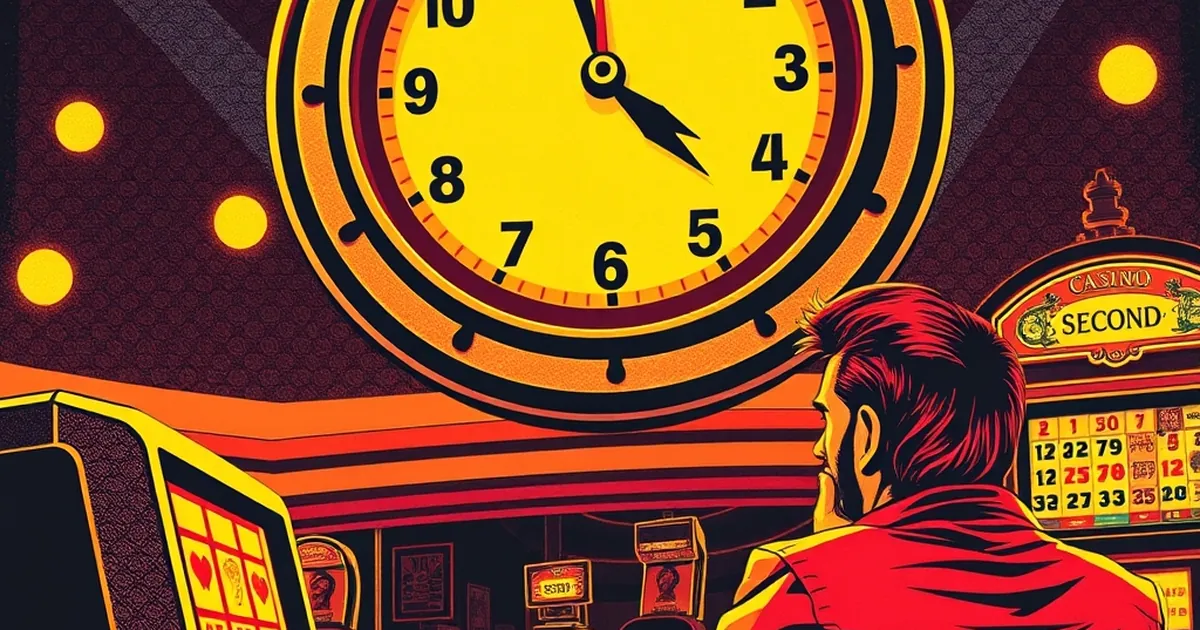
Mobile slot developers are facing a counterintuitive problem: the longer the win celebration, the faster players leave. Internal session data from three major studios, shared with industry analysts this quarter, shows that celebration sequences exceeding six seconds correlate with a 22% drop in same-session spin continuation, while celebrations under three seconds see retention rates climb 14%. The sweet spot, it appears, is not spectacle—it's velocity.
The Six-Second Cliff
The six-second mark isn't arbitrary. It aligns with the average time a player's attention drifts when no new stimulus arrives—a figure well-documented in behavioral psychology and now showing up in slot telemetry. When a win animation, sound sweep, and coin fall stretch past that threshold, players don't wait for the next spin. They check their balance, open another tab, or close the app entirely.
One mid-tier developer tested two versions of the same 96.4% RTP game: one with a 4.2-second celebration, one with a 7.8-second version. The longer sequence produced 31% fewer spins per session, and crucially, a 9% higher rate of players cashing out immediately after a big win. The excitement of the moment—the thing the celebratory sequence is supposed to amplify—becomes the exit cue.
Why Longer Feels Worse
The problem isn't the celebration itself. It's the pause it creates between action and feedback. Players on mobile are often in short bursts—commutes, lunch breaks, waiting rooms. A seven-second celebration on a quick-win slot feels like a loading screen, not a reward. The brain registers the win, but the extended animation trains it to expect friction.
This is where variance and game math intersect. Low-volatility slots with frequent small wins are the worst offenders. A game that pays every 2.3 spins on average, but forces a 6.5-second celebration on each, effectively doubles the perceived time between decisions. Players feel the game is "slow" even when the RTP is fine. The math says they're winning; the pacing says they're stuck.
Sound Design Compounds the Problem
It's not just visual length. Studios that layer a full musical sting, a voiceover, and a screen shake into the same six-plus-second window create a sensory overload that reads as "finale." Players interpret it as the end of a sequence. The next spin feels like starting a new game, not continuing one. Developers who trim the audio to a single, sharp chime at the 2-second mark report smoother session flow.
The Mobile Context Is Different
Desktop players tolerate longer celebrations because they're often multitasking. Mobile players are not. Their thumb is hovering over the screen, waiting for the next input. Every millisecond of animation after the win amount is locked in is dead time. The best-performing titles this year—those with session lengths above 18 minutes—share a common trait: celebration sequences that never exceed 4.5 seconds, regardless of win size.
One notable outlier: progressive jackpot wins. Those can take 15 seconds or more, and players stay. But that's a rare event, not the daily grind. The rule for standard play is simple: the celebration should feel like a punctuation mark, not a paragraph.
What This Means for Game Design
The six-second limit isn't a hard rule for every game. High-volatility slots with rare, massive wins can justify a longer beat because the anticipation is part of the appeal. But for the vast majority of mobile slots—where the average spin count per session is 140 and the average session is just over 11 minutes—every second of celebration is borrowed from the next spin.
The open question is whether player tolerance will shift as VR and haptic feedback become standard. If a celebration can physically vibrate the device or create a spatial audio effect, does the clock reset? Or will players eventually treat all non-spin time as waste, regardless of sensory quality? Right now, the data says six seconds is the ceiling. But the next generation of hardware may push that number in either direction—and developers who aren't measuring it are already losing players they'll never get back.