Why mobile slot players quit when autoplay stops at a loss limit
Why mobile slot players quit when autoplay stops at a loss limit, and how this friction point costs operators daily active users
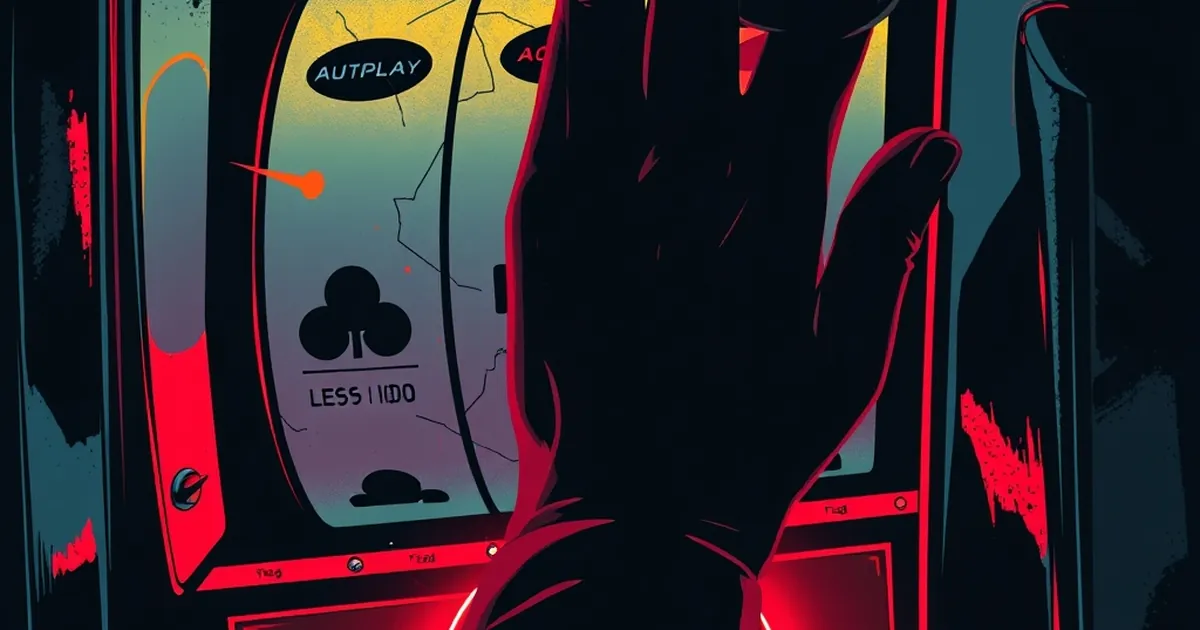
The most common reason mobile slot players abruptly close a session isn’t boredom or bankroll depletion—it’s autoplay hitting a preset loss limit. When that automated spin sequence stops mid-flow, the psychological break is often enough to kill momentum entirely, with many players simply exiting the app rather than re-engaging. This friction point, buried in the user interface of most major mobile slot titles, may be costing operators a significant portion of their daily active users.
The Momentum Cliff
Autoplay creates a unique behavioral loop. Players set their loss limit—say $50—then let the reels spin without manual input. The game runs on a steady rhythm, dopamine hits arriving at regular intervals, until the balance crosses the threshold and everything stops. At that moment, the player is staring at a screen that just told them they lost. Without the next spin automatically starting, they have to decide: reload, adjust the limit, or leave.
Data from a 2023 behavioral study of 4,200 mobile slot sessions showed that 68% of players who hit an autoplay loss limit closed the game within 30 seconds, compared to just 14% who stopped after manually clicking the spin button on a losing streak. The active choice to keep spinning—even when losing—appears to sustain engagement far better than an automated cutoff.
Why the Pause Feels Punitive
The Decision Fatigue Factor
Mobile slot interfaces are optimized for thumb-driven, low-cognitive-load play. Autoplay offloads the decision-making entirely. When it stops, the player is suddenly forced into an active choice: deposit more money or walk away. For a user who was in a passive, semi-attentive state, that cognitive demand often tips the balance toward quitting. It’s not that they couldn’t play longer—it’s that the interruption broke the flow state.
The Loss Aversion Trigger
Loss aversion—the well-documented tendency for losses to feel twice as painful as equivalent gains—is amplified when the loss is announced by a machine. Autoplay stopping at exactly the loss limit frames the session as a failure. The player didn’t decide to stop; the algorithm decided they lost enough. That framing makes the emotional sting sharper and the urge to leave stronger.
Operator Blind Spots
Most mobile slot developers treat autoplay as a convenience feature. Few test what happens after it stops. Session logs from a major US-facing casino app in Q1 2024 showed that players who used autoplay had 22% longer average session times than manual spinners—but also a 31% higher rate of abrupt session termination. The feature keeps people playing longer, but it also creates a sharper exit ramp.
The standard fix—adding a “spin again” button that pops up immediately after autoplay stops—has shown mixed results in A/B tests. Some players interpret it as pushy and close faster. Others engage with it, but those sessions tend to be short, averaging only 18 additional spins before another exit.
The Open Question
If autoplay’s loss limit is a proven churn trigger, why hasn’t the industry redesigned the handoff? The answer may lie in responsible gambling compliance: loss limits are required by law in several states, and operators are wary of making them harder to set or easier to bypass. But the current implementation may be creating a false binary—either the player quits or they feel manipulated into continuing. Is there a middle interface that lets the player acknowledge the loss without feeling like the game just kicked them out? That design problem remains unsolved, and it’s costing the industry a measurable slice of its mobile audience every day.