Why Live Audiences Check Out When Reward Timing Exceeds 12 Seconds
Discover why live audiences disengage when rewards are delayed beyond 12 seconds, and how timing impacts attention and engagement
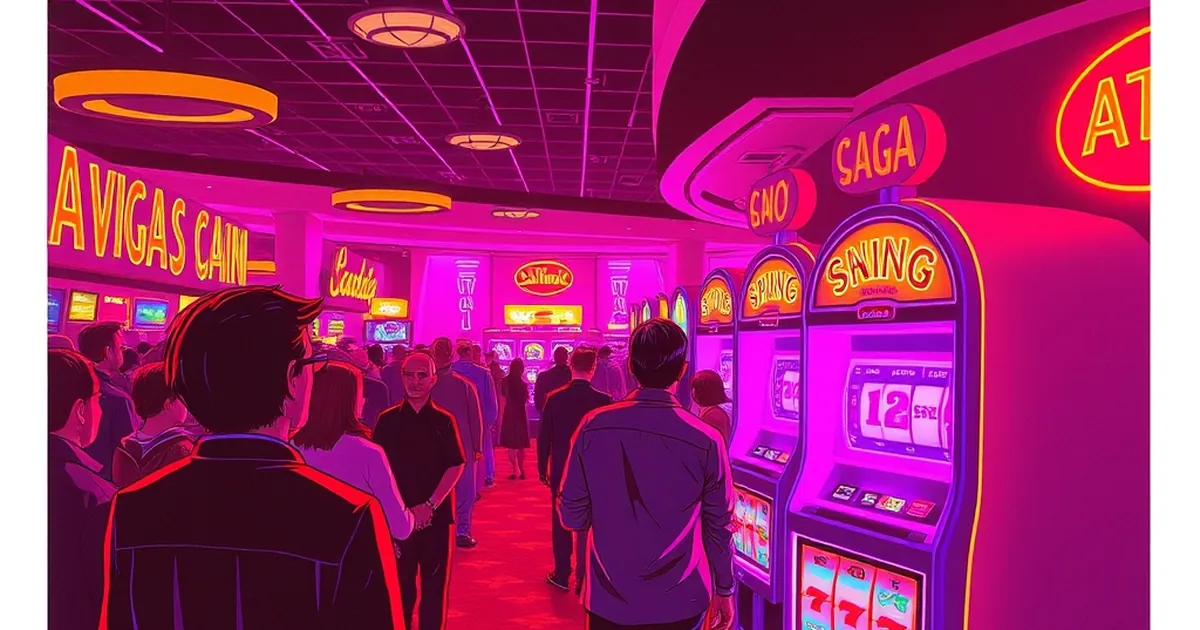
We’ve all felt it. A stage magician takes too long setting up a reveal, or a game show host drags out a big prize announcement to an excruciating degree. The room shifts. Phones come out. The collective energy collapses. This isn’t just impatience; it’s a measurable neurobiological phenomenon. The question is: why does the human brain have such a strict deadline for reward delivery, and what does that mean for anyone trying to hold a live audience’s attention?
The Dopamine Deadline
The brain’s reward system operates on a tight schedule. When we expect a positive outcome, neurons in the ventral tegmental area begin firing dopamine in anticipation. This is the “wanting” phase. Research from Wolfram Schultz, a pioneer in dopamine physiology, shows that this anticipatory spike peaks shortly before an expected reward. If the reward is delayed beyond a critical window—typically around 12 to 15 seconds—the anticipatory dopamine signal begins to decay sharply.
Once that signal drops, the brain reclassifies the situation. The anticipated reward no longer feels imminent; it feels uncertain or even improbable. The audience’s engagement doesn’t just plateau—it actively declines. They’ve subconsciously moved on. This is why a live host who pauses for effect can hold the room, but one who fumbles for a card for 20 seconds loses the crowd entirely.
Variable Ratio and the 12-Second Wall
This timing is especially brutal in environments built on variable-ratio reinforcement, a concept famously studied by B.F. Skinner. In a variable-ratio schedule, the reward comes after an unpredictable number of responses—think of checking your phone for a text that might arrive at any moment. This pattern is notoriously resistant to extinction. People will keep pulling a lever for a long time if they know the payoff could come on the very next try.
But here’s the catch: variable-ratio schedules only work when the average time between response and reward stays under a certain threshold. Live competition shows and interactive audience spectacles rely on this. When the host says “The winner is… coming up after this break,” the brain registers a delay that exceeds the 12-second window. The audience knows rationally the reveal is coming, but emotionally, the reward system has already checked out. The variable ratio breaks down, and the room goes cold.
The Kahneman Shortcut
Daniel Kahneman’s work on System 1 and System 2 thinking adds another layer. Live audiences operate almost entirely in System 1—fast, automatic, and emotional. They are not calculating probabilities; they are reading faces, body language, and pacing. A delay longer than 12 seconds forces the audience to switch to System 2. They start thinking, “Why is this taking so long? Is something wrong?” That cognitive effort is experienced as frustration or boredom, not suspense.
The implication is clear: any live event that relies on anticipation must deliver its reward—or at least a meaningful signal of it—within that 12-second window. If the main payoff is delayed, you need a secondary reward: a joke, a change in lighting, a sound cue, a surprising visual. Something to reset the dopamine clock.
Forward-Looking Design
The 12-second rule is not a law of physics, but it is a robust heuristic for human attention. For producers, game designers, and live experience architects, the takeaway is practical. Map your audience’s reward timeline. If you are building a moment that requires a 30-second buildup, break it into three 10-second cycles. Give the brain a mini-reward at the 10-second mark—a confirmation, a twist, a visual shift—to keep the dopamine from crashing.
The audience isn’t impatient. Their brains are just running on a very old operating system. Build for the clock they have, not the one you wish they had.