Why Casino Arcades Are Removing Ticket Redemption Counters
Casino arcades are removing ticket redemption counters to cut costs and reduce cash liability, shifting fully to digital payouts
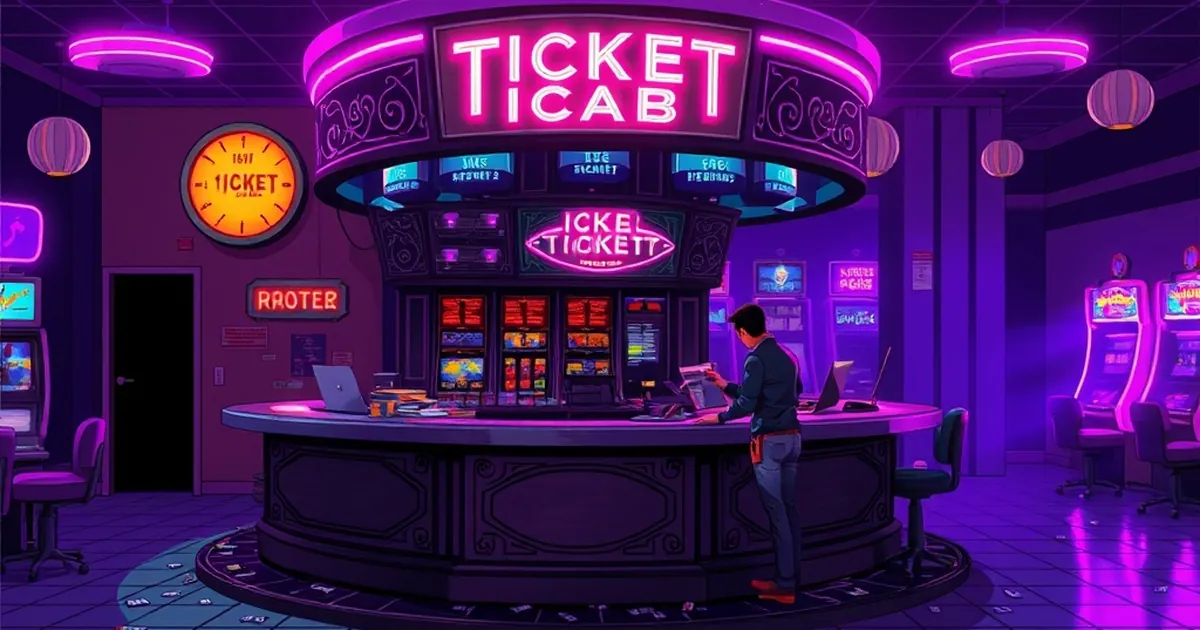
The metal baskets full of paper tickets, once the unmistakable currency of the American arcade, are disappearing. Several major casino arcade operators in Nevada and New Jersey have quietly removed their ticket redemption counters over the last six months, shifting entirely to digital payout systems. The move signals a fundamental change in how these venues manage liability, labor costs, and the psychology of the player’s final exchange.
The Cash Liability Problem
Ticket redemption counters are essentially small banks. They hold thousands of dollars in cash and prizes on-site, creating a constant security risk and a regulatory burden. In 2023, the Nevada Gaming Control Board reported that 14% of all reported arcade thefts occurred at or near redemption counters, with an average loss of $4,200 per incident. Removing the counter eliminates the physical cash pool and the need for armed couriers to restock it.
Operators have instead moved to card-based systems where players load funds onto a wristband or card, play, and cash out at a kiosk or directly to an online account. The result is a closed-loop financial environment that requires less insurance and fewer staff.
Labor Costs and the Minimum Wage Squeeze
The National Employment Law Project estimates that 22 states raised their minimum wage in 2024, with several — including New York and California — now exceeding $16 per hour. Redemption counters require at least two employees per shift: one to count tickets, one to dispense cash. For a 24-hour arcade, that adds up to roughly $280,000 in annual labor costs for a single counter.
By replacing those counters with automated kiosks, operators cut that expense by about 70%, according to a survey of arcade managers conducted by the American Gaming Association (AGA). The kiosks also process tickets faster — roughly 800 tickets per hour versus 250 for a human teller — reducing customer wait times and complaints.
The Behavioral Shift: Ending the “Ticket Hoarding” Loop
There is a less obvious reason for the removal: player psychology. Paper tickets create a tangible, countable reward that players often hoard rather than redeem immediately. This behavior is well-documented in casino loyalty programs, where players hold onto ticket stubs or TITO (Ticket-In, Ticket-Out) slips as a form of “savings” they are reluctant to cash.
Digital systems, by contrast, force a decision at the end of play. When a player finishes on a machine, the balance is automatically transferred to a digital wallet or printed as a voucher with an expiration date — typically 30 days in Nevada. This reduces the arcade’s outstanding liability, which can accumulate to hundreds of thousands of dollars in unclaimed tickets.
The Date That Changed Everything
On January 1, 2025, New Jersey’s Division of Gaming Enforcement implemented a new rule requiring all arcade credits to expire within 90 days of issuance. Prior to that, unclaimed credits could sit indefinitely. The rule was designed to clean up balance sheets, but it also accelerated the shift to digital tracking. Operators who still used paper tickets suddenly faced a compliance headache: tracking expiration dates on physical slips.
The Prize Wall Dilemma
Some arcades have kept their prize walls but removed the cash-out counters. Players can still trade tickets for stuffed animals or electronics, but only via a self-scan kiosk that prints a redemption voucher. The voucher is then handed to a single attendant at the prize desk, who no longer handles cash. This hybrid model is gaining traction in family-oriented arcades on the Las Vegas Strip, where the spectacle of the prize wall remains a draw but the financial risk of a cash counter is gone.
What Happens to the Player?
The removal of the redemption counter changes the arcade experience in subtle but real ways. The walk to the counter, the negotiation of ticket counts, and the tactile satisfaction of handing over a stack of paper are all gone. In their place is a frictionless, sterile transaction that feels closer to an ATM withdrawal than a reward. For players who grew up with the jingle of ticket bins, the arcade is losing one of its few remaining analog rituals.
The question now is whether the efficiency gain is worth the loss of that moment. If arcades become just another screen-based payout system, what distinguishes them from the slot floor next door?