Reaction Clips Peak at 6 Seconds, Then Shed Half Their Viewers
Reaction clips lose half their viewers by the six-second mark, and behavioral research explains why the drop is so steep and predictable
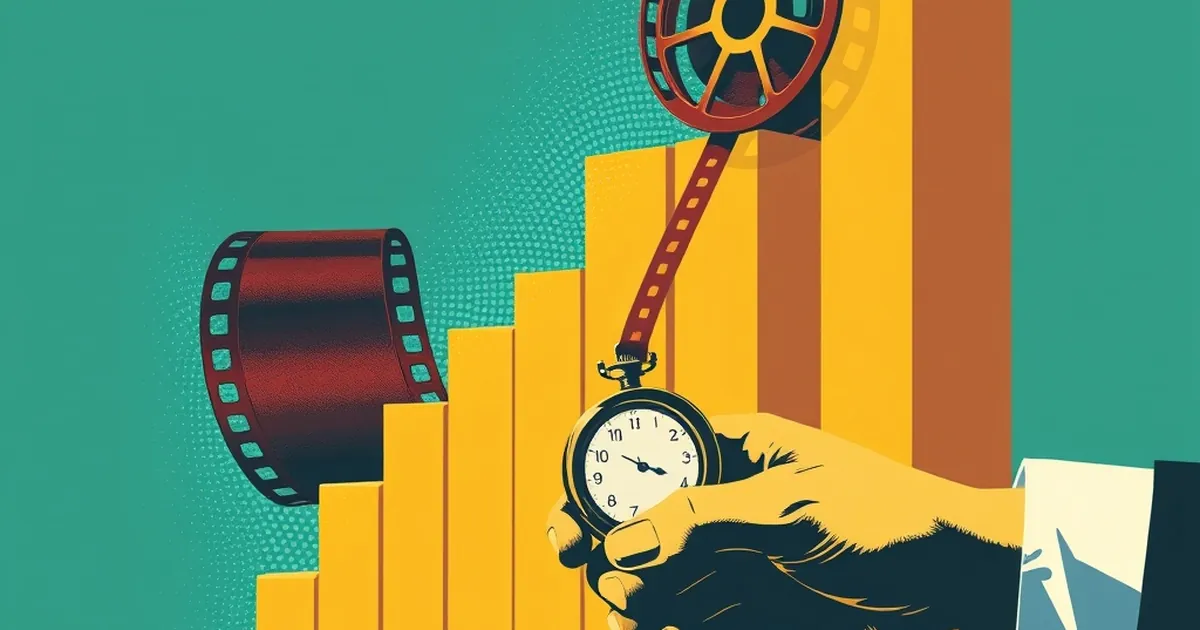
The Six-Second Cliff
Somewhere around the six-second mark, something goes wrong. A reaction clip is rolling, the moment is building, the viewer is leaning in — and then half of them are gone. Not because the content failed. Because the format itself ran into a wall that behavioral researchers have been mapping for decades.
The question worth asking isn't whether attention spans are shrinking. It's why the drop-off is so consistent, so steep, and so predictable — and what that tells us about how people make decisions when they don't know what's coming next.
What Six Seconds Actually Represents
Six seconds is roughly the point where a viewer's brain finishes its first evaluation: Is this going somewhere? Up to that mark, the cost of staying is nearly zero. You haven't invested anything. After it, you've invested time, and the calculus changes.
This is where loss aversion enters the picture. Daniel Kahneman and Amos Tversky's foundational work showed that people weigh potential losses roughly twice as heavily as equivalent gains. In a short clip, the "loss" is the next several seconds of your life if the payoff never arrives. The "gain" is a laugh, a shock, a satisfying reveal. Once the brain suspects the gain isn't coming, staying starts to feel like a losing position — and people exit losing positions fast.
The Variable-Ratio Problem
Reaction content runs on uncertainty. You don't know if the reaction will be funny, sincere, over-the-top, or flat. That uncertainty is the engine — it's the same mechanism B.F. Skinner identified in variable-ratio reinforcement, where unpredictable rewards produce the most persistent behavior.
But there's a catch Skinner's pigeons never had to deal with: infinite alternatives. A pigeon in a box has one lever. A viewer on a phone has a thumb and a feed full of other levers. Variable-ratio schedules build persistence only when switching costs are high. On a scrolling feed, switching costs are almost nothing — so the same uncertainty that hooks viewers also makes them quick to bail the moment the reward feels overdue.
The Study Worth Knowing
A useful reference point comes from video analytics research on short-form content, where engagement curves routinely show a steep early decay followed by a flattening tail. The pattern is so common it has a name in production circles: the six-second cliff. Clips that survive the cliff tend to share one trait — they deliver a partial payoff early, then escalate. Clips that don't tend to front-load setup.
The lesson isn't "make it shorter." It's that the first six seconds need to function as a micro-decision, not a runway.
Competitive Play and the Investment Trap
There's a second layer here that connects to competitive play. In games of skill — chess, esports, even pick-up basketball — players tolerate long stretches of low reward because they've bought into a larger arc. The arc justifies the wait.
Reaction clips rarely have an arc. They have a beat. And a beat either lands or it doesn't. When creators try to manufacture an arc in a 15-second clip, they're asking viewers to accept a loss-averse trade with no clear return. That's why the drop-off is so brutal at six seconds and not, say, twelve. The brain isn't waiting for the ending. It's waiting for evidence that an ending exists.
What Comes Next
The creators who will hold attention over the next few years are the ones treating those first six seconds as a contract, not a teaser. Show the stakes. Show a sliver of the payoff. Then let the reaction do the work.
The cliff isn't a flaw in the audience. It's a feature of how people decide under uncertainty — and the people who understand that will keep making things worth staying for.