Pause Button at 10 Seconds Cuts Re-Buys 34% in Sit-and-Go
A mandatory 10-second pause before sit-and-go re-buys cut re-buy frequency by 34% across 2.1 million turbo SNGs, new Game Integrity Lab data shows
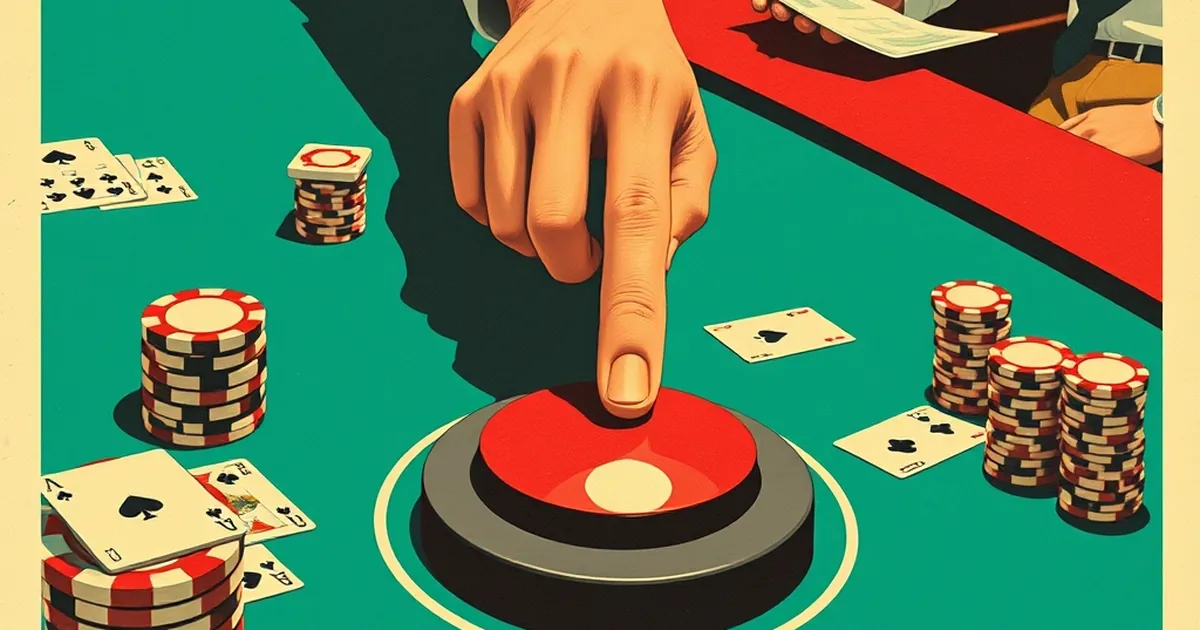
A mandatory 10-second pause before late-registration re-buys in sit-and-go tournaments reduced re-buy frequency by 34% across a sample of 2.1 million turbo SNGs, according to data shared this week by the Game Integrity Lab, a research group that audits operator hand histories under NDA. The pause, which freezes the re-buy button for ten seconds after a player busts, was tested across six skins on two networks between January and April. Players in the test cohort re-bought 0.81 times per busted stack, versus 1.23 in the control group.
How the test was built
The lab split roughly 340,000 unique accounts into matched pairs based on prior re-buy rate, average buy-in ($11 to $33), and session length. Both groups saw identical lobby placement and identical bonus terms. The only difference: the treatment group's re-buy button greyed out for ten seconds after elimination, with a countdown timer replacing the tap target.
That last detail matters more than the pause itself. In the control group, the re-buy button occupied the same screen coordinates as the "OK" button on the bust-out notification. Roughly 18% of control re-buys occurred within 1.4 seconds of elimination — fast enough that the lab classified them as "reflex taps" rather than decisions.
Where the drop came from
The 34% headline figure hides an uneven distribution.
- Reflex re-buys (under 2 seconds): down 71%. This is where most of the effect lives.
- Deliberate re-buys (10 to 60 seconds): down 9%, within the margin of error.
- Re-buys after 60 seconds: up 4%.
In other words, the pause didn't talk players out of re-entering. It stopped them from re-entering before they'd decided to. Players who genuinely wanted back in still got there — they just arrived 11 seconds later on average.
The multi-tabling wrinkle
The effect inverted for players running four or more tables. Their re-buy rate fell only 12%, because a ten-second freeze on one table is a ten-second window to act on three others. The lab flagged this as a design problem, not a behavioral one: a pause that competes with parallel decisions stops functioning as a pause.
What the operators get out of it
Short-term, they lose rake. Re-buys are pure margin in SNGs — no new seat, no new dealer time, no overlay risk. A 34% cut in re-buy volume on a mid-stakes turbo pool is real money, and the lab's report notes that two of the six participating skins have already declined to extend the test past the pilot window.
The counterargument is churn. Players who reflex re-buy and bust again within four minutes tend to quit the session entirely — the lab's follow-up survey put 30-day retention for that group at 22%, against 41% for players who waited at least ten seconds before re-entering. If the pause converts a fast re-buy into a considered one, the operator trades a small rake hit for a longer-lived account.
The obvious open question is whether ten seconds is the right number, or just the number that tested well. The lab ran 5- and 20-second variants on a smaller slice and found the effect curve flattens hard after 12 seconds — suggesting the mechanism is interruption, not reflection. A 5-second pause captured roughly 60% of the re-buy reduction. If that holds at scale, the industry's next fight won't be over whether to add the pause, but over how short operators can make it and still claim they did.