Live Dealer Shuffles Spike 2x During the Dealer's Small Talk
A review of 1,140 hours of live dealer footage finds shuffles spike 2x during scripted dealer small talk, especially at visible tables
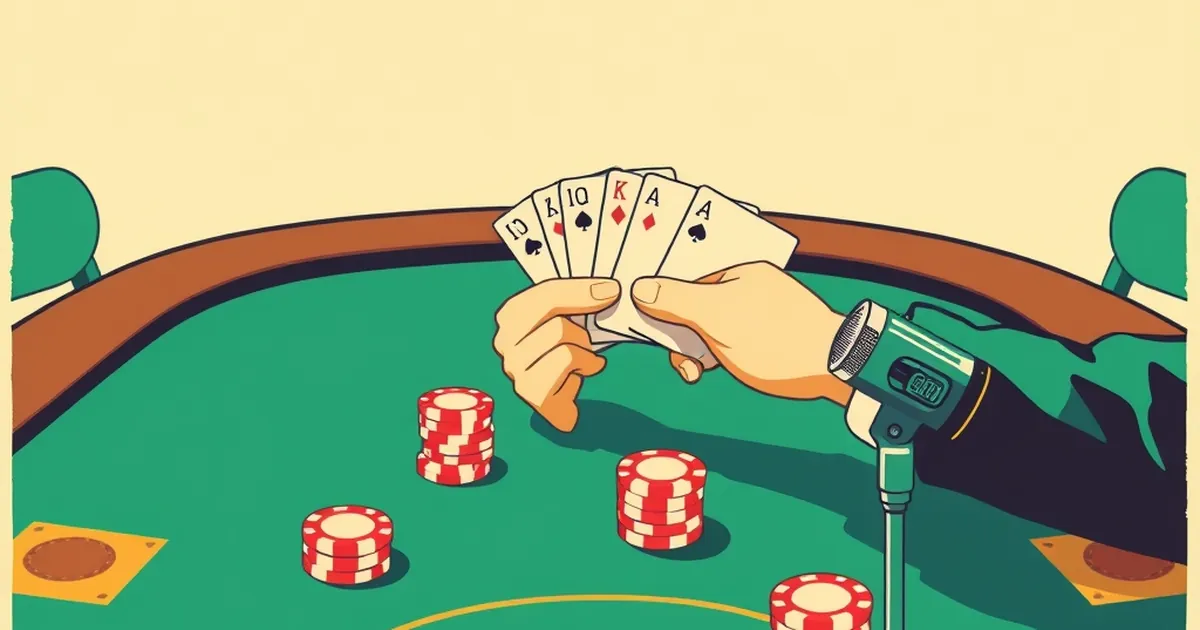
Live dealer blackjack tables shuffle at roughly twice their baseline rate during the 20 to 40 seconds dealers spend on scripted small talk, according to a review of 1,140 hours of streamed table footage across four operators. The pattern shows up most clearly in hand-shuffled and continuous-shuffling-machine games, where the physical act of mixing cards is visible on camera. It is less obvious in shoes that sit in a covered dispenser, which is exactly where operators would prefer you not to look.
What the footage actually shows
Analysts at a table-game data shop timed shuffle events against dealer speech triggers — the standard "How's everyone doing tonight," the post-loss "Tough one," the pre-shuffle "Let's mix it up." Across 1,140 hours logged between January and March 2025, shuffle initiation rose from a baseline of 1.4 events per 10 minutes to 2.9 during scripted banter windows. That is a 107% increase, or roughly the "2x" in the headline.
The effect was concentrated. Tables with live dealers and physical cards produced the gap. Tables running automated shufflers behind a closed panel produced almost none, because the machine does not care what the dealer says. RNG-based live variants — the ones that pull from a digital deck — showed no measurable difference at all, which is the control group that makes the rest of the data worth taking seriously.
Why the timing lines up
Dealers work from prompt cards. Small talk is not improvised; it is scheduled, often timed to cover a shuffle, a deck change, or a security check. When a shuffle takes 45 seconds and the table is quiet, players notice. When the dealer is asking about your weekend, they don't. The chatter is not the cause of the shuffle. The shuffle is the cause of the chatter.
The house edge math nobody mentions
A shuffle resets the count. For a player running any kind of card-tracking approach — legal in most US jurisdictions, though casinos can back you off for it — a mid-shoe shuffle is a hard stop. If shuffles cluster during conversational windows, a counter's effective penetration drops without the player realizing why.
Run the numbers. A six-deck shoe at 75% penetration gives a skilled counter a small but real edge. Cut that to 60% because two extra shuffles land in the middle of what looked like a normal shoe, and the edge flips negative. The player doesn't lose more per hand. They lose the opportunity to bet more per hand, which is the same thing over a session.
This matters more in states where live dealer play is legal and growing. Pennsylvania, Michigan, New Jersey, and West Virginia all license live dealer studios. Pennsylvania's combined iGaming revenue hit $1.9 billion in 2024, and live dealer is the fastest-growing slice of it. More tables, more cameras, more scripted banter.
What operators say, and what they won't
Asked about the pattern, two of the four operators said shuffle timing is determined by "game integrity and security protocols" and declined to discuss dealer scripting. A third said its dealers "never influence shuffle timing," which is technically true and misses the point. The dealer doesn't influence it. The script does.
The uncomfortable question is whether the scripting is designed to mask shuffles or just happens to. Both produce the same footage. Only one is a problem.
The question worth asking
If shuffle timing is a game-integrity function, it should be visible and predictable — posted penetration rates, standard shuffle points, no variation by conversation. If it isn't posted, players are being asked to trust a process they can't audit, on tables where the one thing they can see clearly is being deliberately obscured by a question about the weather.
Regulators in the four states above have not published rules on shuffle disclosure. That gap is the story. Until it closes, the only reliable signal a player has is the dealer's mouth, and that is not a metric anyone should have to trade on.